







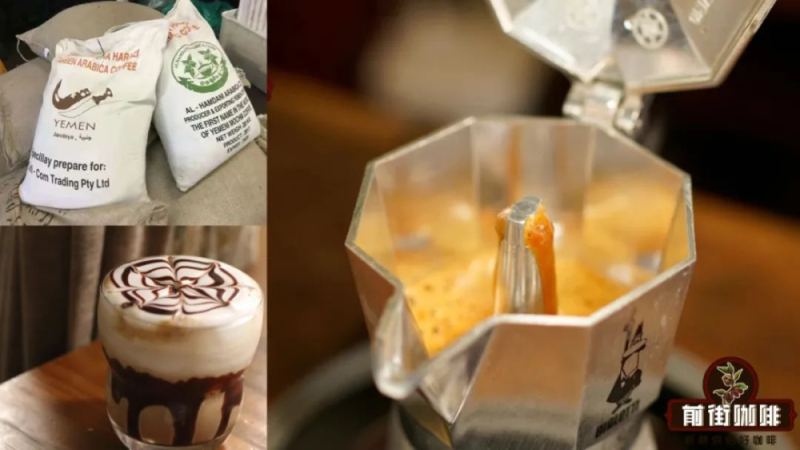
Does a moka pot make mocha coffee, or something else?
Coffee brewed in a moka pot is not mocha coffee in the historical sense. The word mocha comes from the Yemeni port of Mocha, which from the 15th century onward was a major trading hub. Coffee beans shipped through that port reached Europe and were called mocha coffee because of their rich chocolate flavor, long before anyone brewed with a moka pot.
Later, mocha also became the name of a chocolate-flavored espresso drink, which is where most of the confusion starts. The moka pot shares the sound of the word but none of that history; it is simply a stovetop brewer. So the same beans can go into a moka pot, yet the result is not mocha coffee by origin or by recipe.
The moka pot, mocha coffee, and mocha coffee beans—all these names carry the word "mocha." What exactly is the connection between them? Can the coffee brewed with a moka pot be called mocha coffee? These questions often confuse coffee enthusiasts. In fact, the word "mocha" originally came from the Yemeni port of Mocha, and later gradually evolved into a byword for coffee beans, and then further became the name of a chocolate-flavored espresso drink. Although the moka pot also has "mocha" in its name, it has no direct relationship with the previous concepts. Today, Front Street Coffee will sort out the past and present of these "mocha series" to help you fully understand their differences.
Seeing these names inevitably raises questions: why do they all carry the word "mocha"? What kind of connection exists between them? Can the coffee brewed with a moka pot really be considered mocha coffee? Today, Front Street Coffee will guide everyone through the relationships among these "mocha series."
Mocha
As mentioned earlier, these concepts all revolve around the word "mocha," making it easy to associate them literally: for example, extracting mocha coffee beans with a moka pot naturally yields mocha coffee. But this understanding is only superficial.
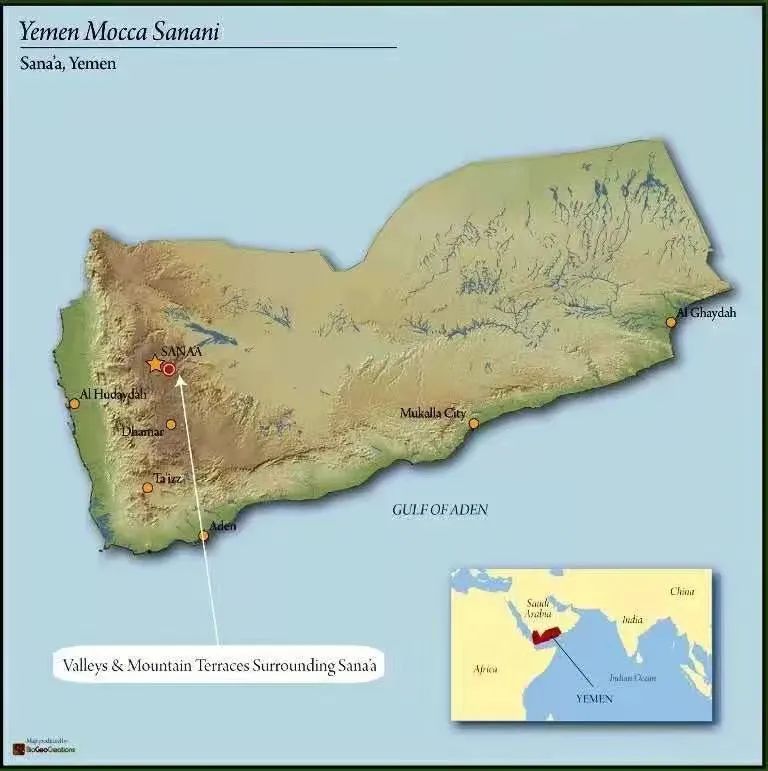
The word "mocha" actually comes from a port city in Yemen—the port of Mocha. For more than three hundred years starting in the 15th century, this port held an extremely important trading position, roughly equivalent to today's Port of Shanghai. At that time, almost all goods relying on maritime transport worldwide had to be transshipped through here. Therefore, originally "MOCHA" was merely a place name.
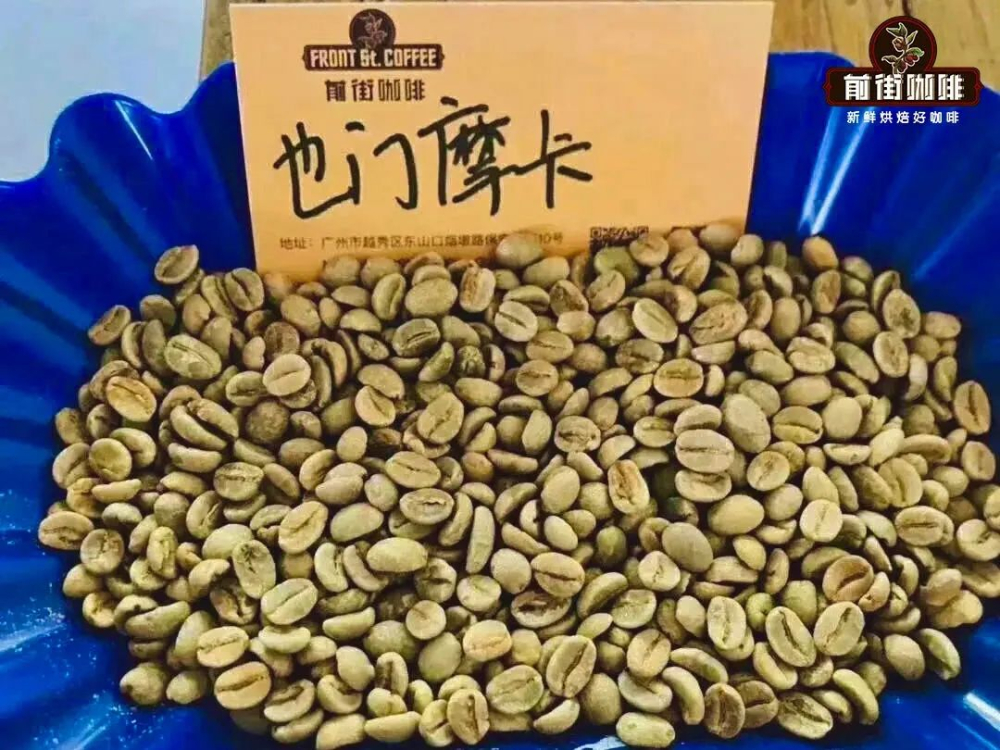
Mocha Coffee Beans
In the trade flowing through the port of Mocha, the most famous commodity was undoubtedly coffee beans. However, it should be noted that the port of Mocha itself did not grow coffee (the port of Mocha is not the same as Yemen); it was simply that the coffee beans exported through the port of Mocha, after arriving in Europe, fascinated European aristocrats with their rich chocolate flavor.
But at that time people did not know the specific origin of the coffee beans; they only knew that they were shipped from the port of Mocha, so Europeans collectively called the coffee beans transported through the port of Mocha "mocha coffee."
After coffee beans became popular, all coffee beans exported from the port of Mocha were marked with "MOCHA" to indicate that they were legitimate goods exported through the port of Mocha. Therefore, by this stage, when people mentioned mocha, they associated it more with coffee beans rather than the port of Mocha itself.
Mocha Coffee
Entering the 18th century, the espresso trend swept the world. European countries successively opened their own coffee plantations, trade no longer had to rely on the port of Mocha, and the port of Mocha completely lost its monopoly position in the coffee trade. In the following decades, the Ottoman Empire occupied Yemen, and the export volume of mocha coffee beans shrank sharply, making it difficult for Europeans to again taste that mocha coffee with its rich chocolate flavor.
At that time, the status of mocha coffee beans in people's minds was like that of today's Geisha—outstanding in flavor, yet hard to obtain because of scarce production. So in the era when espresso prevailed, people switched to chocolate sauce to simulate the chocolate flavor of mocha coffee beans, thus creating what we now know as "mocha coffee." At this point, mocha coffee no longer referred to coffee beans, but to a chocolate-flavored espresso drink.
Moka Pot
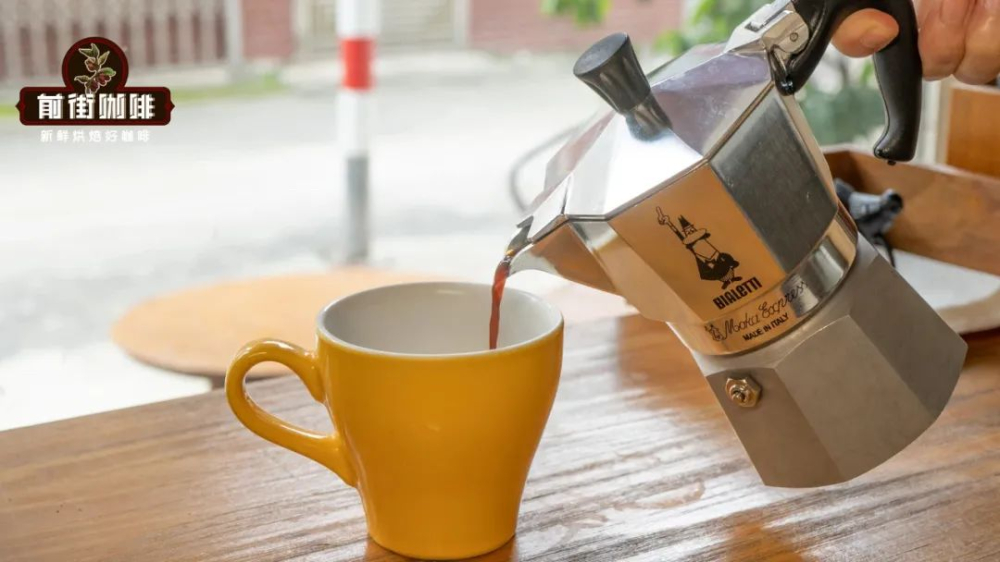
The moka pot "Moka Express" is neither produced in Mocha, nor is it a device for making chocolate-flavored coffee, nor is it a tool specifically for extracting mocha coffee beans. It came from the Italian Alfonso Bialetti, inspired by a washing machine. So to be honest, the moka pot is different from the previous concepts with mocha; aside from having the word mocha in its name, it has no substantial connection to mocha itself.
Early washing machines had a metal tube whose function was to draw up the detergent from the bottom by heating it, then sprinkle it onto the clothes. It was precisely from this principle that Alfonso Bialetti drew inspiration and invented the moka pot in 1933, using pressure to quickly extract coffee.
The moka pot spread extremely quickly, because people no longer needed to go to a coffee shop and use a coffee machine with pressure as high as 9 bar to drink coffee; merely by operating this small, portable moka pot at home, they could make coffee close to that of an espresso machine.
As for why the moka pot is called "moka pot," the most common explanation is the same as mentioned earlier: the coffee beans the Venetians first encountered were exported from the port of Mocha, with "mocha" printed on the burlap sacks, leading people to believe that coffee (here referring to coffee beans) all came from Mocha, so mocha became a synonym for coffee locally, and this naming association was still used by some until the 20th century. Therefore, the English name of the moka pot is written as "Moka Express," where Moka means coffee and Express means fast; together they mean quickly obtaining coffee.
The coffee made with a moka pot—you can call it moka pot coffee, since it indeed comes from a moka pot. But it is not mocha coffee—mocha coffee in the past referred to coffee beans exported from the port of Mocha with a chocolate flavor, while today's mocha coffee refers to a chocolate-flavored milk coffee made with an espresso machine and chocolate sauce. So these "mocha" concepts are not the same, and it is best for everyone to distinguish them clearly.
Front Street Coffee (FrontStreet Coffee)
No. 10 Baoqian Street, Yandun Road, Dongshankou, Yuexiu District, Guangzhou, Guangdong Province
The above content is compiled by CoffeeHunters, a coffee news website.


