








What does Frontstreet Coffee say about departing staff and recipes?
When a staff member leaves a café and carries its specialty drink recipes to the next shop, owners split on how much it matters. Some feel betrayed, since recipes built through repeated testing are a kind of personal intellectual property. Others argue that creative coffee recipes are close to transparent now, and that drinks are reformulated fast enough that a single recipe ages quickly.
Frontstreet Coffee gathers views from several industry practitioners on handling the dilemma, from written agreements and in-house ingredients to a calmer mindset. Suggestions include keeping a signature homemade element that is hard to copy, limiting how much of a recipe is written down, and treating shared street coffee knowledge as normal in a trade where staff move between bars and menu ideas circulate.
Private cafés, besides the usual Americano and latte, often also offer specialty drinks that have been repeatedly tweaked, and these recipes embody the hard work of the owner. But when a staff member leaves and takes the recipe to the next shop, how should owners deal with it? Some are deeply troubled by this, while others believe recipes have become fairly transparent these days and there is no need to overthink it. This article compiles the views and suggestions of several industry practitioners, discussing this common industry dilemma from legal agreements, homemade ingredients, to mindset adjustment, and includes related recommendations from Front Street Coffee for coffee lovers and shop owners to reference.
▲
Click to follow | Daily specialty coffee culture magazine Coffee Workshop
Most private coffee shops, in addition to serving Americanos, lattes, and other regular coffees, also offer specialty coffee. Whether it is a classic flavored latte paired with syrup, or a creative coffee paired with alcohol or fruit, it must go through repeated testing by the owner to confirm the taste before it can finally be put on the menu.
Since the materials and proportions used are carefully matched, the recipe becomes especially important during production. Seen this way, a recipe seems like a kind of personalized intellectual property. So if you teach your shop's staff to make coffee according to the recipe, what do you do if the staff member takes the recipe to the next shop after leaving?
Some coffee shop owners are troubled by this:
"To make daily production easier for myself, I told the staff the recipes of products I worked hard to develop. But if a staff member leaves and uses the recipe to please the next shop's owner, just thinking about it makes me really angry!"
If you tell the staff the recipe, competitors may ask the staff about the recipe; if you don't tell them, you have to bear part of the work alone. Thinking about it this way really is quite frustrating.
Some people think that in this era when creative coffee has to be a "Manchu Han Imperial Feast," no one cares what the recipe is, because drinks iterate and update too quickly. In this advanced information age, a search online turns up plenty of recipes. After a few sips of some private cafés' specialty drinks, you can tell what was added, and some shops even write the recipe on the coaster when serving, making it public.
Second, in the food and beverage industry, recipes have basically become transparent. Some people even deliberately sell recipes in order to understand how their products are received in the market. The larger the base, the clearer the data, and thus there is enough data to develop new products.
Some netizens advise coffee shop owners to relax their mindset and think about why they told the staff the recipe in the first place. First, it must have been to enable them to do the job and reduce some of their own workload; second, it may have been to help the staff improve and then summarize experience themselves for further improvement. But in this process, whether the staff improves depends on whether they develop their own understanding. As long as their innovation and R&D abilities are sufficient, there is no need to fear others blindly imitating, because they will only remain stuck where they are. Moreover, the coffee industry advances through constant sharing and exchange, which is how it can bring customers better products and experiences.
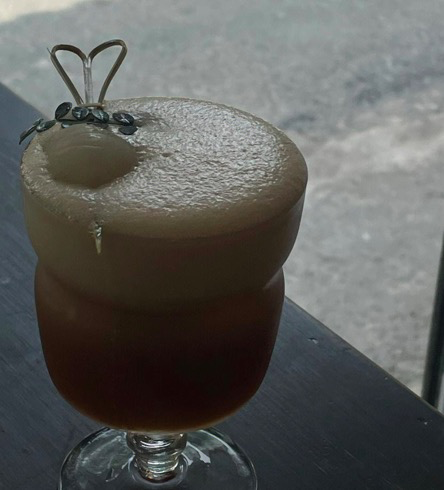
But some people feel that this is, after all, the result of their own hard work, and having it directly taken by someone else "for their own use" really feels awful. This is a bit like at school when your homework is copied by a classmate. Even if few people care about the homework you wrote, having it copied by someone else still makes you uncomfortable.
For this reason, some netizens offer advice: if possible, sign relevant agreements with employees, or obtain legal certification for your recipes.
You can also make part of the ingredients yourself and just let the staff mix them in proportion. Some cafés make their own syrup. In this case, unless the staff steals all the materials, it cannot be replicated.
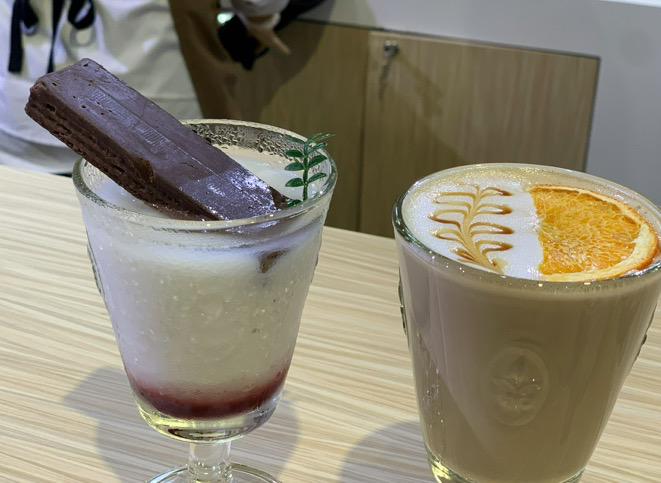
Those who have already accepted it say that without technical barriers, that's just how it is. Keep a calm mind; once you let it go, you won't feel it's a problem anymore. Looking at it from another angle, your recipe has already been recognized by others. Products themselves need constant development; while others are replicating, you are already updating your products. As long as you don't slack off, you can always stay ahead. So this situation is understandable, but basically unsolvable.
Front Street Coffee suggests that shop owners can focus on making and keeping core ingredients in-house during daily operations, while maintaining a pace of product iteration, so as to build true competitive barriers through continuous innovation.
Disclaimer: Some images in this article are from the internet. For some content on the website, such as images, we will respect the original author's copyright and indicate the source. However, due to the large quantity, some images and texts may not have been credited in time. Please understand. If the original author has any disputes, they can contact the website for handling. Once verified, we will correct it immediately. Compiled and edited by "Coffee Workshop." Please indicate the source when reposting. If there is infringement, please inform us for deletion. Thank you~!
The above content is compiled by CoffeeHunters, a coffee news website.


