








Do Instant and Freeze-Dried Coffee Differ in Production?
Instant coffee and freeze-dried coffee look alike in the cup and are both prepared by mixing coffee with hot water, yet they follow two separate production routes. Instant coffee relies on spray drying, a method that traces back to 18th-century efforts to give American soldiers a portable brew, while freeze-dried coffee uses vacuum freeze-drying technology. Those different routes yield distinctly different flavor profiles.
The historical thread runs from a congressional project called Simple Portable Coffee to a concentrated Coffee Essence made from coffee, milk, and sugar, and later to Nestle's spray-drying method. Raw material selection also diverges between the two. Grinding coffee particles and brewing them by hand was the slow step soldiers wanted to skip, which is why convenience shaped both techniques from the start.
Instant coffee and freeze-dried coffee can both be enjoyed simply by adding hot water, and both belong to the convenient coffee camp, but are they really the same product under different names? The answer is no. From the coffee predicament of American soldiers in the 18th century, to the birth of Nestlé's spray-drying method, and then to the application of vacuum freeze-drying technology, the two technical routes have produced completely different flavor profiles. This article will systematically sort out the essential differences between instant coffee and freeze-dried coffee from multiple dimensions such as historical origin, production process, and raw material selection, helping you understand why freeze-dried coffee can shed its "low-end" label and win back the favor of coffee lovers.
The ways of using the two are largely the same—both can be drunk directly after mixing with hot water, and both belong to the category of convenient coffee. This inevitably makes one wonder: are they the same thing under a different name?
Although they are both products born around the concept of convenience and both belong to the category of convenient coffee, there are still certain differences between them. Let us start with instant coffee!
The Birth of Instant Coffee
In the 18th century, during the American War of Independence, soldiers became almost fanatically obsessed with a stimulant beverage—coffee—to the point where they could not do without it and could hardly take a step without it! So the most common scene during marches was this: whenever soldiers seized a spare moment, they would brew a pot of coffee and drink their fill.

But because what the troops distributed were coffee beans that had not yet been ground, every time the soldiers wanted to drink coffee, they first had to grind them, and then boil the ground coffee particles into coffee, which was extremely time-consuming.
This almost frenzied behavior reached the U.S. Congress. So, in order not to let soldiers spend too much time and energy on drinking coffee, the U.S. Congress began a research project called "Simple Portable Coffee." Then, with strong congressional funding, by the end of 1861, a product called "Coffee Essence" was born.
According to the inventor's explanation, this "Coffee Essence" was an essence obtained by mixing coffee, milk, and sugar and then concentrating it! Just a small spoonful, mixed with water, would become a pot of delicious coffee, while its weight and volume were greatly reduced, making it very portable!
So it was said, but American soldiers were not buying it! This essence tasted terrible, did not refresh them, and perhaps because spoiled milk was used in its production, many soldiers suffered diarrhea on the spot after drinking it! This series of negative examples quickly led to the discontinuation of this coffee essence. Although it was discontinued, it also made all merchants smell a huge business opportunity and throw themselves into making portable coffee!
In 1890, David Strang, who had once sold coffee and spices on the South Island of New Zealand, produced soluble coffee powder by injecting hot air into coffee liquid, and named it "Strang's Coffee." That's right—this soluble coffee powder was the world's first true "instant coffee."
In 1899, Japanese chemist Satori Kato made instant coffee by extracting coffee solution and drying the powder under vacuum, and in 1903 he obtained a patent for this technology. But at that time he did not realize the path by which this product could be commercialized. Then in 1906, George C. L. Washington obtained a production patent for instant coffee in the United States, created the commercial instant coffee "Red E Coffee," and vigorously promoted it to the market. But in the end, "Red E Coffee" did not spread around the world because of its poor taste.
It was not until 1929 that Brazil, due to an economic crisis, was left with a large stockpile of coffee beans! To solve this problem, the Brazilian Coffee Institute applied to the Swiss company Nestlé to develop a more richly flavored instant coffee.
Subsequently, Nestlé spent eight years and in 1937 invented the "spray-drying method": first extracting the substances from coffee beans, then using hot air to evaporate the water in the coffee, drying the coffee from liquid into powder, and adding soluble carbohydrates during the drying process to enhance its flavor. In this way, more convenient instant coffee was born!
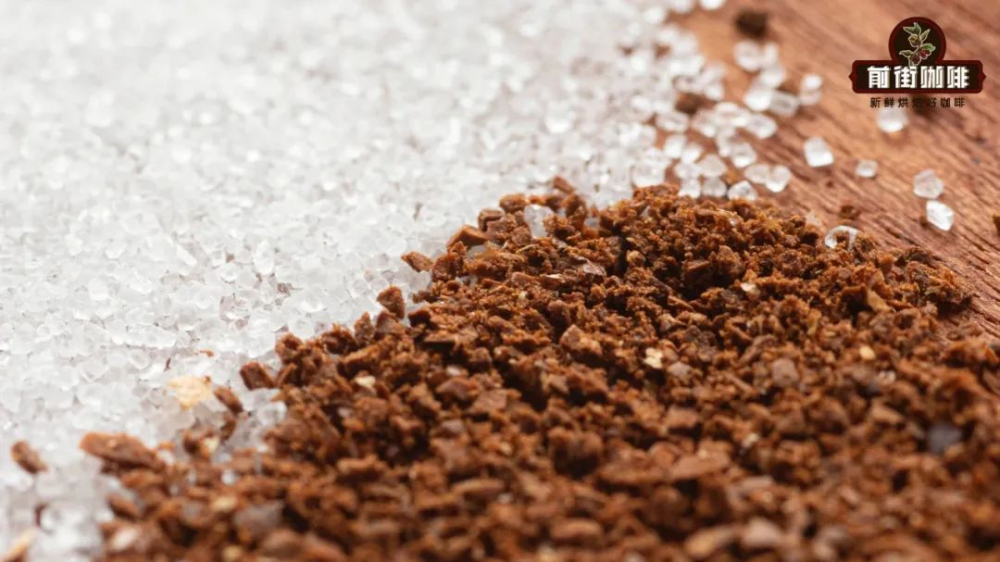
But its drawbacks are also obvious. Because of continuous high-temperature drying, the aromatic substances in the coffee almost completely evaporate, leaving only bitter components. Therefore, instant coffee is usually made mainly from lower-quality Robusta beans, and then a large amount of non-dairy creamer and sugar is added to dilute the bitterness. This is why instant coffee has become synonymous with "low-end coffee"—because early instant coffee was not healthy.
While promoting instant coffee, people were also constantly researching and innovating. Later, people discovered that the vacuum freeze-drying technology (Freeze Drying) invented in 1935 by Stuart Mudd and Dr. Earl W. Flosdorf could be applied to food production. So the Hills Brothers used freeze-drying technology to produce freeze-dried coffee and obtained 47 U.S. and foreign patents between 1966 and 1971.
The production steps of freeze-dried coffee are somewhat similar to those of instant coffee: both first extract the substances from coffee beans! But the coffee liquid extracted for freeze-drying is not as thin as what we usually make; instead, it is very thick, similar to chocolate syrup.
After extraction is completed, this coffee liquid is immediately transported to an environment of -5°C to condense until it becomes paste-like, and then transferred to a freezer below -40°C for freezing! After being frozen into blocks, it is directly broken into small pieces of 2–3 mm.
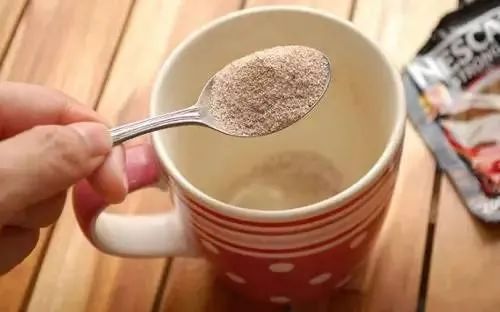
Finally, these block-shaped coffee pieces are sent into a vacuum drying chamber for heating and drying. When heated under vacuum, water sublimates rather than liquefying. The dried coffee particles are the freeze-dried coffee we see today!
Because cooling is carried out immediately after extraction is completed, freeze-dried coffee can retain more coffee flavor, and therefore better Arabica beans can be used to replace Robusta. Of course, what follows is the increase in cost brought by the complex process and expensive materials.
At this point, it seems we have already found the answer. The reason instant coffee is often defined by coffee enthusiasts as the bottom of the "contempt chain" is that its process and materials create the result that it does not taste good. And long-term stereotypes also make it difficult for this term to be associated with good taste. Therefore, when instant coffee appears before people with a "brand-new appearance (freeze-dried coffee) and brand-new substance (using better materials)," it gains the ability to be sought after once again.
Front Street Coffee
No. 10 Baoqian Street, Yandun Road, Dongshankou, Yuexiu District, Guangzhou City, Guangdong Province

The above content is compiled by CoffeeHunters, a coffee news website.


