







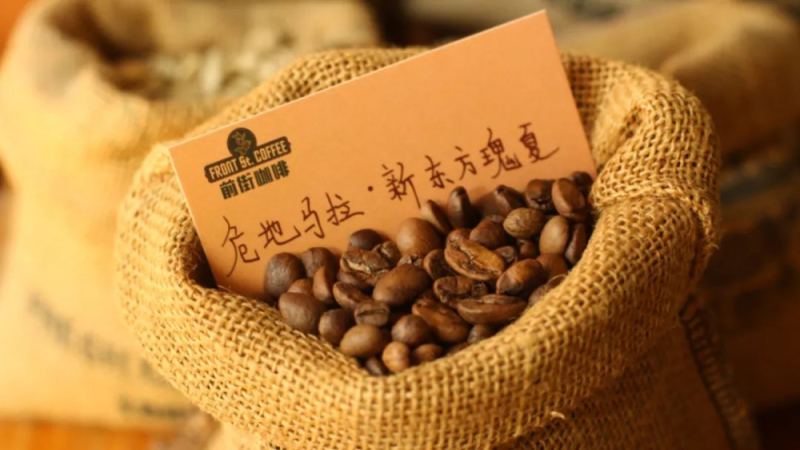
What makes New Oriente geisha coffee taste so distinctive?
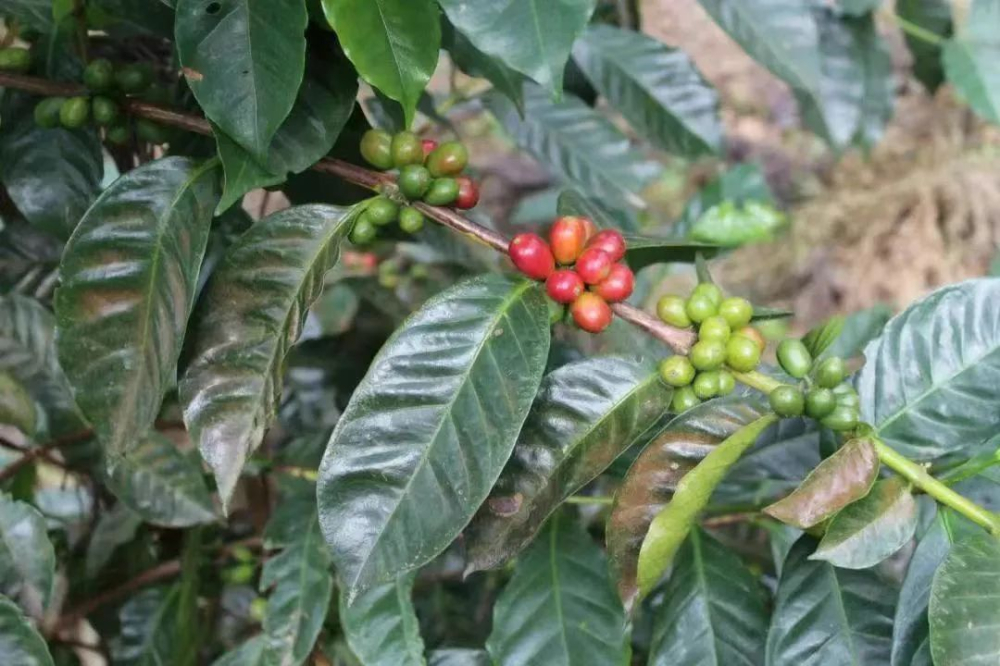
New Oriente is Guatemala's youngest coffee region, and its high altitude, volcanic metamorphic soil, and heavy rainfall give geisha coffee grown there a complex profile. The honey-processed, medium-light roasted beans from Front Street show sweet orange, magnolia, citrus, and toffee notes. The region sits between 1,500 and 2,050 meters, within Guatemala's eight official growing areas.
Guatemala's coffee regions are administered by the Guatemalan Coffee Association (Anacafé), founded in 1960, which divided the country into eight areas by flavor and growing conditions. Geisha itself traveled from Ethiopia's forests to Hacienda La Esmeralda in Panama before spreading worldwide. New Oriente's rainy climate and volcanic soil now support some of the country's newer geisha plantings.
Guatemala's youngest coffee-producing region, New Oriente, with its high altitude, volcanic metamorphic rock soil, and abundant rainfall, provides a uniquely favorable growing environment for Geisha. This New Oriente Geisha brought to you by Front Street Coffee is honey-processed and medium-light roasted, presenting a complex flavor profile of sweet orange, magnolia, citrus, and toffee. This article will start with the layout of Guatemala's eight major producing regions, trace Geisha's comeback journey from Ethiopia to Hacienda La Esmeralda in Panama, and then delve into the specific brewing method and tasting performance of this bean, giving you a complete understanding of the unique charm of New Oriente Geisha.
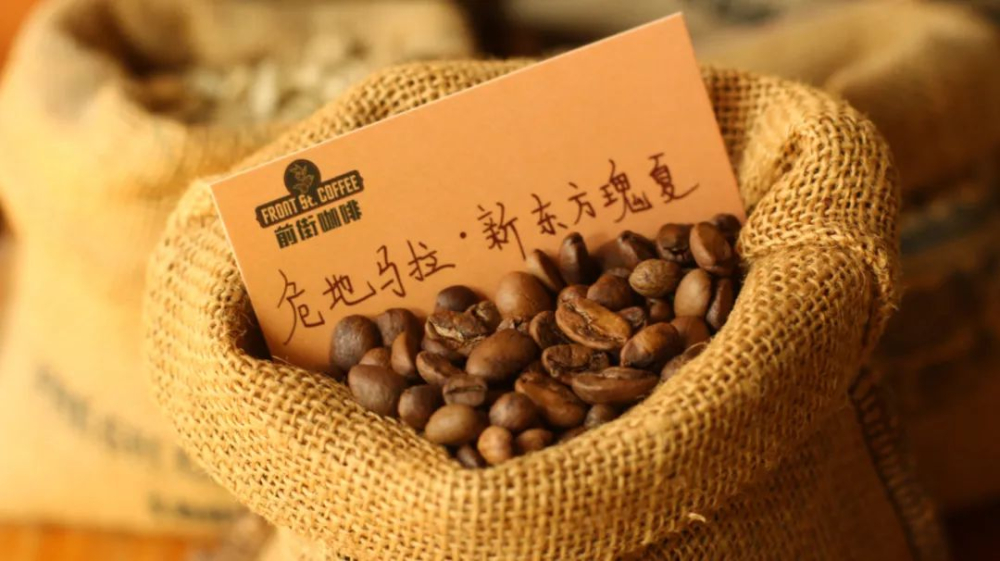
Front Street Coffee: Guatemala New Oriente Geisha Coffee Beans Country: Guatemala Grade: SHB Region: New Oriente Altitude: 1500-2050 meters Processing Method: Honey Process Variety: Geisha Flavor: Sweet Orange, Magnolia, Citrus, Toffee
Guatemala · New Oriente Region
The entire country of Guatemala lies within the tropical zone. Its northern and eastern coastal plains have a tropical rainforest climate, with annual rainfall reaching 2000 to 3000 millimeters; while the southern mountainous areas have a subtropical climate, with annual rainfall between 500 and 1000 millimeters. The year is divided into dry and wet seasons, with May to October being the wet season and November to April of the following year being the dry season.
It is worth mentioning that Guatemala is home to numerous volcanoes, which means the country possesses large areas of volcanic soil suitable for coffee cultivation. This is precisely why coffee has become one of the important crops supporting the nation's economy.
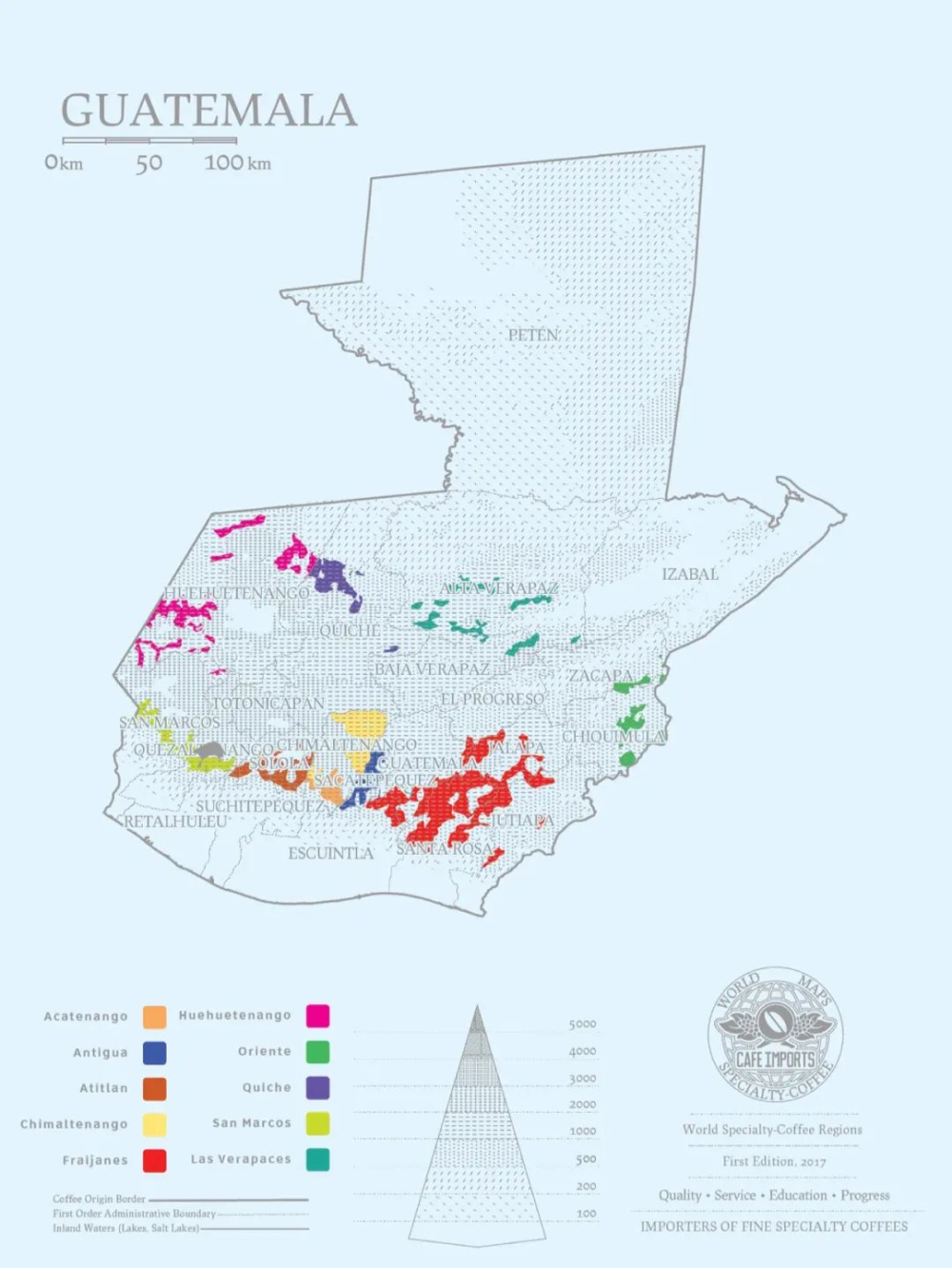
All coffee affairs in Guatemala are uniformly managed by the Guatemalan Coffee Association (Asociación Nacional del Café, or Anacafé). Founded in 1960, the association divides the country's coffee regions into eight producing areas based on coffee flavor and growing conditions: Antigua Classic, Huehuetenango, Rainforest Coban, Traditional Atitlan, Fraijanes Plateau, Volcanic San Marcos, Acatenango, and New Oriente. The focus of this article is precisely the youngest of them all — the New Oriente region.
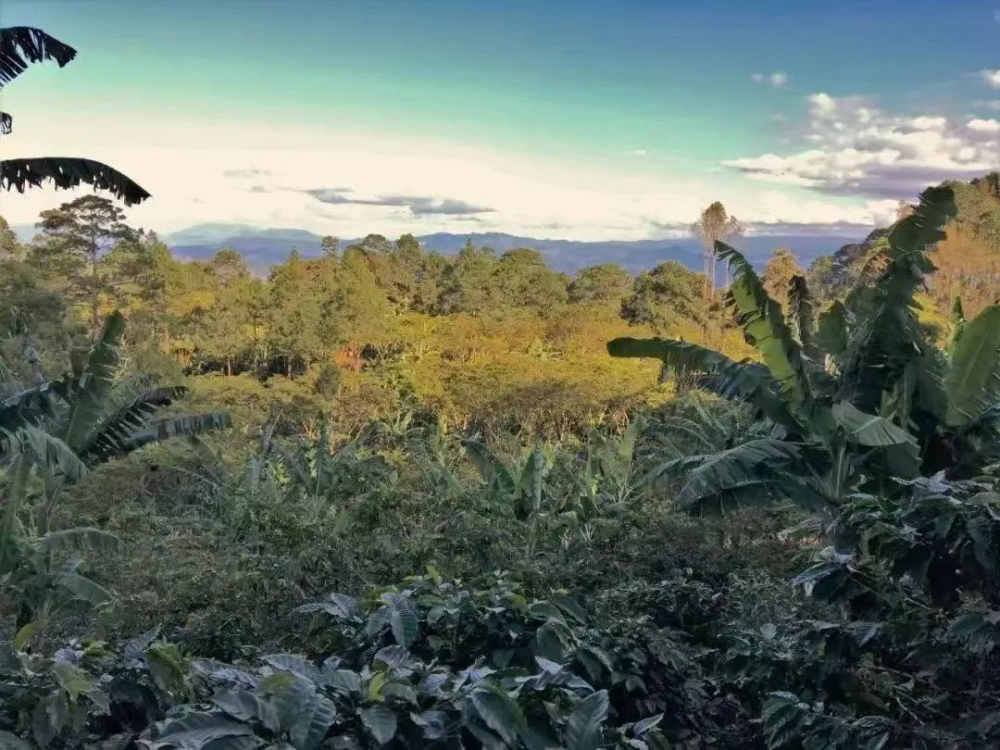
New Oriente is Guatemala's youngest coffee-producing region, with abundant rainfall year-round. Combined with its relatively high altitude, this area is often shrouded in fine mist from dense cloud cover, resulting in relatively short sunshine hours.
In ancient times, New Oriente was a volcanic activity zone, so its soil is composed of metamorphic rock with extremely rich mineral content. It can be said that this region possesses quite ideal conditions for coffee cultivation. Therefore, the Geisha produced here not only carries the excellent genetic heritage of the variety but also benefits from the multiple advantages bestowed by the region, and its flavor performance is naturally not to be underestimated.
Guatemalan Geisha
In 1931, Geisha was discovered in the Kaffa Forest of Ethiopia. But at that time, the coffee industry still prioritized quantity over quality, and the low-yielding Geisha held no exploratory significance for people then, let alone receiving any attention. Thus, Geisha, which should have been pursued like gold, remained obscure and adrift for over seventy years.
In 1936, Geisha was introduced from Ethiopia to Uganda and Tanzania; in 1953, it crossed the ocean from Africa to Costa Rica in Central America; in 1970, Costa Rica's Geisha was brought to neighboring Panama. After that, as the specialty coffee wave emerged, people began to focus on the flavors presented by coffee itself, gradually shifting from pursuing yield to pursuing quality, and only then did Geisha usher in its moment of revelation.
In 1990, when the Peterson family, owners of Hacienda La Esmeralda, were inspecting damage caused by leaf rust, they noticed that the Geisha plants in the corner had not been heavily affected by the disease. They quickly moved the Geisha and other undamaged varieties to higher altitudes for mixed cultivation.
It was not until 2003 that they tasted a cup of coffee in a cupping session that was brimming with floral aromas, combined with bright, rich layers, and an overall very clean presentation. They immediately launched an investigation into that batch of coffee beans, examining them one by one, and discovered that this stunning flavor actually came from that inconspicuous low-yielding plant.
Astonished, the people at Hacienda La Esmeralda immediately set aside a dedicated plot for it and named it "Geisha" (previously known as variety T2722), then entered it into the BOP competition.
In 2004, Hacienda La Esmeralda completely overturned people's preconceptions about Geisha. Geisha won the championship at the competition by an overwhelming margin, and everyone present was stunned by its rich white floral aroma.
If you had been there at the time, you would have seen a panel of judges frowning, repeatedly tasting a single coffee. Because they simply could not believe that Panama could produce such a bean — one that carried citrus honey notes, yet possessed such intense floral aromas, and above all, extremely high cleanliness. You see, at that time, coffee beans from Central and South America were generally dominated by nutty and cocoa notes, to the point that they even suspected someone had entered Yirgacheffe beans under a false name.
This remarkable feat attracted many countries to introduce Geisha to their own lands, and Guatemala was one of them. So today, Front Street brings you precisely a Geisha from Guatemala's New Oriente region. We have given this bean a medium-light roast to better showcase the terroir of the region and the distinctive flavors of the Geisha variety.
Front Street Coffee Brewing Recommendations Dripper: V60 Water Temperature: 92℃ Dose: 15g Coffee-to-Water Ratio: 1:15 Grind Size: Fine sugar consistency (80% passing through a No. 20 sieve)
First, fold the filter paper and fit it into the dripper, wet it with a small amount of water to make it adhere better, and discard the water in the server. Then add the coffee grounds and gently tap to distribute the bed evenly. For the first pour, gently add 30 grams of water for blooming, with a bloom time of 30 seconds; for the second pour, add water to about 135 grams, maintaining a steady, even circular motion outward. Then wait for the coffee liquid to drop, and when the level drops to halfway, add the final pour of water up to 225 grams. After all the coffee liquid has dripped through, the total extraction time is typically about 2 minutes.
Brewing Performance: When sipping at the start, the first thing that presents itself is the classic "sweet orange" flavor of the Guatemalan region, accompanied by toffee sweetness and delicate white floral notes. At medium to low temperatures, a distinct honey-like mouthfeel emerges, and the sweet orange transforms into bergamot with a slight tartness, making the layers of the entire cup even more complex and varied.

Front Street Coffee
No. 10 Baoqian Street, Yandun Road, Dongshankou, Yuexiu District, Guangzhou, Guangdong Province
The above content is compiled by CoffeeHunters, a coffee news website.


