








Can rural coffee succeed? Lessons from a mountain village café
A café converted from an earthen house in an old village outside Beijing draws about 150 regulars on ordinary days, 400 on weekends, and up to 700 people at peak times, filling nearly 300 parking spaces. Its success rests on choosing a tourist destination, turning the mountain setting itself into a photo-worthy landmark, and stacking camping and team-building offerings on top.
Rural coffee is not automatically profitable. Inconvenient transport, limited village spending power, and low repeat visits from tourists have already closed many early ventures. The operators who last tend to treat the shop as a one-off destination business rather than a neighborhood café, which means equipment choices, staffing, and how to use a coffee pot or other gear all have to match unpredictable rush periods.
As the urban coffee market gradually saturates and rents keep climbing, a group of coffee people have turned their gaze to the countryside. Some have converted earthen houses in old villages on the outskirts of Beijing into cafés built along the mountain slopes. On ordinary days they have 150 regulars; on weekends 400 people pour in; at peak times they serve 700 people a day and fill nearly 300 parking spaces—and they even topped the camping-site saved list. Yet rural coffee is not paved with gold everywhere: inconvenient transport, limited spending power among villagers, and low repeat-visit rates among tourists have already sunk many pioneers. Through the success story of one coffee shop on a barren mountain, this article analyses a viable operating path for rural coffee: choose a tourist destination and run a one-off business, turn the unique environment itself into an Instagram-worthy landmark, and stack on compound offerings such as camping and team-building.
▲
Click to follow | Daily specialty coffee culture magazine Coffee Workshop
Not long ago, a netizen earnestly asked online: if you opened a coffee shop in a village, could you make money? The comment section immediately came alive, with everyone joking about it: early in the morning a village uncle comes to buy an Americano, drinks it and goes off to hoe the fields; at night he's so wired he can't sleep, gets up and keeps turning the soil—his already tough days now come with a bit of extra tossing and turning.
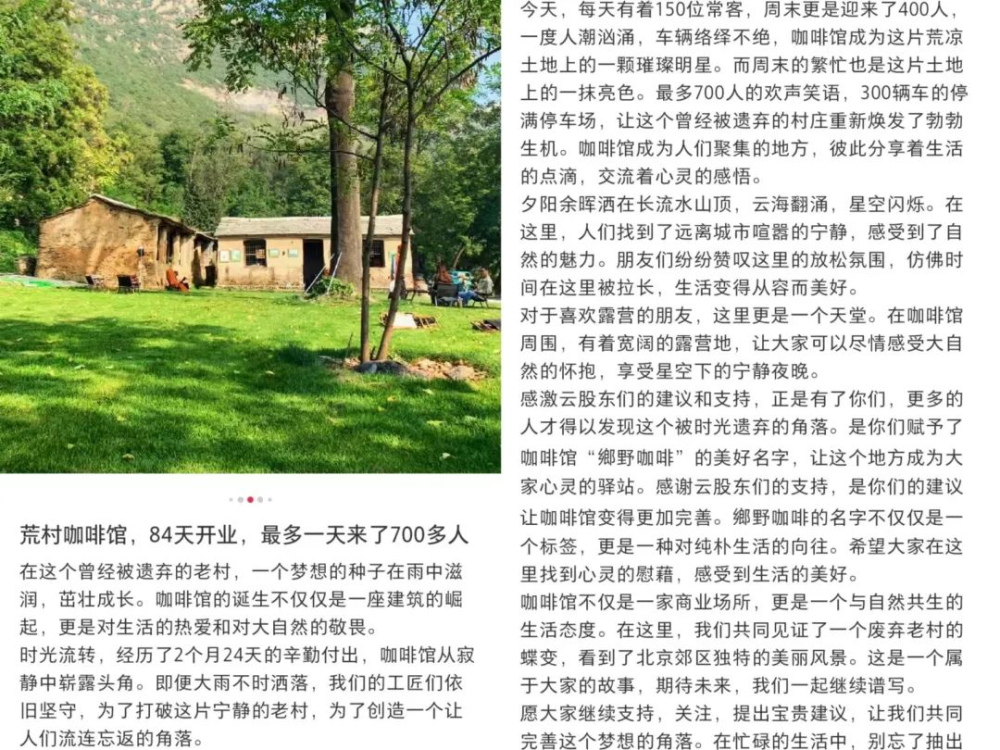
Just as everyone was still stuck at the joking stage, someone had already taken the first step. Recently, a netizen recounted on social media their experience of opening a coffee shop. Unlike those stores that "go wherever the crowds are," this one deliberately chose an old village in Beijing, built along the mountain terrain, reachable only after a bumpy ride along a winding mountain road. The coffee house was converted from an old-style earthen house, with a very strong rustic flavour.
According to a post the owner published on Xiaohongshu, this coffee shop hidden on a barren mountain is actually doing quite brisk business: on ordinary days 150 regulars come by, on weekends it can draw 400 people, and on its busiest day it received 700 people, with nearly 300 cars in the car park.
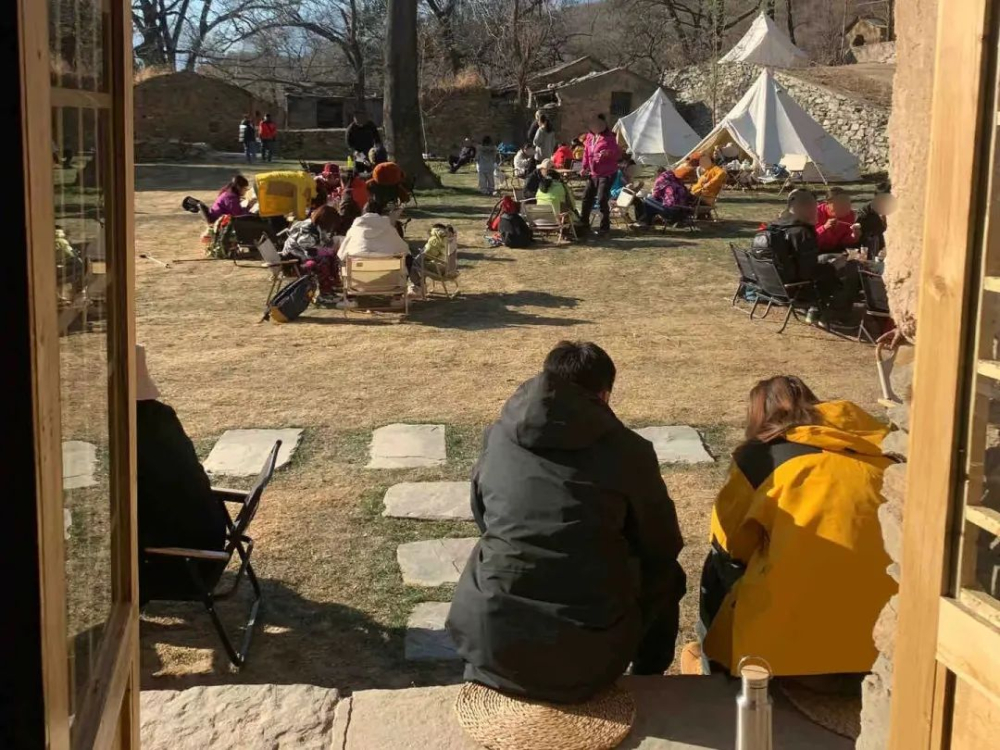
Because the photos posted didn't show any crowds, some fellow coffee-industry people in the comments doubted the figure of "700 people in a day," leaving messages like: "When there are over 700 people, can you spare a moment to snap a photo and show me? Really curious about such a spectacular scene."
The owner explained that at the time they were simply too busy to take photos, but the figure had already been included in data statistics by the local culture and tourism authorities during the red-leaf festival, to prove the claim was not exaggerated, and also posted a photo taken on the spot. Quite a few netizens on Xiaohongshu also posted that on weekends there really were a great many people and cars going to this shop.

It is understood that this owner doesn't just sell coffee but has also expanded into "side businesses" like camping, in order to accommodate more guests. From a social platform's food, drink and entertainment rankings that the owner shared, this coffee shop took first place on Beijing's camping-site saved list—firmly the number-one ranking.

Recently, the concept of rural coffee has been quite hot, with one "village-entrance coffee" and "countryside coffee" after another popping up, opened in inconspicuous corners of small villages. These owners' initial ideas were all quite simple: first, to escape the fiercely competitive coffee market; second, to avoid high-rent urban core locations; third, to hold the dream of being promoters of a blend of old and new: "Getting the whole village to drink coffee is a mission coffee people cannot escape."
But the reality is that, constrained by the target customer base and travel distances, villagers who live nearby are rarely willing to spend the cost of a family meal on a cup of a drink, while customers who are willing to pay won't make a special long trip just for this. Ideals are丰满 but reality is骨感—the first batch of shops that tested the waters of rural coffee have already suffered plenty. A casual search on social platforms shows most such coffee shops are operating at a loss, and countless more have quickly shut down.
Still, for rural coffee, the appeal of "low investment, broad market" is genuinely strong. As the Yangtze's rear waves push the front waves, though many of the front waves have already been left stranded on the beach, plenty of people are still itching to try a rural coffee shop. Just how can you avoid losing money and closing down—is there a workable path? As things stand, most rural coffee owners still hanging in there have chosen a very clever route: open the shop in an area with developed tourism. Since customer loyalty is hard to guarantee, boldly run a "one-off business" instead. It doesn't matter if villagers don't drink coffee; tourists will always be willing to pay for a souvenir.
Then there's the approach in the original post: find a place with good scenery, use plenty of distinctive landmarks, and turn the coffee shop itself into a photo spot. As that owner put it: "A unique environment has lasting value; the café itself does not, but because it's in this environment, it gains lasting value." In addition, you can stack on various ancillary business models, such as "coffee + camping," "coffee + team-building," "coffee + photos" and so on, combined with promotion, so that consumers come "specifically for me."
Anyway, a morning Americano really does wake you up quite a bit. Enough said—I'm off to turn the soil.
(Adding a few doge emojis to save my skin)
Image source: Internet
Disclaimer: Some images in this article are from the Internet. For some content on the website, such as images, we respect the original authors' copyright and will indicate the source. However, due to the large quantity, a few images and texts may not have been credited in time; please forgive us. If the original author has any dispute, they may contact the website and we will handle it; once verified we will correct it immediately. Compiled and edited by "Coffee Workshop"; please indicate the source when reposting. If there is any infringement, please inform us for deletion. Thank you~!
The above content is compiled by CoffeeHunters, a coffee news website.


