







Is americano coffee bitter when ginseng is added?
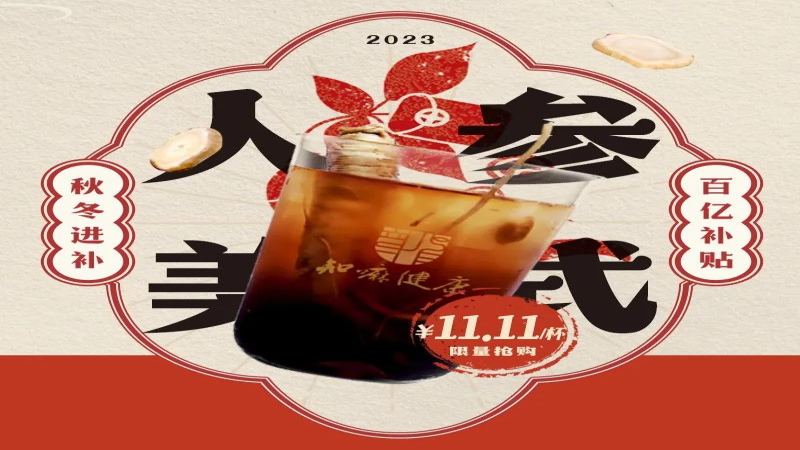
Tmall partnered with Tongrentang's subsidiary Zhima Health to release a limited-edition Ginseng Americano for Double Eleven, priced at a subsidized 11.11 yuan per cup with 5,000 cups available. Each cup steeps a whole fresh ginseng root and also contains licorice and longan. The vendor advises adults to drink no more than one cup per day.
The launch continues a wave of medicine-and-coffee pairings that had seemed to fade. Beyond whether americano coffee taste bitter or sweet when herbal ingredients are added, the product raises questions the industry has not settled: additive standards for such drinks remain unclear, and the source of the ginseng is not fully transparent, so buyers should weigh novelty against those gaps.
When "Double Eleven" meets a time-honored pharmaceutical company, a cup of ginseng Americano makes a stunning debut. Tmall teamed up with Tongrentang's subsidiary Zhima Health to launch a limited-edition "Ginseng Americano," each cup containing a whole fresh ginseng root, at a subsidized price of just 11.11 yuan. Following previous waves of various "medicine coffees," this move has once again drawn attention. Besides ginseng, the drink also includes Chinese medicinal ingredients such as licorice and longan, and the vendor simultaneously reminds customers not to drink more than one cup per day. However, issues such as the lack of additive standards in the industry and unclear ginseng sources have also surfaced, meaning consumers should be extra cautious while trying something new.
▲
Click to follow | Daily specialty coffee culture magazine Coffee Workshop
"Healthy living, accompanied by ginseng" "Drink, ginseng Americano. Enjoy, life's pleasures."
"New formula for autumn and winter nourishment = fresh ginseng + pure coffee"
Seeing these promotional slogans, you've probably already caught on—yep, another "medicine coffee" has recently come out to stir things up!
Not long ago, to ride the "Double Eleven" wave, Tmall teamed up with Tongrentang's subsidiary Zhima Health to launch a pretty hardcore co-branded new product—Ginseng Americano, sold at a subsidized price of 11.11 yuan per cup, limited to 5,000 cups.
I originally thought the trend of pairing Chinese medicinal ingredients with coffee had long passed its peak, and the popularity of wellness coffee had faded considerably, but who would have thought that with the team's painstakingly crafted "tacky copywriting" and that bit of "damn curiosity," this cup of "ginseng coffee" still got some consumers to try it on their own initiative.
According to Zhima Healthy Life, this doubly nourishing Americano not only contains ginseng but also adds Chinese medicinal ingredients like licorice and longan, with each cup steeping a whole extra-large fresh ginseng root, all sourced from cultivated harvests of 5 years or less.
Regarding the "efficacy" of the ginseng Americano, the official account also thoughtfully provided a reminder: "Ginseng Americano is good, but don't be greedy." Adults are advised not to drink more than 1 cup per day; if chewing, moderation is needed, not exceeding 10–12 grams per day. Pregnant women and those with fever or excess internal heat should not consume it, and it's said that over-supplementing may cause nosebleeds.
Perhaps because Tmall and Tongrentang's collaboration broke the ice, while searching for materials, I found that many places have also started "following the trend," tossing dried ginseng roots covered in fibrous roots directly into coffee to steep, playing punk wellness under the banner of "life extension + health preservation."
From the industry's current state, the entire food and beverage sector currently has no clear industry standards for the dosage of health-preserving ingredients added, so everyone is better off being cautious when tasting this kind of "medicine coffee." In this regard, a Chinese medicine student mentioned that vendors have not specified which type of ginseng is used in terms of materials, since different sources mean different prices, quality, and pharmacological effects. If this type of drin k uses real gin seng, then is it suitable for everyone to consume ? You know there's a saying that goes, medicine is three-parts toxic.
As for how this "tonic" actually tastes—whether it's bitter medicine that's good for you, or "fighting bitterness with bitterness = not bitter," or whether you'll just "meet your maker" right after drinking it—only those who've tried it personally would know. But looking at that cup of coffee with ginseng steeped in it, doesn't it look like a bowl of dark medicinal soup that accidentally had a piece of herbal medicine dropped into it? Regardless of whether it tastes good or not, the repeat-drink index probably isn't very high.
Additionally, as more and more time-honored Chinese medicine brands join the coffee-selling ranks, a series of highly contrasting Chinese medicinal coffee products keep emerging. Later, because the whole internet was imitating and making them at home, everyone gradually became "numb" to them.
Disclaimer: Some images in this article are sourced from the internet. For some content on the website, such as images, we will respect the original creator's copyright and indicate the source. However, due to the large volume, some images and texts may not have been attributed in time; please forgive us. If the original creator has any disputes, they can contact the website for resolution, and once verified, we will immediately correct it. Compiled and edited by "Coffee Workshop." Please indicate the source when reposting. If there is any infringement, please inform us for removal. Thank you~!
The above content is compiled by CoffeeHunters, a coffee news website.


