







How is coffee cultivation expanding across Sri Lanka?
Sri Lanka's coffee cultivation area has climbed steadily from 4,690 hectares at the start of this century, and the government plans to reach 5,263 hectares by 2025. The Market Development Facility has worked with the local industry since 2017, and the Lanka Coffee Association was founded in 2021, hosting national coffee festivals since.
The island is known for Ceylon black tea, but its central highlands offer altitude and climate suited to arabica coffee, supported by decades of government investment in plantation infrastructure. Production and exports remain small, yet the growth trend is clear, and coffee is being positioned as a complement to tea rather than a replacement for it.
Sri Lanka is renowned worldwide for Ceylon black tea, but few people know that this Indian Ocean island nation also has a long history of coffee cultivation and exceptional geographical conditions. In recent years, with government policy support and backing from international organizations, Sri Lanka's coffee industry is experiencing a revival. Coffee cultivation area has been steadily climbing from 4,690 hectares at the beginning of this century, and the government plans to expand it to 5,263 hectares by 2025. The Market Development Facility (MDF) has been deeply involved in the local coffee industry since 2017, and the Lanka Coffee Association was also established in 2021 and has held consecutive national coffee festivals. This article will trace the revival path of Sri Lanka's coffee industry, the challenges it faces, and its future direction of development, taking you through how this kingdom of tea is rediscovering the aroma of coffee.
Sri Lanka is located on the Indian Ocean south of the South Asian subcontinent and is an island nation abundant in natural resources, with rich agriculture, forestry, fishery, and hydropower resources. The country's economy is dominated by a plantation model, with tea, coconut, and rice being the most important crops. Among them, the locally produced Ceylon black tea enjoys the reputation of being "one of the world's three great black teas."
Although tea has long been Sri Lanka's pillar industry, thanks to decades of sustained government investment, infrastructure development for tea production, and policy support, Sri Lanka also has a historical foundation as a coffee-producing country. Combined with favorable geographical conditions and the high-altitude advantages of the central highlands, this has laid a solid foundation for the revival of Arabica coffee cultivation.
Currently, Sri Lanka's coffee production and export scale remain limited, but the growth momentum is very notable. At the beginning of this century, only 4,690 hectares of land nationwide were used for coffee cultivation, and the government has formulated plans to expand this figure to 5,263 hectares by 2025.
The Market Development Facility (MDF) has maintained close cooperation with Sri Lanka's coffee industry since 2017, driving growth plans and supporting the development of the local coffee cultivation industry. MDF is a multi-country initiative funded by Australia's Department of Foreign Affairs and Trade, aimed at promoting sustainable economic development in the Pacific region, including Sri Lanka. According to MDF estimates, Sri Lanka's coffee production is expected to double within the next five years. At the same time, as the coffee industry continues to advance, the Lanka Coffee Association (LCA) was officially established in 2021, held its first national coffee festival in 2022, and successfully held its second in 2023.
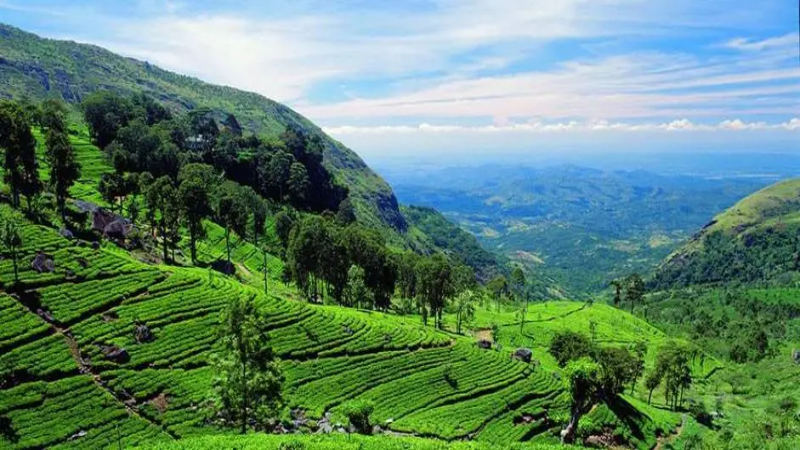
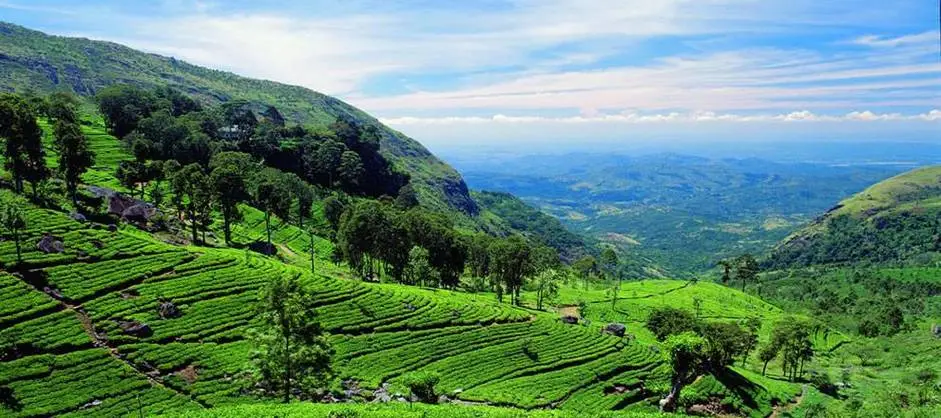
Sri Lanka's mountainous terrain and warm climate provide an ideal growing environment for Arabica coffee. Combined with continuously rising global coffee demand, these factors have jointly prompted Sri Lanka to resolve to re-enter the coffee production sector, focusing on quality improvement and market development. However, since the country's tea industry has developed for over a century and the coffee industry has long been neglected, structural and systematic improvements are still needed in cultivation methods, coffee quality, and processing.
To further support the development of Sri Lanka's coffee industry, MDF has specifically formulated a guidance plan and intends to invest in four key areas. First, expand the scale of coffee farms by converting some abandoned tea plantations into coffee plantations. Second, expand smallholder networks to promote communication and collaboration within the industry. Third, develop coffee processing capacity to achieve stricter quality control. Fourth, introduce and improve barista training programs. Sri Lankan baristas urgently need more systematic training and skill enhancement. By participating in international barista competitions, they can bring coffee with Sri Lankan characteristics to the global stage and increase its exposure.
Since approximately 80% of Sri Lanka's coffee beans are produced by smallholder farmers across the country, management poses certain difficulties. However, the Sri Lankan government is full of confidence in this and is intensifying efforts to promote the development of the coffee industry. It can be foreseen that more coffee products from Sri Lanka will appear in the international coffee market in the future.
Disclaimer: Some images in this article are from the internet. For some content on the website, such as images, we will respect the original author's copyright and indicate the source. However, due to the large quantity, some images and texts may not have been credited in time. We ask for your understanding. If the original author has any disputes, they can contact the website for handling. Once verified, we will immediately correct it. Compiled and edited by "Coffee Review vdailycom." Please indicate the source when reposting. This article is intended to spread coffee culture. If there is any infringement, please inform us for removal. Thank you~!
The above content is compiled by CoffeeHunters, a coffee news website.


