








How does the coffee tree growing environment shape flavor?
About 70 percent of a cup's flavor comes from the genetic makeup of the variety, and the remaining 30 percent comes from the growing environment: latitude, altitude, soil, sunlight and humidity. Two beans of the same variety grown in different countries, processed and roasted the same way, still taste different because of these conditions.
Most coffee trees grow in the tropical belt between the Tropic of Cancer and the Tropic of Capricorn, where temperatures stay at 16 to 25 degrees Celsius and rainfall reaches 1600 to 2000 mm. Altitude matters too: temperature drops 0.6 degrees Celsius per 100 meters gained, slowing growth and letting nutrients accumulate for richer flavor.
Baristas often mention the word "terroir"—what exactly does it mean? About 70% of a cup of coffee's flavor is determined by the genetic makeup of the variety, while the remaining 30% comes from the natural conditions of the growing region—latitude, altitude, soil, sunlight, and humidity all working together to give coffee from different origins distinctly different flavor profiles. This article will examine these five dimensions to analyze how the environment affects coffee's sweet-tart balance and full-bodied texture, and help you understand why high-altitude beans have richer flavors and why volcanic soil can give coffee a unique acidic aroma.

About 70% of the flavor and mouthfeel that a cup of coffee ultimately presents depends on the genetic makeup of the coffee bean variety itself, while the other 30% comes from the natural environment in which it grows—including a series of conditions such as latitude, altitude, soil type, sunlight duration, temperature, and humidity.
In other words, although varietal genetics are the foundation, the geography and climate of the growing region must never be overlooked. It is precisely these factors that allow coffee from a certain origin to distinguish itself from other origins and form a unique flavor signature, and what we often call the taste of "terroir" refers to the sum of these characteristics.
For example: two beans of the same variety grown in different countries, even if processed in the same way and roasted to the same degree, will still differ in their final flavor expression because of differences in the growing environment.
Latitude
The vast majority of the world's coffee-growing regions are distributed in the tropical belt between the Tropic of Cancer and the Tropic of Capricorn (including the equatorial region). Here, temperatures remain at 16–25°C year-round, there is no threat of frost, and annual rainfall is abundant, reaching 1600–2000 mm. In coffee circles, this region has been given a resounding name—the "Golden Growing Belt."
Altitude
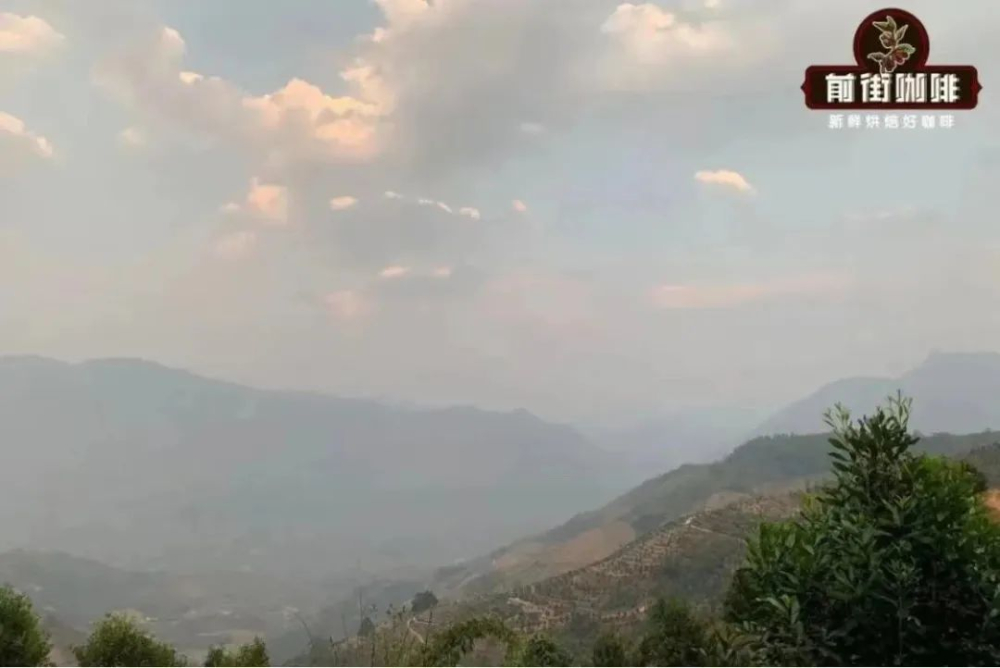
The lower the temperature of the growing environment, the slower the coffee grows, giving it more ample time to accumulate nutrients and ultimately resulting in a richer flavor expression. Research data shows that for every 100 meters of increase in altitude, the temperature drops by 0.6°C.
Therefore, higher altitude means a colder climate. In high-altitude environments, coffee's growth pace is greatly slowed by low temperatures. For every 300 meters of increase in altitude, the sucrose content in coffee cherries rises by 10%. During roasting, these sugars undergo chemical reactions that can generate more aromatic compounds, mainly acidic types. This also explains why beans from high-altitude origins have fuller flavor and brighter acidity.
Soil
The soil of the growing region directly affects coffee's body and acid content, thanks to the minerals contained in the soil. Among these, the most representative is "volcanic soil."
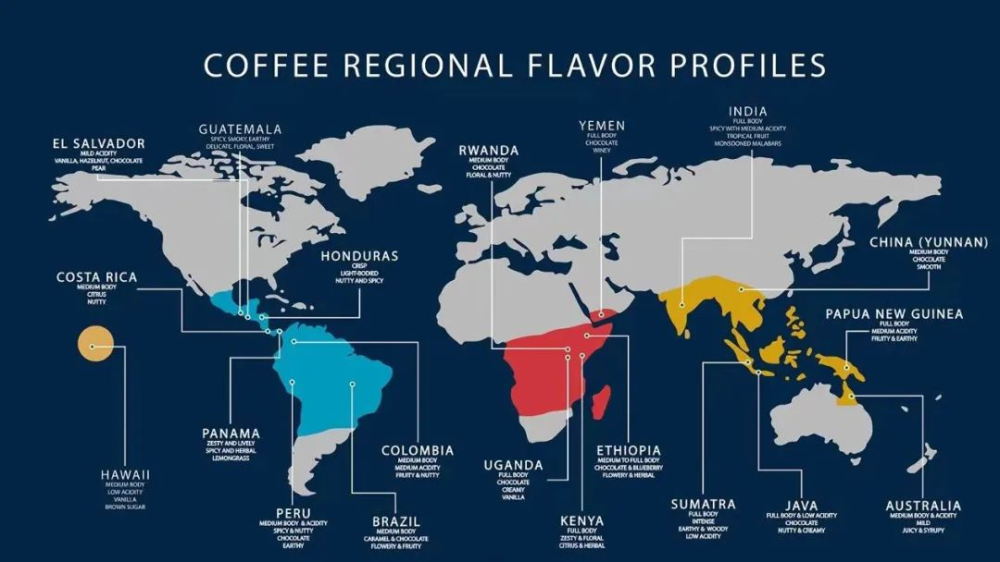
Volcanic soil is rich in high concentrations of sulfuric acid and sulfides, as well as large amounts of potassium, all of which are important drivers of the acidic aroma in coffee. Taking Kenyan beans as another example, the reason we can taste a rounded acidity reminiscent of cherry tomatoes in them is that, in addition to the washed processing method, another key factor is the abundance of phosphoric acid in the local soil.
Sunlight
It was mentioned earlier that low temperatures slow down coffee's growth rate, so higher temperatures naturally produce the opposite effect—this is the role of sunlight. The heat brought by sunlight is enough to shorten the coffee bean's growth cycle and accelerate ripening.
If coffee beans ripen before their nutrients have been fully accumulated, the brewed coffee will inevitably be bland and unremarkable. To solve the problem of excessive sunlight, people came up with the method of planting taller trees above the coffee trees (commonly known as shade trees), thereby greatly reducing sunlight exposure, slowing the growth rate, and harvesting more delicious coffee.
Humidity
A high-humidity environment helps increase the production of malic acid and sugars in the coffee pulp. These substances formed in the pulp are ultimately absorbed by the coffee beans. Especially with special processes such as honey processing and anaerobic processing, the beans can take in more sugars and ultimately present a full, juicy sweet-tartness.
Front Street Coffee (FrontStreet Coffee)
No. 10 Baoqian Street, Yandun Road, Dongshankou, Yuexiu District, Guangzhou, Guangdong Province
The above content is compiled by CoffeeHunters, a coffee news website.


