







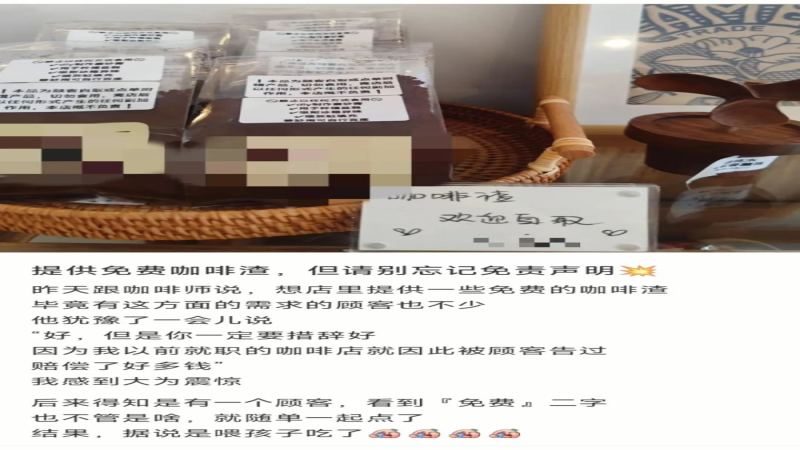
Why do free coffee grounds need a disclaimer?
Coffee shops that give away used coffee grounds for deodorizing or fertilizing have run into disputes over labeling. In one case a customer saw the word free, added the item without checking what it was, and fed the coffee grounds to a child. A barista was then complained about and asked for compensation over the wording.
Customers noted that coffee grounds can look like a cookie, and one said a coffee scrub soap was eaten because it was not labeled. The lesson is that shops handing out grounds should mark the intended use clearly, which helps people use them correctly and limits the risk of the same misunderstanding.
Coffee grounds, when properly handled, have many uses such as deodorizing and fertilizing, so many customers ask coffee shops for them. Some shops are also happy to provide them for free. However, this seemingly simple act of goodwill can trigger disputes between shop owners and customers. A netizen posted a suggestion that a disclaimer should be attached when providing free coffee grounds, because a barista was once complained about and asked for compensation by a customer over wording issues—the customer saw the word "free" and ordered without understanding what the item actually was, and ultimately fed the coffee grounds to their child. This incident sparked widespread discussion and also reminds shops that when providing added items, they need to clearly label their intended use, which both helps customers use them correctly and avoids unnecessary risks.
▲
Click to follow | Daily specialty coffee culture magazine Coffee Workshop
As everyone knows, coffee grounds have quite a few practical uses if handled properly. Precisely because of this, many customers ask the shop for some coffee grounds while consuming at a coffee shop, and some shops, seeing that customers have this need, also take the initiative to provide them for free. But unexpectedly, coffee grounds can actually become the trigger for conflict between shop owners and customers.
Recently, a netizen posted on social media suggesting that when providing free coffee grounds, a disclaimer should be labeled. Why is there such a suggestion? From the content of the post, when it comes to providing coffee grounds, the barista in the shop once encountered a situation where they were sued and asked for compensation by a customer because of "wording" issues. The cause of the matter was that when ordering, the customer saw the word "free" and added it to the order without figuring out exactly what it was, and in the end actually fed the coffee grounds to their child!
In response, some netizens expressed their views:
"Some coffee grounds really do look quite like a cookie..."
"Is it because they used food packaging bags to hold the coffee grounds, so they mistakenly thought it was something to eat?"
In the comments section, a netizen said they had a similar experience: "The coffee scrub soap I made was eaten by a customer..." At the time, they forgot to label the scrub soap, but wrote soap on the receipt.
Faced with the netizens' questions, the author of the post also offered their own thoughts: reusing coffee grounds is indeed quite eco-friendly, and customers have this need, so this option is provided. In addition, since our shop mostly handles delivery orders, pre-packaging the coffee grounds is clean and neat; when customers order, it is not only convenient to give out, but the grounds also will not spill during transport.
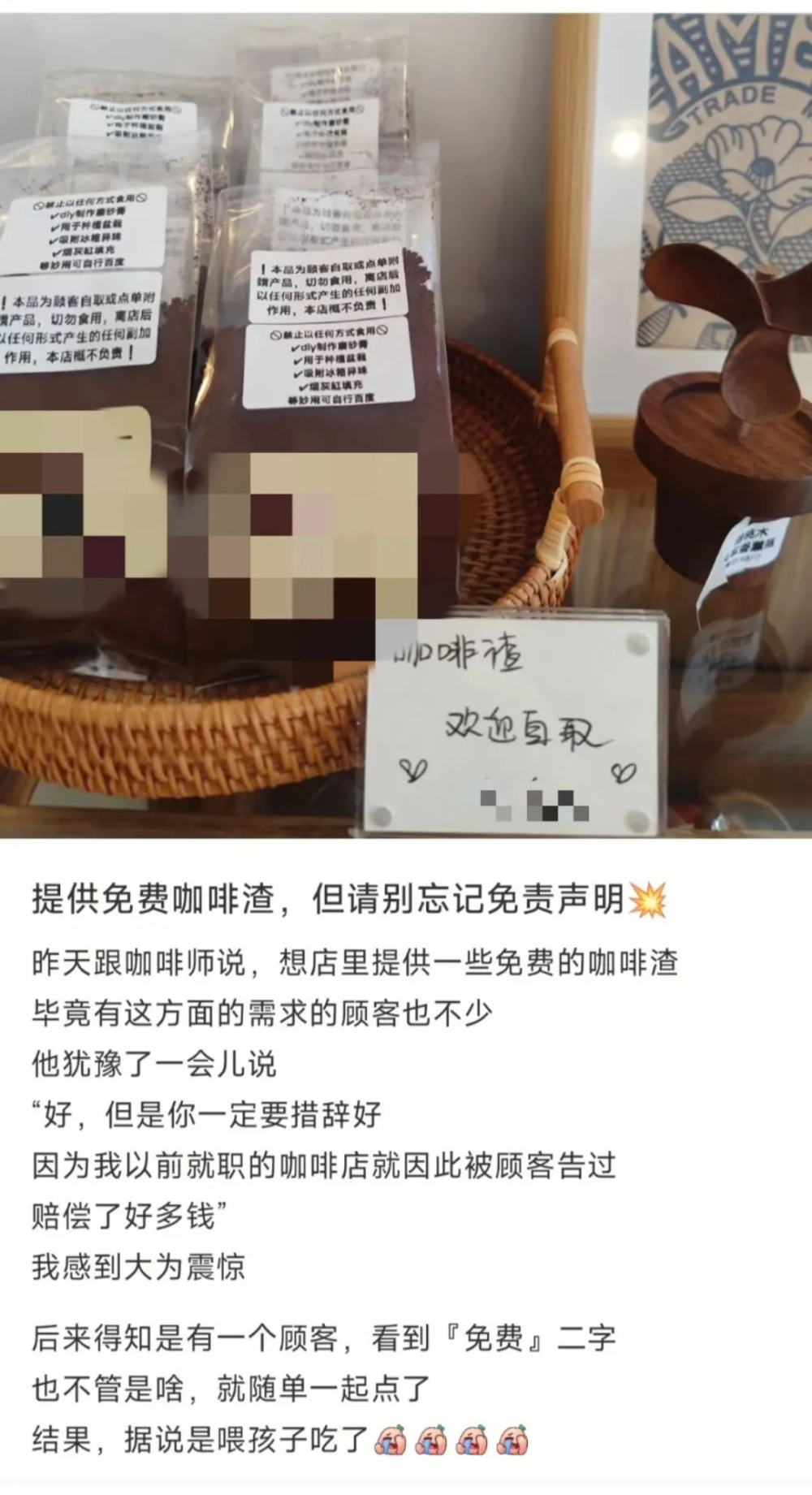
Then why does the situation of customers accidentally eating coffee grounds occur? Besides packaging reasons, what other factors are there?
Some people think it is a gap in perception: "Maybe the shape makes people mistake it for something to eat!" "So ridiculous..."
People ask for coffee grounds for their functions: removing odors, fertilizing plants, and even exfoliating dead skin cells... But before use, the coffee grounds must first be treated accordingly, such as drying or fermenting. Ignoring this step can lead to "failure." Since everyone has a different understanding of how to use them, the final results also vary greatly.
Some netizens also said: "Can't rule out deliberate scamming" "Suddenly I understand Luckin and Starbucks!"
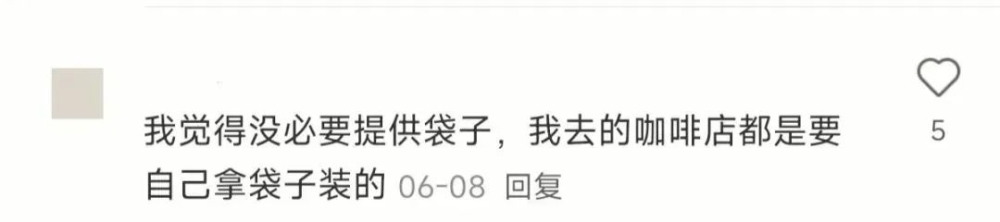
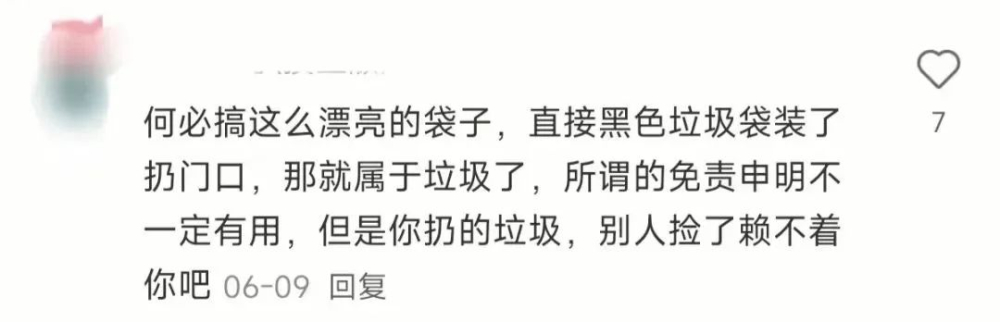
Finally, a netizen offered their own suggestion: "Attach the disclaimer to the packaging bag! Also give a verbal reminder, and make sure the shop's surveillance can record audio."
Behind every absurd rule is an absurd story. For these extra add-ons in the shop, adding a "disclaimer" can help the coffee shop avoid unnecessary risks. The shop has already considered writing the purpose on the packaging bag to remind customers. Consumers should also keep their eyes open when using products and clearly see the purpose, which is beneficial to both sides.
Disclaimer: Some images in this article are from the internet. For some content on the website, such as images, we will respect the original author's copyright and indicate the source, but due to the large quantity, there will be individual images and texts that have not yet been credited in time. Please understand. If the original author has any dispute, they may contact the website for handling. Once verified, we will correct it immediately. Compiled and edited by "Coffee Workshop." Please indicate the source when reposting. If there is infringement, please inform us for deletion. Thank you~!
The above content is compiled by CoffeeHunters, a coffee news website.


