







What rare coffee varieties grow on American coffee farms?
Beyond Caturra, Catuai, and Bourbon, several lesser-known varieties are now being planted on coffee farms across the Americas. Villa Sarchi, Venecia, Tekisic, and Bernardina have drawn attention through agricultural research programs and green bean competitions, and each brings distinct plant traits, disease resistance, and cup character worth understanding.
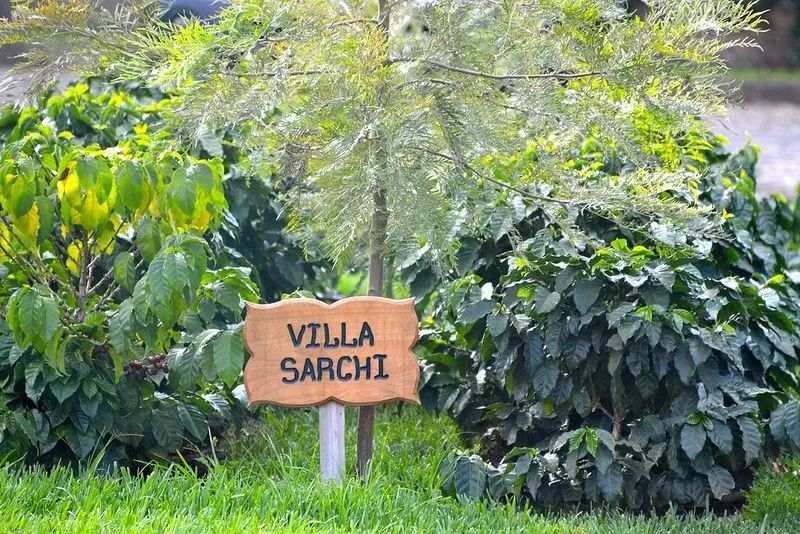
Villa Sarchi, a Bourbon mutation found in Costa Rica in the 1950s, has a short, wind-resistant plant suited to high altitudes but weak tolerance to leaf rust and berry disease. Every coffee enthusiast tracking variety diversity can follow how research institutes and competitions keep bringing these rare types into view, alongside familiar names like Caturra and Catuai.
For a long time, people's understanding of American coffee-producing regions has mostly remained on the three major varieties: Caturra, Catuai, and Bourbon. However, with the continuous investment of agricultural research institutions in various countries and the promotion of professional green bean competitions, a group of previously little-known excellent varieties is gradually coming into view. This article focuses on four rare coffee varieties in the Americas—Villa Sarchi, Venecia, Tekisic, and Bernardina—sorting out their discovery history, plant characteristics, disease resistance, and flavor performance, to help coffee enthusiasts gain a more comprehensive understanding of the diversity of American coffee varieties. Front Street Coffee will also combine the characteristics of these varieties to provide reference for daily bean selection.
In most people's understanding, the varieties planted in American coffee-producing countries are nothing more than Caturra, Catuai, and Bourbon. But in recent years, agricultural research institutions in various producing countries have continued to emerge, and with the promotion of various professional green bean competitions, more and more rare high-quality varieties have been discovered.
Villa Sarchi, also known in the industry as La Luisa or Villalobos Bourbon. It was first discovered in the 1950s in Sarchi, Costa Rica, and was developed through pedigree selection—that is, selecting a single plant over successive generations. Villa Sarchi is mainly grown in Costa Rica, but it has not been widely promoted. In 1974, the Honduran Coffee Institute (IHCAFE) introduced it to Honduras.
Villa Sarchi is a natural mutation of Bourbon. It has a short plant type (with dwarfism characteristics), outstanding wind resistance, and good adaptability to high-altitude environments, but it has relatively weak tolerance to common diseases such as coffee leaf rust, coffee berry disease, and root-knot nematodes. This variety has green tips, an angle of about 45° between the lateral branches and the main trunk, and tightly spaced fruit clusters. The fruit is resistant to wind and rain and not easy to fall off. In terms of flavor, Villa Sarchi usually shows bright and delicate citrus acidity, as well as a relatively complex fruity aroma.
Venecia is a natural mutation of Caturra discovered in the San Carlos area of Costa Rica's Central Valley, and was released by the Costa Rica Coffee Research Center (ICAFE) as a new Caturra line. Like Caturra, Venecia has a short plant, with the advantages of high yield, strong rain resistance, and good disease resistance. The coffee trees of this variety need three years before they begin to bear fruit, the bean size is relatively large, and the bean core is hard in texture.
In 1991, ICAFE began research and screening of this variety's coffee beans in Turrialba, Coto Brus, and Perez Zeledon in Costa Rica. After years of effort, it was finally found in the Perez Zeledon area that Venicia not only had a richer flavor, but also had better yield and resistance to pests and diseases.
Tekisic was developed by the Salvadoran Coffee Research Institute (ISIC) starting in 1949 and officially released in 1977 as a selected Bourbon variety. It took nearly thirty years to successfully breed. At present, this variety is planted in many coffee farms in El Salvador, and together with unimproved Bourbon, it accounts for about 70% of the country's total coffee production.
The name Tekisic comes from the Nahuatl word tekiti, meaning "work." It is not a mutation, but a Bourbon-line coffee. It is a potential variety intentionally cultivated by agricultural scientists through generations of selection from a large number of Bourbon plants, choosing excellent individuals that are strong, high-yielding, and also have good flavor. However, it has poor resistance to major diseases, including coffee leaf rust.
Bernardina was first discovered in 2015 at Los Bellotos farm on the western side of the Cerro Verde volcano in El Salvador. The farm is owned by the Pacas family, and the variety name comes from its discoverer, Ruperto Bernardino Merche. It truly entered the public eye at the 2019 El Salvador COE, when Finca La Esperanza's Bernardina made its debut and won third place. Many judges gave positive evaluations of it as transparent, delicate, and elegant.
According to genetic identification by an Italian laboratory, Bernardina is a new bean variety that had never been recorded before. It is a special hybrid variety containing 70% Geisha genes and 30% Agaro genes, an Ethiopian landrace. After returning to Finca La Esperanza, the Pacas family identified and found that there were a total of 46 trees of this new variety on the farm.
The above content is compiled by CoffeeHunters, a coffee news website.


