







Why is kopi luwak one of the most expensive coffee types?
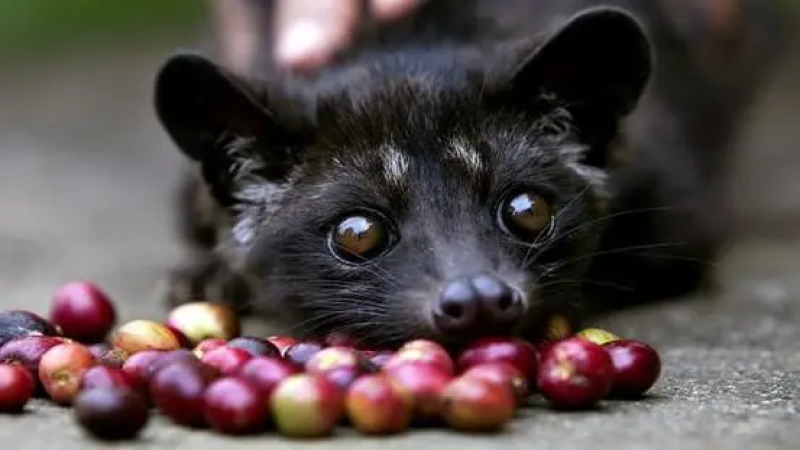
Kopi Luwak is made from coffee cherries eaten and excreted by wild civets in Indonesia, so it does come from animal droppings, though not from ordinary house cats. The beans are collected from the feces, washed, and roasted, and the result ranks among the most expensive coffee sold anywhere.
The story traces back to the 17th century, when Dutch colonists cultivated coffee on Java and local workers gathered the civet-excreted beans. Today the drink is known for its heavy fermentation flavor and dark roast profile, while captive farming has raised animal welfare concerns. Kopi Luwak has also become the most expensive coffee animal model that inspired other fermented coffees.
Kopi Luwak, just the name alone evokes both curiosity and a sense of resistance. Is it really cat excrement? The answer is: yes, it is, but not in the ordinary sense of cat poop. The raw material for this coffee comes from the feces of wild civets in the tropical rainforests of Indonesia, which, after washing and roasting, surprisingly becomes one of the most expensive coffees in the world. From its accidental discovery during the 17th-century Dutch colonial period, to the animal ethics controversies sparked by modern captive farming, and then to its unique heavy fermentation flavor and deep roasting process, Kopi Luwak has a complex and tortuous story behind it. This article will provide a complete overview of Kopi Luwak's origins, production process, flavor characteristics, and the other animal-fermented coffees it has inspired, while also reminding everyone to view this special beverage rationally.
Note: Rest assured, everyone, there's no need to specifically find a suitable time or place to read this article. Although it sounds a bit heavy on the palate, it's okay—none of the scenes you might imagine actually appear (probably), so go ahead and boldly scroll down!
Is Kopi Luwak really cat poop?
To be precise, yes, but also no! Because it is indeed a product made from cat excrement, but the cat referred to here is the civet that lives in tropical rainforests, not the pampered pet cats in the city. So, please, all you poop-scooping owners out there, stop your claws from reaching for your own cats!
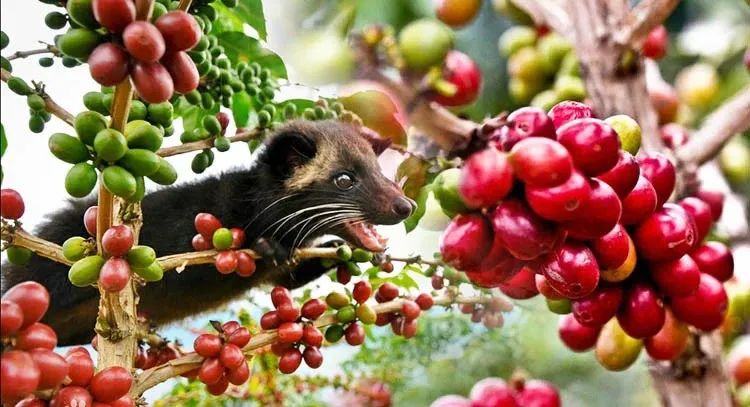
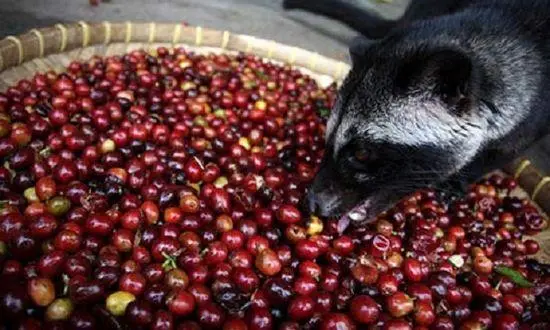
The civet (also known as the large Indian civet, fragrant cat, or nine-sectioned civet) is a unique omnivorous wild animal native to Indonesia. It eats everything, including coffee cherries! They swallow the coffee cherries whole, digest the skin and pulp in their stomachs, and then excrete the denser, harder-to-digest green coffee beans. And these excretions—yes, they are the raw material for "Kopi Luwak."
The Birth of Kopi Luwak
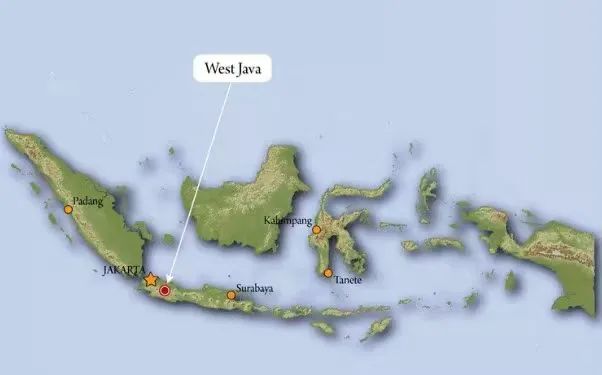
In the 17th century, the Dutch discovered the huge business opportunity in coffee, so they immediately set off for Indonesia to start coffee cultivation. And their first stop was the island of Java in Indonesia.
Since Java's climate and environment were very suitable for coffee plant growth, after many years, the Dutch made a fortune from the abundant coffee harvest. Having tasted success, the Dutch quickly spread coffee cultivation from Java to other islands.
The ones responsible for coffee cultivation were Indonesian laborers. Local coffee planting and processing were all carried out by them, but frequent contact inevitably sparked curiosity. So, the Indonesian laborers all wanted to taste what the coffee they grew was like. However, since these coffees were important goods to be shipped to Europe, the Dutch strictly forbade them from picking and drinking it on their own.
Although the Dutch could forbid the Indonesian laborers from picking coffee beans, they could not stop the wild animals that could not be reasoned with! Ripe coffee cherries attracted large numbers of wild civets. They would climb the trees, pick and eat the ripe red cherries, and leave behind the unripe green ones, which infuriated the Dutch. As a result, the Indonesian laborers' work increased! In addition to coffee cultivation, they also had to drive away these wild civets!
Then, one Indonesian laborer, following the traces of a civet, found several piles of wild feces mixed with green coffee beans at the base of a tree. Now this was a good opportunity—the urge to try coffee that had been suppressed for years made him reach out his hand toward these "objects" mixed with coffee beans!
He took these excretions home and washed them! He extracted the coffee beans mixed inside, then immediately grabbed a pan and "stir-fried over high heat" these coffee beans, ground them, and brewed the world's first cup of "specially" processed coffee. The experience was not bad, so the Indonesian laborer spread the story of Kopi Luwak locally. Then, as it continued to spread, Kopi Luwak spread from Indonesia to other countries!
At first, people regarded this heavy-flavored product with a wait-and-see attitude, but with more and more reports around it, Kopi Luwak quickly became famous! People completely changed their attitude and scrambled to taste the deliciousness of Kopi Luwak.
But the production was simply too small! One catty (500g) of wild civet feces could only produce 150g of green Kopi Luwak beans, and with roasting losses, the already scarce beans became even rarer. Rare things are precious, and the price of Kopi Luwak soared all the way, at its peak several times higher than Emerald Red Label, which led to the captive farming practices that everyone online condemns!
Coffee farmers capture and confine civets, feeding them only coffee cherries three meals a day to mass-produce! But civets are naturally timid and are not social animals, so keeping them in cages easily leads to territorial fights, injuries, infections, and cross-infections. This is why people online call for a boycott of Kopi Luwak!
What does Kopi Luwak taste like?
At the time Kopi Luwak was discovered, Indonesia had already suffered from leaf rust, so Arabica had long been replaced by Robusta. Therefore, when Kopi Luwak was first discovered and drunk, it was already Robusta.
Then, the green coffee beans underwent a period of erosion by gastric juices in the civet's stomach, during which proteins in the beans were broken down, producing more free amino acids, making the entire cup of coffee taste more mellow! But you should know that this is already a form of heavy fermentation. Leaving aside whether Robusta is suitable for light roasting, just considering this heavy fermentation flavor, if light roasting were used, the resulting taste would be imaginable.
Therefore, Kopi Luwak generally uses deep roasting!
Deep-roasted Kopi Luwak has spice and chocolate flavors reminiscent of Mandheling, but its body is even higher than Mandheling... emmmm, so, borrowing a quote from a well-known UP主 on Bilibili: some coffees can just exist in stories; they are not necessarily things you have to spend money to try. This is good for everyone and for the animals.
Besides Kopi Luwak, many other "animal-fermented" processed coffees have also emerged. For example, Brazil's "Bird Poop Coffee," Thailand's "Elephant Poop Coffee," and so on...
Front Street Coffee
No. 10, Bao'an Qian Street, Yandun Road, Dongshankou, Yuexiu District, Guangzhou, Guangdong Province
The above content is compiled by CoffeeHunters, a coffee news website.


