








How Do Landrace and Heirloom Coffee Trees Differ?
Heirloom describes Ethiopian coffee harvested as a mix, not one variety. Smallholders grow nameless coffee trees in garden plots, often inherited or shared among neighbors, and sell the cherries together. A single lot can hold dozens or hundreds of unclassified varieties, so bean size and shape vary widely within the same bag.
Landrace is the newer label for those locally adapted populations, tied to a specific area rather than a breeder's line. Front Street's Kafa Forest lot illustrates the point: it reflects the terroir of where the coffee beans grown, and it is unrelated to Panama Geisha, which is a distinct variety rather than a regional designation.
When selecting Ethiopian coffee, the terms "native species" or "heirloom" commonly seen on packaging are already familiar to many, but in the past two or three years, a new term "landrace" has also begun to appear frequently. What exactly is the difference and connection between the two? This article, from the perspective of Front Street, sorts out the essence of Heirloom mixed harvesting, the formation logic of Landrace local varieties, and, combined with the specific case of Front Street Kafa Forest coffee beans, explains the regional story behind variety labeling. At the same time, it will also clarify a common misconception: Kafa Forest and Panama Geisha varieties are completely different things; the former emphasizes the terroir of the origin, not a specific variety.
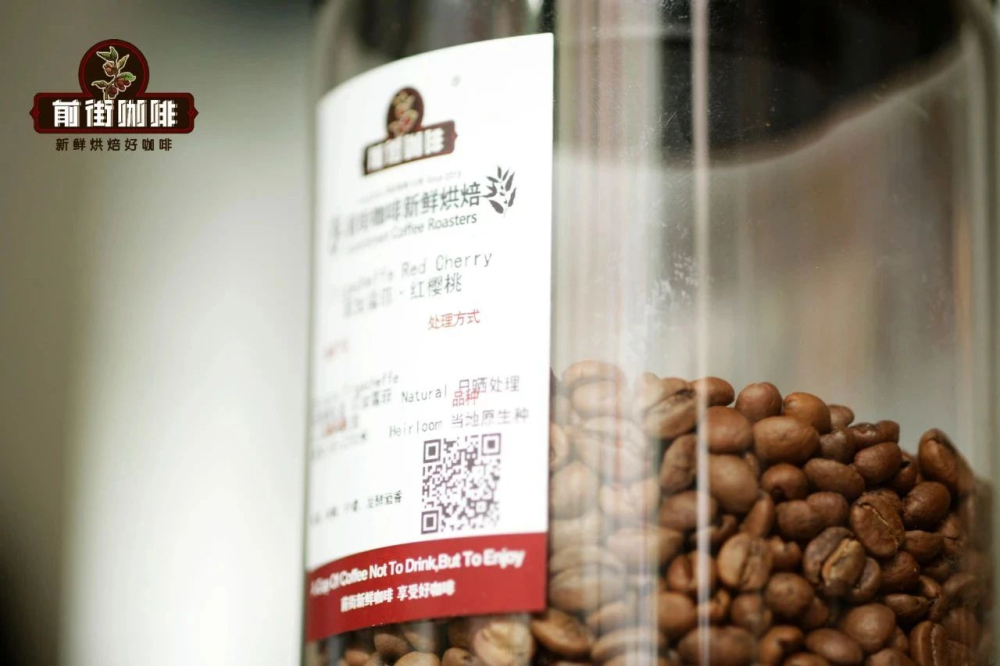
When buying Ethiopian coffee beans, the word "Heirloom" is almost everywhere, usually translated into Chinese as "native species" or "heirloom," generally referring to those coffee varieties harvested as a mix. However, in the past two or three years, another term has quietly appeared on the packaging of some Ethiopian beans—"landrace." What exactly is this "landrace"? What is its relationship with heirloom? Today Front Street will talk with everyone about what exactly the concept of Landrace (local variety) is.
In Ethiopia, the garden planting system is the main way most smallholder coffee farmers make a living, and Heirloom native species come precisely from those "nameless varieties" around their homes. These coffee trees may have been left by the previous landowner, may have come from sharing among neighbors, or may even have been introduced and cultivated from other producing areas. All kinds of different coffee plants are mixed with other cash crops on the land, and when they mature, they are picked and sold.
For this reason, Heirloom does not refer to one specific coffee variety; what it represents is actually a green bean blend at the producing-area level—gathering coffee harvested by multiple smallholders during the same period, mixing them together to form a lot. A single lot may contain dozens or even hundreds of varieties that have not yet been subdivided. Because there are differences among varieties and the ways of mixing differ each time, these coffee beans also vary in bean size, dimensions, and shape—some large, some small, some long, some round—and can be understood as a "blended-style lot." Taking the beans Front Street regularly offers as an example, popular lots such as Gedeb, Red Cherry, Worka, Kafa Forest, Konga, and Kochere all list "Heirloom" in the variety column.
Front Street Coffee: Kafa Forest Coffee Beans
Country: Ethiopia
Region: Kafa Forest
Altitude: 1,800 meters
Variety: Heirloom
Grade: G1
Processing Method: Washed
Flavor: Lemon, sweet orange, peach, green tea, melon seeds, caramel
This Kafa Forest on Front Street's bean list comes from the familiar Ethiopia and is named for growing in a vast cloud forest region—the Kafa Biosphere Reserve. The primary forest of the Kafa Biosphere is not only recognized worldwide as the birthplace of coffee, but is also today a genetic treasure trove of Arabica coffee. The "Gesha" in the origin story of Geisha is precisely a area in the western part of Kaffa.
Here, Front Street especially reminds everyone: because Kafa Forest is the main setting of the Geisha origin story, and the name of the Geisha variety comes precisely from the Geisha Mountain area here, some merchants directly call this bean "Geisha" and market it under the name "Kafa Forest Geisha." But in fact, it is completely different from the Geisha variety as we know it.
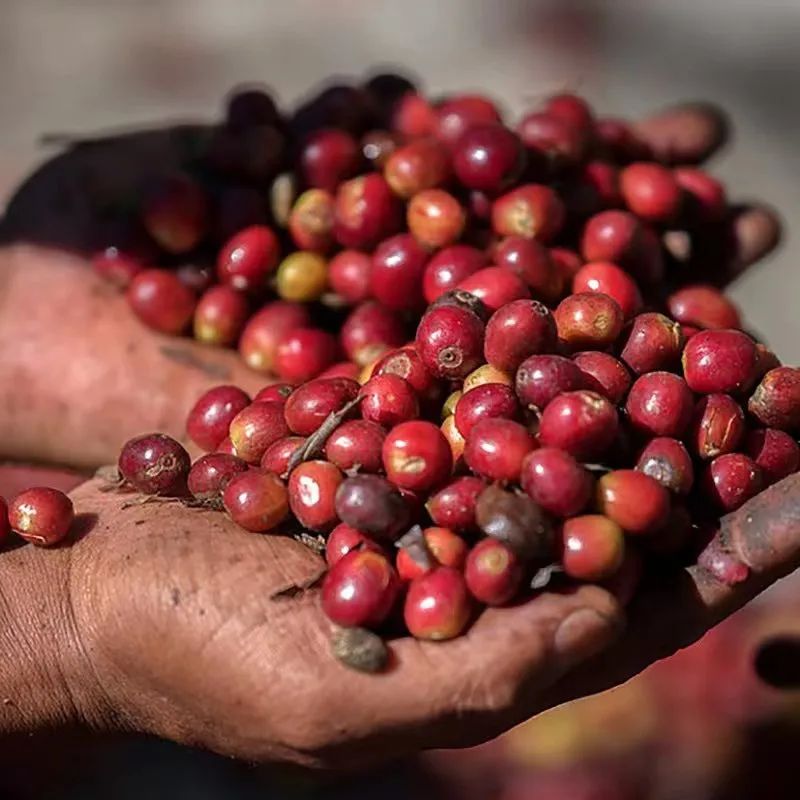
Generally speaking, what baristas call "Geisha" refers to a coffee variety from the Panama producing region that was once recorded as "T2772." The bean's biggest characteristics are that it is large and slender, pointed at both ends, plump in the middle, and after roasting its inner side curls outward, always reminding Front Street of a "sausage roll." Panama Geisha has won the affection of countless people because, unlike the heavy flavors of traditional coffee in most people's impressions, it is more like a fresh cup of floral and fruity tea, often carrying rich fragrance and complex fruit flavors, reminding people of a series of unusual aromas, and at different temperatures one can feel a delicate texture and sweet-and-sour fruitiness filling the whole mouth.
Compared with the Geisha variety, this Kafa Forest that Front Street acquired this time emphasizes more its origin attributes, so in the variety labeling, Front Street classifies it as the common native species of Ethiopia. Considering that this bean comes from Ethiopia's high-altitude forest region, is rich in light floral and fruity aromas, and uses washed processing, Front Street hopes to present its clean and tranquil character through a light roast.
Back to the point: among all the plants grown in the fields, some coffee trees show stronger cultivation advantages. They not only adapt to the local soil, climate, and environmental conditions, with flavors gradually becoming more stable, but also show disease resistance and high yield, so they are deliberately retained by farmers. After years of cultivation and crossing, they are gradually "domesticated," and as coffee farmers carry out a certain degree of selection, the traits of individual plants are no longer unpredictable and become stable and regular.
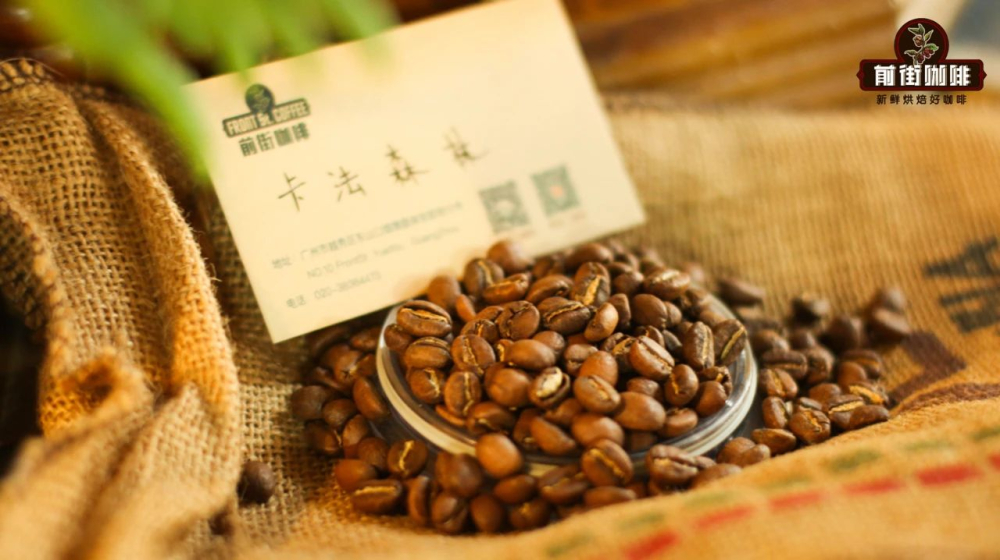
These coffee types that can be described gradually become recognized "local varieties" and are passed down from generation to generation by coffee farmers. Therefore, Landrace refers to coffee plant types that have historical origins, genetic diversity, and clear characteristics, can adapt to the local terroir, and work well with farmers' field management. They are also called ancient superior varieties.
So, if these ancient superior coffee varieties already existed locally in Ethiopia, why were they not separately distinguished before? From a botanical perspective, Landrace local varieties cannot be called an independent variety, nor even a subvariety, because this "unity" is not only caused by plant genes, but is more influenced by the local terroir; it is the result of time and natural selection working together.
In recent years, through the efforts of Ethiopia's agricultural management agency JARC (Jimma Agricultural Research Center), many regional local varieties originally classified under "Heirloom" have also been identified, and the number of farmers switching to growing these local varieties is gradually increasing. However, because there was previously no public-sector identification, they were not specifically announced externally. For example, local varieties widely grown in southern Ethiopia include Kurume, Wolishao, and Dega, while Choche, Sardo Buna, and Bedessa are planted in the west or southwest.
Even if coffee farmers can distinguish which local variety they are growing and clearly point out whether a coffee tree belongs to Kurume or Choche, after harvesting they may not necessarily retain detailed native-variety information. This is because processing plants operated by many large companies purchase coffee cherries from hundreds of local smallholders, mix them together for processing and sale, and finally label them as Heirloom for export around the world. So the Ethiopian heirloom coffee we drank in the past was mixed with these local varieties.
Nowadays, more and more international green bean traders, in order to provide more choices for consumers seeking "uniqueness," tend to purchase local coffee varieties that emphasize producing-area characteristics. From the perspective of planting and production, these local varieties can show good adaptability locally and also ensure decent income, because they are no longer produced after being mixed with other unknown heirloom varieties, but can be harvested separately and made into a single lot for sale. Naturally, both new and old farmers are more willing to plant them. On the consumer side, there are also more and more Ethiopian coffee beans belonging to local varieties for us to choose from.
The above content is compiled by CoffeeHunters, a coffee news website.


