







How Does Lactic Acid Fermentation Change Coffee Processing?
Lactic acid fermentation in coffee processing uses lactic acid bacteria to turn sugars in the coffee pulp into lactic acid and aroma compounds. These bacteria work in the low-oxygen environment of soaking tanks, which makes the method common in washed processing, where yeast and lactic acid bacteria break down mucilage and add bright acidity to the beans.
During fermentation, lactic acid bacteria release esters, ketones, and aldehydes that shape floral and fruity notes and a fuller mouthfeel. Estates such as La Palma y El Tucan in Colombia have applied controlled lactic fermentation to green coffee beans, and the approach is spreading among specialty producers experimenting with wine-like acidity and body.
Lactic acid fermentation is widely used in the food industry, from pickles to yogurt. In the processing of green coffee beans, this technique is increasingly being adopted by estates to shape richer floral aromas, fruity notes, and a fuller mouthfeel. This article walks you through the mechanism of lactic acid bacteria, their role in washed processing, and how controlled fermentation can achieve flavor breakthroughs. Meanwhile, the practice of La Palma y El Tucan in Colombia demonstrates the potential of lactic fermentation in specialty coffee. Front Street Coffee will also recommend related products worth trying.
In daily life, many delicious foods rely on lactic acid fermentation—such as pickled vegetables, yogurt, and cheese—all of which use lactic acid bacteria to produce acidity under anaerobic conditions. During the processing of green coffee beans, specific lactic acid strains can similarly be introduced for fermentation, giving the coffee a unique and multi-layered flavor.
Lactic acid bacteria are a large group of bacteria capable of converting carbohydrates such as glucose, sucrose, or galactose into lactic acid. Under certain conditions, they also produce ethanol. During fermentation, lactic acid bacteria release various flavor compounds including esters, ketones, and aldehydes—these substances are precisely what create differences in food aroma and taste.
In recent years, specialty coffee processing methods have continuously innovated, with more and more coffee estates experimenting with enhanced lactic fermentation in pursuit of more pronounced floral and fruity notes, as well as wine-like acidity and body.
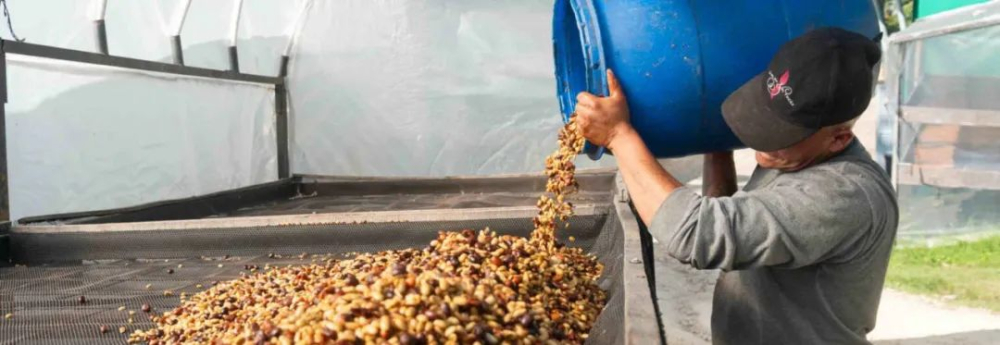
Lactic acid bacteria are facultative anaerobes, able to complete their metabolism only in anaerobic or low-oxygen environments—and the tanks used to soak green coffee beans provide exactly such anaerobic conditions. Therefore, traditional lactic acid bacteria fermentation is commonly seen in washed processing, with yeast and lactic acid bacteria being the main participants.
At this point, lactic acid bacteria ferment using sugars in the coffee pulp as a substrate. The metabolic process helps remove the mucilage layer, making the pectin easier to detach, while imparting bright acidity to the beans. However, the microbial species involved in fermentation in the tank are not restricted; both yeast and lactic acid bacteria may be present.
In recent years, much research has focused on fermentation reactions involving lactic acid bacteria. Results show that certain lactic acid strains can produce a variety of aromas, and positive lactic fermentation can enhance specific coffee flavors, improving the sensory experience for the drinker.
Compared with yeast, lactic acid bacteria are more tolerant of anaerobic environments. Most yeasts can survive under anaerobic conditions, but once oxygen is available, their reproduction rate increases dramatically. The effect of oxygen concentration on the reproduction rate of lactic acid bacteria, however, is not significant. Thus, many producers deliberately create low-oxygen environments to promote lactic fermentation while inhibiting yeast growth.
To achieve effective and controllable lactic fermentation, the most direct method is to add lactic acid bacteria directly during controlled fermentation. As long as a sufficient number of specific strains is added to the fermentation tank, it is possible for lactic acid bacteria to "steal a march" and dominate the entire fermentation process. But this approach has a drawback—it is costly, because the cultivation, packaging, and transportation of live lactic acid bacteria are far more expensive than for yeast.
It is understood that the estate that first proposed the idea of lactic fermentation in green coffee processing was La Palma y El Tucan in Colombia. The founders, Felipe Sardi and Elisa Madrinan, are skilled at implementing innovative projects. They use anaerobic methods to achieve higher concentrations of lactic acid bacteria during coffee fermentation. Treating fermentation as a variable and using different sealed containers for processing, they achieved operable variable control, resulting in beans with strong sweetness and a heavy fermented feel.
Front Street Coffee suggests that enthusiasts who want to experience lactic-fermented coffee can look for beans processed this way and savor their unique flavor expression.
The above content is compiled by CoffeeHunters, a coffee news website.


