







Why Does the Pour-Over Coffee Bed Crack Into Two Segments?
A pour-over coffee bed that splits into two segments usually means the final pour was too forceful. The strong stream breaks through the coffee wall built up on the filter paper, and water then escapes through the filter's ribs instead of passing evenly through the grounds. That channeling pulls coffee particles out of the wall, drops them to the bottom, and leaves the cup tasting thin and uneven.
The bed tells the story of the brew. As the liquid level falls during the second pour, surface coffee particles settle against the paper and form a wall of fairly even thickness. Once the level drops to roughly two-thirds of the dripper height, a wide circling motion with a heavy flow can wash that wall apart. A slow, centered long brew pour keeps the bed intact.
The shape of the coffee bed after a pour-over often reflects whether the pouring technique was appropriate. Some beginners find that after brewing, the coffee wall has broken into two sections, with a thin ring of coffee grounds and small bubbles in the middle, some grounds sunk to the bottom, and the coffee tasting less than ideal. This usually happens because the water flow was too forceful during the final pour, breaking through the previously built coffee wall, and hot water escapes directly through the filter paper's ribs, creating a channeling effect that leads to uneven extraction. Additionally, too large a circling motion can cause the liquid level to overflow the coffee wall, resulting in under-extraction and bitterness. This article will analyze the causes of these two coffee bed shapes and, combined with Front Street Coffee's usual three-stage technique, explain how to master flow control by managing water flow height and circling range, allowing coffee particles to release flavor evenly.
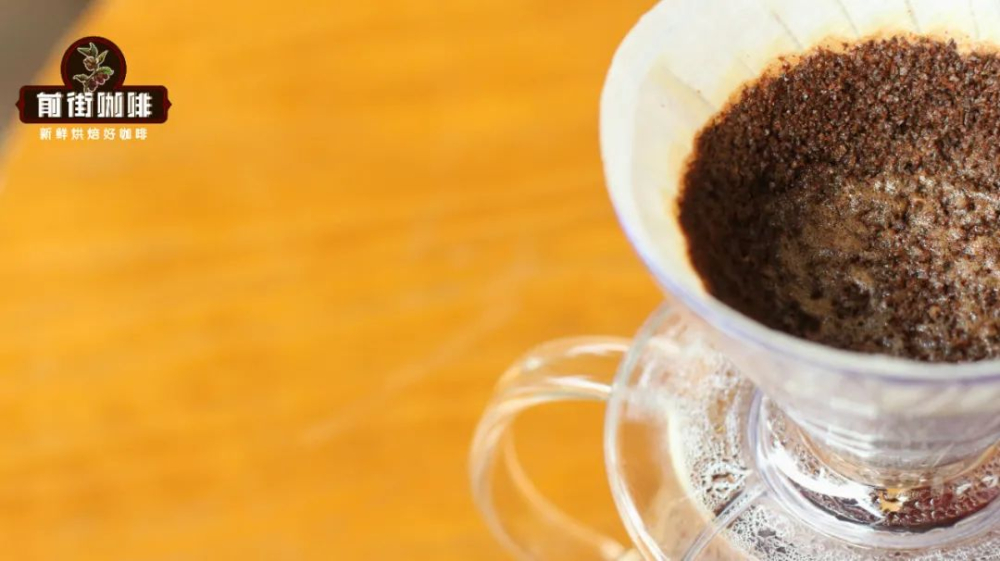
Recently, a beginner friend reported that the coffee he brewed tasted subpar, and the coffee bed after brewing looked different from what he saw in tutorial videos, so he asked Front Street Coffee what might have gone wrong. The photo of the coffee bed he sent looked like this: the coffee wall on the inner wall of the dripper was clearly divided into upper and lower sections, with a very thin layer of coffee grounds and some small bubbles in the middle ring, almost no coffee particles visible, and some coffee grounds carried by the water flow to the bottom of the dripper, roughly as shown in the image below.
When this kind of coffee bed appears, the problem mostly lies in the pouring action. The reason the coffee wall breaks into two sections is mainly that the water flow was too strong during the final pour. Imagine this: after blooming is complete, pour the second stage of water into the dripper according to your brewing plan. The agitation of the water column makes the coffee grounds tumble and suspend wherever the liquid surface reaches. As the liquid level slowly falls, the more surface-level particles attach to the filter paper, gradually forming a coffee wall of relatively uniform thickness.
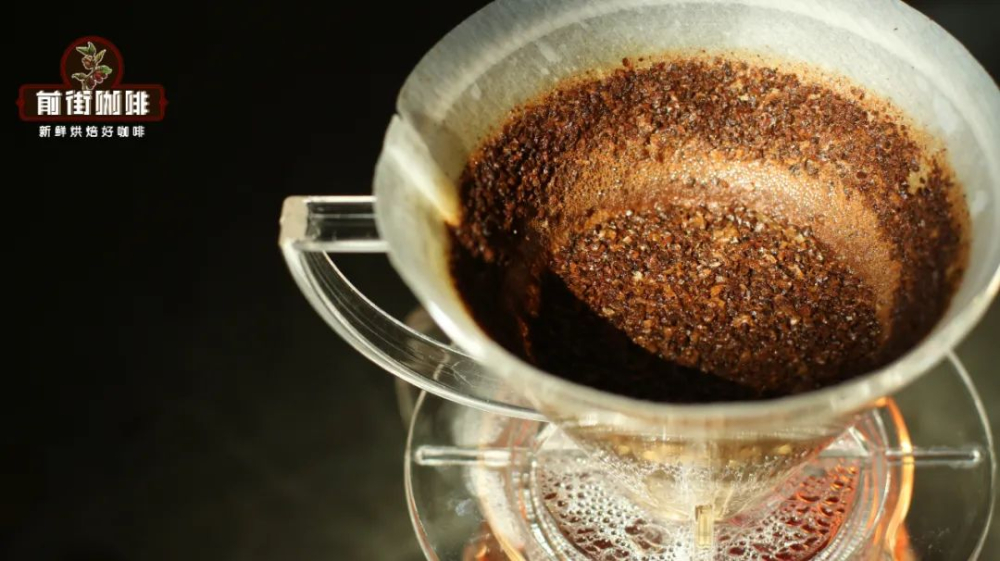
When the liquid level drops to about two-thirds of the dripper's height, if you rush to pour the final stage with a large flow while circling widely, the overly forceful water column will break through the previously built coffee wall. This section of coffee grounds gets carried down by the water flow, and the coffee wall becomes two disconnected sections. If you continue pouring at the broken spot, hot water will pass directly through the paper and escape from the dripper's guiding ribs at the edge—this is what's called "channeling," resulting in uneven extraction. This also explains why the coffee our friend brewed tasted off.
Besides the断层 (fault line), there is another type of coffee bed also caused by too large a circling motion, as shown below.
This kind of coffee bed usually forms because during the later pouring stages, the liquid level completely overflowed the previously built coffee wall. Although the water didn't directly hit the filter paper, the overflowing water flows directly along the rib edges, causing under-extraction or low concentration. The fine grounds that sink to the bottom may clog the filter paper pores, causing water to pool. Identifying features include: scattered coffee particles on the top of the coffee wall, extraction time often exceeding 2 minutes 10 seconds, and the coffee tasting unpleasantly bitter.

Many people have encountered both of these situations when first learning pour-over. To improve coffee flavor and take your extraction technique to the next level, Front Street Coffee suggests first solidifying the basic skill of flow control using a reliable method. The higher the water flow position, the stronger the penetration and the more intense the washing of the coffee bed; conversely, the lower the water column, the gentler the force and the less the coffee bed churns. Once you understand this principle, you can flexibly adjust water flow height and circling size according to different pouring stages.
Taking Front Street Coffee's commonly used three-stage method as an example: after blooming is complete, first use a steady, vertical, relatively large flow, maintaining a distance of 3 to 4 centimeters from the liquid surface, circling at a constant speed to wash the coffee bed, gradually expanding clockwise from the center outward until the timer scale shows 125 grams. As the liquid level rises, fewer coffee grounds can attach to the filter paper. When the water level drops to the halfway point, you can circle in concentric circles along the half-radius of the liquid surface, pouring slowly with a small flow at 2 centimeters height. This not only allows the particles in the dripper to get "equal share" and fully release flavor compounds, but also effectively prevents the previously built coffee wall from being suddenly destroyed, avoiding uneven extraction.
- END - Front Street Coffee
No. 10, Bao'an Qian Street, Yandun Road, Dongshankou, Yuexiu District, Guangzhou, Guangdong Province
The above content is compiled by CoffeeHunters, a coffee news website.


