







Why does cash change fail at chain of coffee shops?
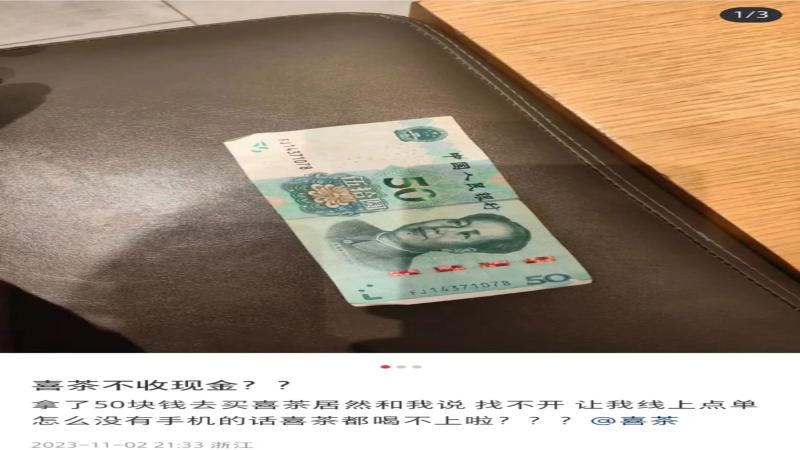
A customer brought 50 yuan in cash to a Heytea store and was told staff could not make change, then suggested ordering online. The post spread quickly, and workers said low change reserves are common at mall locations during peak hours, when staff have no time to leave and exchange small bills.
Critics argue the difficulty should not be pushed onto customers, since merchants should keep every legal payment method accessible, and refusing cash outright is not allowed. The episode, which follows earlier complaints, puts cash management at large chain of coffee shops and tea brands back under scrutiny, including counterfeit-bill risk that cashiers may bear.
Recently, a consumer reported on social media that when they went to a Heytea store with 50 yuan in cash to buy a drink, a staff member told them they could not make change and suggested switching to online ordering. This experience quickly sparked widespread discussion. Many tea beverage industry workers chimed in, saying that insufficient change reserves at stores is indeed a common phenomenon, especially during peak customer flow at mall locations, where staff often have no time to go out and exchange for small bills. However, some voices pointed out that the difficulty of making change should not be passed on to customers, and merchants should ensure that all legitimate payment methods remain accessible. This is not the first time Heytea has been criticized over cash payment issues, and this incident has once again pushed the cash management problems of chain tea beverage brands into the spotlight.
▲
Click to follow | Daily specialty coffee culture magazine Coffee Workshop
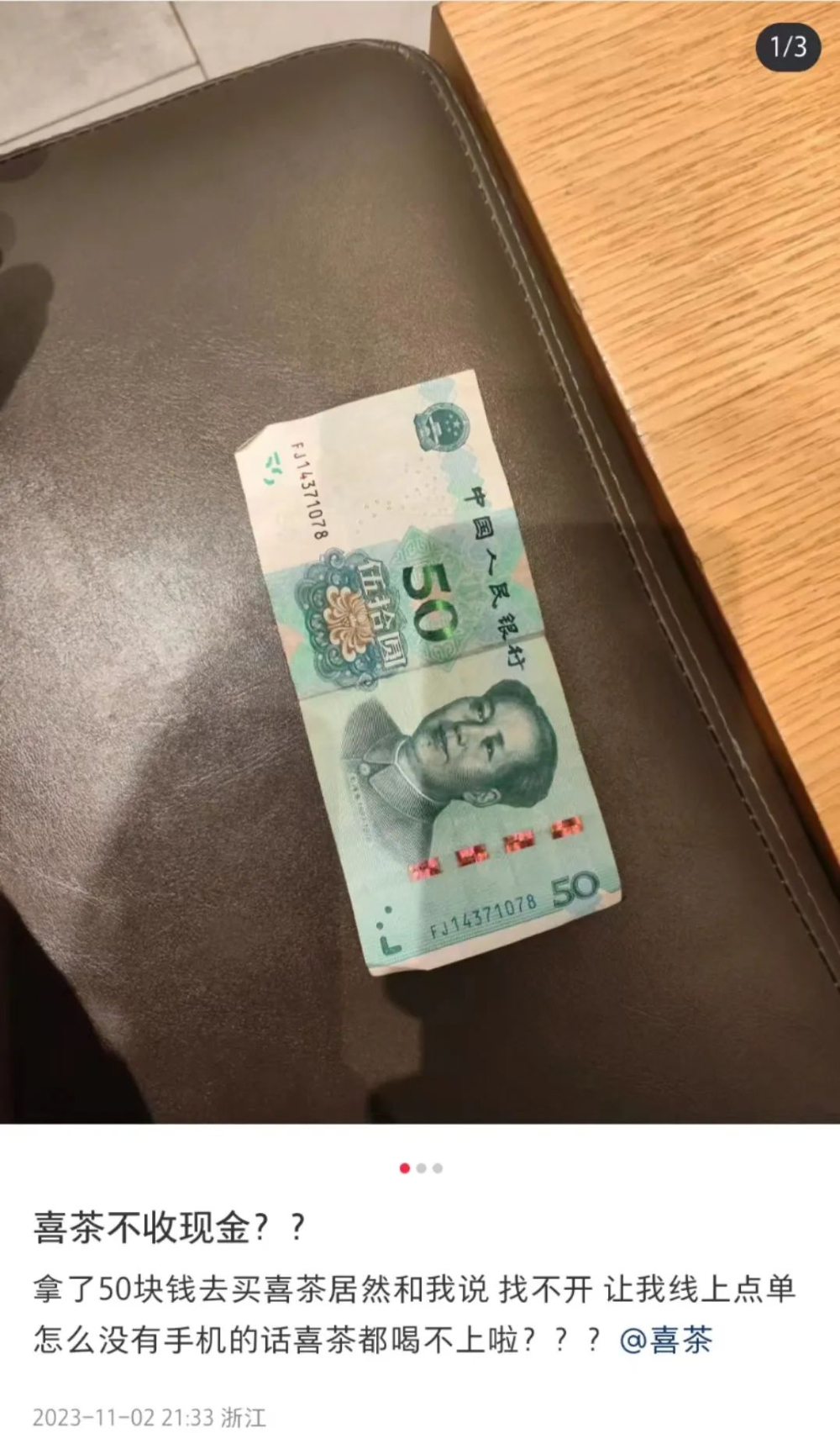
On November 2, a netizen posted on social media about an awkward experience using cash at a Heytea store. The netizen wrote: "I took 50 yuan to buy Heytea, and they actually told me they couldn't make change and asked me to order online. What? Can't you even drink Heytea without a phone?"
As a leading chain tea beverage brand, Heytea actually has situations where it lacks small change and cannot give customers change? Some netizens questioned this: "Most cash registers have at least 1,000 yuan in change as backup. They actually can't make change? Heytea isn't very standardized either."
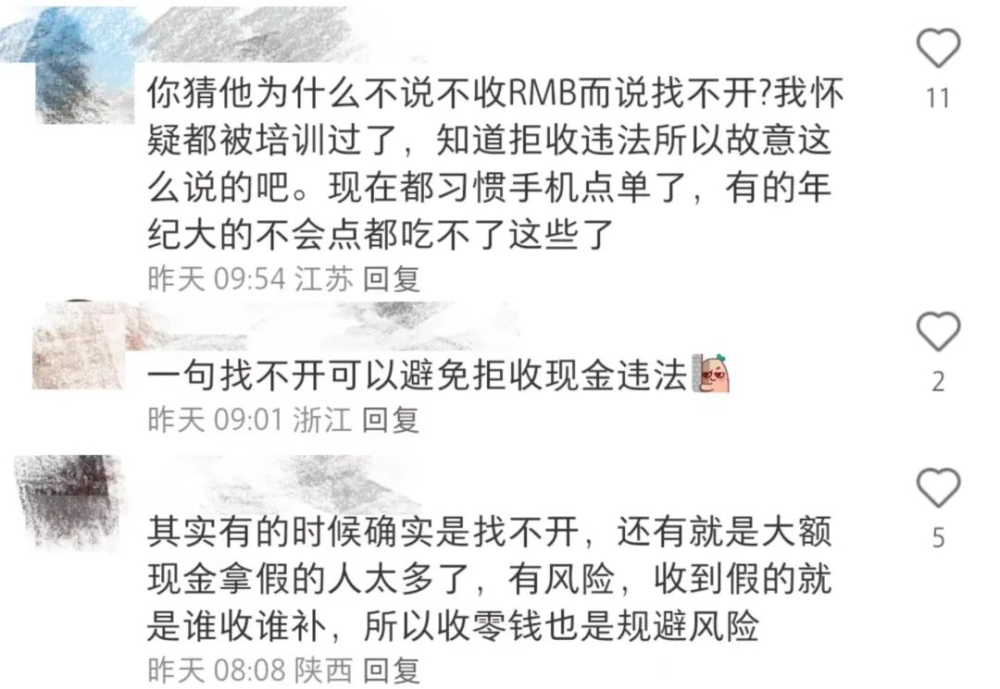
Regarding this phenomenon, some netizens analyzed that large-denomination cash carries a relatively higher risk of counterfeit bills, and once a fake note is mistakenly accepted, the loss is often borne by the cashier. Therefore, are Heytea staff merely using the excuse of "can't make change" to avoid the risks that may come with accepting cash? "Guess why he didn't say they don't accept RMB but said they can't make change? I suspect they've all been trained and know refusing cash is illegal, so they deliberately say it that way." "A single sentence about not being able to make change can avoid the illegality of refusing cash."
In the comments section, netizens claiming to be Heytea employees quickly responded, admitting that they do indeed encounter situations where they cannot make change: "If you can't make change, then add a topping or something, or the person in charge at the store goes out to exchange for small bills. If it really can't be worked out, then there's really no way." Another netizen familiar with the situation said: "Heytea is indeed like this... If I want to pay in cash, I always prepare exact change."
Many tea shop employees with similar experiences also left comments, admitting that making change for customers during busy periods is truly beyond them. "Working part-time at a milk tea shop, I can say sometimes it's really impossible to make change. One reason is that very few people use cash now, and another is that in malls everyone mostly has large bills and few small ones. Every time we have to remind the boss to break some coins at small shops outside, but sometimes one person buying a cup with 100 yuan takes away all the change." "Businesses definitely want to sell as many cups as possible and won't push customers away. It's really that there's no change to give, and the store is too busy to spare someone to go exchange for small bills."
Some netizens also defended Heytea, arguing that the staff proactively suggested online payment and that this cannot simply be equated with refusing cash. If customers really want to drink it, they can simply switch to another payment method. "What can they do if they can't make change? One after another, everyone comes with big bills. If you really want to drink that much, order several cups totaling 50 yuan, would they still refuse to take it? Refusing cash and being unable to make change are two different things." "Besides, they said they couldn't make change and suggested you order online. They must have seen you had a phone. If you directly and firmly said you had no phone, they couldn't possibly refuse to work something out."
However, another viewpoint also appeared in the comments, arguing that the consequences of inconvenient change-making should not be borne by consumers. Since a business is open, when problems arise it should prioritize finding solutions, otherwise it is easy to set a bad precedent. "So many people actually think that if they can't make change, they can just refuse cash? Apparently as long as they don't want to accept cash, they can just say they can't make change, right?" "Even if it's not refusal of cash, being unable to make change shouldn't be the customer's fault, right? This was originally just management wanting to save manpower and costs. Blame the bosses more and customers less. This was never the consumer's fault."

A search found that this is not the first time Heytea has been criticized for being unable to make change or for refusing cash. Some netizens questioned this: "Heh, isn't paper money money??"
Objectively speaking, a large number of workers in the comments expressed understanding of the "difficulty of making change," which shows that frontline store employees do indeed face practical difficulties. But as netizens said, these troubles should not be borne by consumers. It is hoped that major brands will take this as a warning, stock enough small change, and ensure that customers can smoothly use all reasonable payment methods.
Image source: Internet
Disclaimer: Some images in this article are from the Internet. For some content on the website, such as images, we will respect the original author's copyright and indicate the source. However, due to the large quantity, there may be个别 images and texts that have not yet been credited. Please understand. If the original author has any disputes, they may contact the website for handling. Once verified, we will correct it immediately. Compiled and edited by "Coffee Workshop." Please indicate the source when reposting. If there is infringement, please inform us for deletion. Thank you~!
Coffee Workshop
Watching
Like
The above content is compiled by CoffeeHunters, a coffee news website.


