







What is caffe in wellness coffee blends?
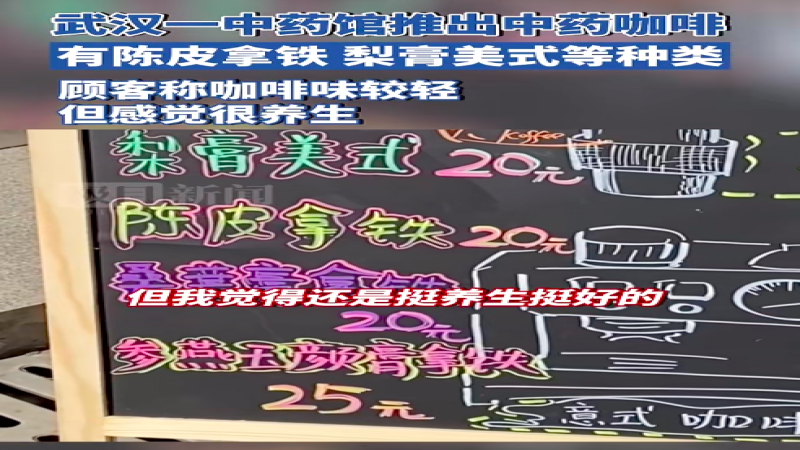
Wellness coffee mixes traditional Chinese medicine ingredients with coffee, and it has spread quickly among young consumers in China. A booth at Ye Kaitai's Herbal Paste Festival drew crowds with four combinations: Pear Paste Americano, Chenpi Latte, Mulberry Paste Latte, and Ginseng and Bird's Nest Paste Latte. Most such drinks are made by brewing herbs together with coffee.
Whether these blends deliver any health benefit is unclear, since ingredient amounts are usually small and daily coffee already carries its own stimulant effect. Some commenters called it pseudo-wellness, while others saw it as psychological comfort or a way to introduce Chinese medicine to newcomers. Knowing what is caffe in the cup, and where is coffee from originally, helps put the trend in perspective.
When coffee's energizing effects meet traditional Chinese medicine's nourishing philosophy, a new species called "wellness coffee" is quietly gaining popularity among young consumers. From the creative booth at Ye Kaitai's Herbal Paste Festival to the daily menus of coffee shops everywhere, the cross-border combination of Chinese medicine and coffee has frequently drawn attention. However, is this East-meets-West beverage truly a healthy choice, or does it merely offer psychological comfort? This article will examine ingredient composition, market trends, and potential risks to give you a comprehensive understanding of the pros and cons of wellness coffee, and explore whether this innovative drink can continue to win consumers' favor.
▲
Click to follow | Daily specialty coffee culture magazine Coffee Works
When people think of coffee, what often comes to mind are its effects of refreshing the mind and reducing water retention, which is why it is revered by many office workers as a "life-extending elixir."
In the post-pandemic era, Chinese medicine and coffee—two things that originally had nothing to do with each other—have frequently sparked creative collisions as young Chinese people increasingly prioritize health and wellness and consumption experiences. Health and wellness has become a popular trend in the food and beverage industry.
On October 21, at the wellness market of Ye Kaitai's Herbal Paste Festival, a booth offering Chinese herbal paste coffee was crowded with curious customers. The booth launched four creative "coffee + herbal paste" combinations: Pear Paste Americano, Chenpi Latte, Mulberry Paste Latte, and Ginseng & Bird's Nest Paste Latte.
In response, some netizens commented bluntly that if one has reached the point of needing Chinese medicine for recuperation, one should prioritize caring for the body and avoid falling into the trap of "pseudo-wellness."
Other netizens felt that this is more about seeking a kind of psychological self-comfort.
This novel East-meets-West form of wellness coffee not only gives curious consumers a brand-new coffee experience, but also gives those who are relatively unfamiliar with Chinese medicine a deeper understanding of it.
So how should we properly view wellness coffee? First, it is necessary to understand the ingredient composition of wellness coffee. Most wellness coffees on the market are made by brewing coffee beans together with certain Chinese medicinal herbs.
It is understood that coffee beans are rich in caffeine and other components, which can refresh the mind and relieve fatigue and pain; while Chinese medicinal herbs include goji berries, astragalus, angelica, and others, which have multiple effects such as supplementing qi and nourishing blood, and nourishing yin and tonifying the kidneys. Therefore, from the perspective of ingredients, wellness coffee does have certain health benefits.
Products combining coffee and medicinal herbs are not isolated cases; in fact, many coffee shops are launching wellness coffee.
However, what needs to be cautioned against is that Chinese medicine and coffee are two different substances, and their compositions and pharmacological effects are not the same. Therefore, mixing the two may pose safety risks.
At the same time, it should also be noted that although wellness coffee is not a terrifying monster, it is by no means a miracle cure for all ailments. We should view its health benefits rationally, pay attention to product quality, suitable populations, and drinking methods when consuming it, and exercise caution when choosing wellness coffee.
Even if young Chinese people are willing to pay for wellness, truly satisfying the public's taste is no easy task. Whether the popularity of "Chinese medicine coffee" can continue depends on whether shop owners truly understand consumers' needs when innovating.
Image source: Internet
Disclaimer: Some images in this article are from the Internet. For some content on the website such as images, we will respect the original author's copyright and indicate the source. However, due to the large quantity, some images and text may not have been credited in time. Please forgive us. If the original author has any disputes, they can contact the website for handling. Once verified, we will correct it immediately. Compiled and edited by "Coffee Works." Please indicate the source when reposting. If there is any infringement, please inform us for removal. Thank you~!

The above content is compiled by CoffeeHunters, a coffee news website.


