








How chain price wars reshape coffee quality and independent shops?
A chain-brand price war is pushing independent cafés to the edge. In the past year 77,083 new coffee stores opened but the net increase was only 42,450, meaning nearly 35,000 exited. Owners are transferring stores to cut losses, running discounts, or building differentiation, and some have left the industry altogether.
Supply-demand imbalance, consumers' growing preference for standardized chain brands, and cutthroat discounting from Luckin, Cotti and Lucky Cup drive the reshuffle. Data through September 13 shows the coffee-drinking population grew in the first half of the year, but café expansion ran several times faster than that growth, squeezing margins and coffee quality across the market.
When major coffee chains have launched an all-out price war, independent cafés are being pushed to the edge of survival. In the past year, more than 70,000 new stores opened, but the net increase was only just over 40,000, which means more than 30,000 stores quietly exited amid the industry wave. From closing advertisements saying "We've graduated" to owners each seeking a way out—transferring stores to cut losses, offering discounts, building differentiation, and even leaving the coffee industry—the survival dilemma of independent cafés can no longer be avoided. Supply-demand imbalance, consumers' growing preference for standardized chain brands, and cutthroat price competition—these factors together form the real picture of today's coffee market. This article reviews the many faces of independent cafés under siege by chain brands and explores the logic behind the industry reshuffle and possible future paths.
▲
Click to follow | Daily specialty coffee culture magazine Coffee Workshop
At present, the price war among major coffee chains has fully unfolded, and independent coffee brands caught in the middle are facing unprecedented operating pressure.
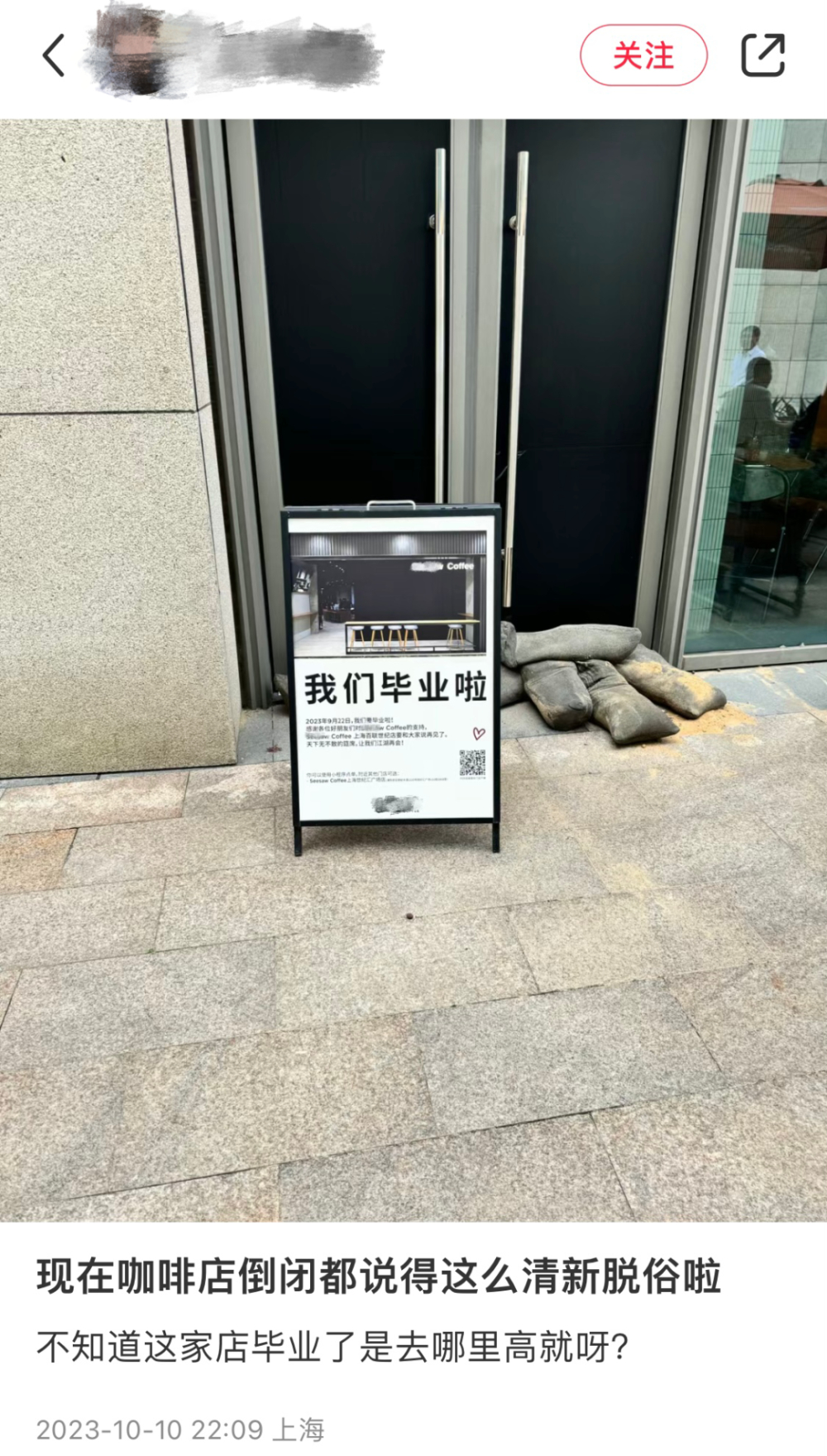
Recently, a netizen photographed a billboard while shopping, with the words "We've graduated" written on it, using "graduation" as a metaphor for closing down, making closure sound fresh and refined and standing out among the many store-closing notices. Behind the laughter and curses, there are likely many bitter hardships.
Many store owners passively dragged into this business war, facing the frenzied expansion and subsidy offensives of chain brands such as Luckin, Cotti, and Lucky Cup, have each adopted different response strategies. Some decisively transferred their stores to cut losses in time, some chose to hold on a while longer, some launched various promotions and discounts, and some relied on their own brand characteristics to take a differentiated route.
According to Narrow Door Restaurant Eye data, as of September 13, 77,083 new stores opened in the past year, with a net increase of 42,450. A simple calculation shows that nearly 35,000 stores "vanished" in this round of industry ups and downs.
Data from food delivery platforms shows that the coffee-consuming population did indeed grow significantly in the first half of this year, but the speed of café expansion was several times the growth rate of consumers, severely tilting the supply-demand balance.
Some netizens on social platforms said bluntly: "Who says opening a café is about making money by selling coffee?" Whether cafés should pair with meals or other business formats seems to be an unavoidable question. But what is certain is that cafés that also sell food or other elements clearly have stronger survival ability.
Another netizen said: "Going to a café is mainly about finding a place to sit and chat. Unfamiliar stores are easy to disappoint, so later I simply only went to Starbucks." Besides value for money, the flavor of coffee is equally crucial. However, coffee quality and taste on the market vary greatly, which may be exactly why some consumers turn to large chain brands with more "standardized" output.
The price involution between independent coffee brands and chain brands, plus the supply-demand imbalanced market environment, is essentially a helpless situation.
For many small independent cafés, the wave of the times has already pushed them to a crossroads of development, and they must make a choice right now. Markets rise and fall, which is normal for any industry, and it is precisely through continuous elimination and screening that truly capable brands can gain the chance to remain.
On the other side, the coffee wave is still spreading, and demand is still growing. Large chain brands, relying on their digital capabilities, launch new collaborations and new products almost every short period, keeping the topic of "coffee" in the public eye.
Facing an uncertain macro environment, coffee practitioners have begun looking for new ways out. Some plan to deepen their skills at old stores, some want to continue looking for opportunities in the coffee track, some choose to go solo and open studios for training... In short, they are still striving to balance passion and life. But some also choose to leave the coffee industry and compromise with reality.
This year is destined to be an unsettled year for the coffee market. This track that was once at its peak has indeed reached a stage where rational choices are needed. For those who truly love this industry and possess sound operational knowledge, now may perhaps be the time to grow in adversity. I hope everyone can stay true to their original aspirations amid the complex environment and move forward steadily.
Image source: Internet
Disclaimer: Some images in this article are from the Internet. For some content on the website, such as images, we will respect the original author's copyright and indicate the source. However, due to the large quantity, some images and texts may not have been credited in time. Please forgive us. If the original author has any dispute, they may contact the website for handling. Once verified, we will correct it immediately. Compiled and edited by "Coffee Workshop." Please indicate the source when reposting. If there is infringement, please inform us for deletion. Thank you~!
The above content is compiled by CoffeeHunters, a coffee news website.


