







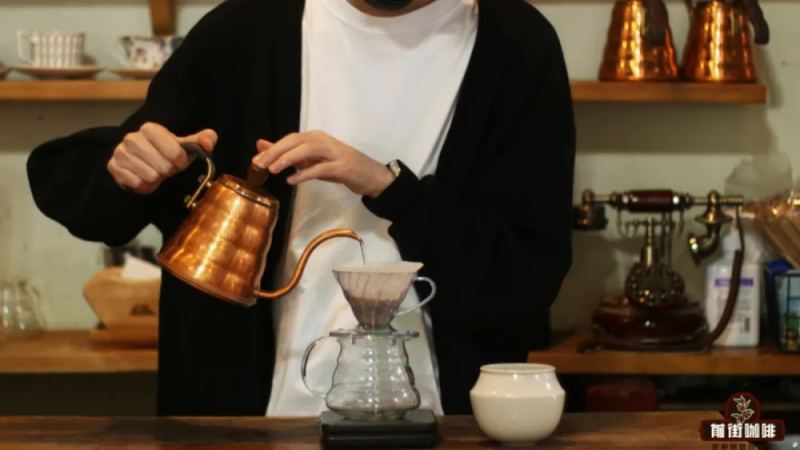
Why does cold weather change coffee quality?
When cold air arrives, pour-over coffee quality drifts because heat escapes before the water reaches the coffee bed. A kettle set to 92°C may deliver only about 87°C to the grounds, so the usual setting under-extracts and the cup tastes weak and thin. Raising the water temperature by 1 to 2°C compensates.
Preheating equipment also matters. An unheated server lets the coffee liquid fall to roughly 69°C, while a preheated one holds around 75°C, so warming the dripper and server slows heat loss. Lowering the pour height shortens contact with cold air, and cold-weather static can be handled with a distribution needle and a blower to stop grounds clumping.
When cold air arrives, the extraction rhythm of pour-over coffee often gets disrupted. The originally set 92°C water temperature may only be 87°C by the time it reaches the coffee bed, and a sudden drop in ambient temperature causes hot water to lose more heat in the air, resulting in under-extraction and a weak, bland flavor. Besides raising the water temperature by 1~2°C or lowering the height of the water stream, preheating the server and dripper can also significantly slow heat loss—an unheated server will bring the coffee liquid down to around 69°C, while after preheating it can be maintained at around 75°C. In addition, the static electricity generated during grinding in cold weather should not be overlooked—coffee grounds tend to clump or cling to the grinder, which can be effectively solved with a distribution needle and a blower. This article starts with three key details to help you keep every cup of pour-over performing steadily.
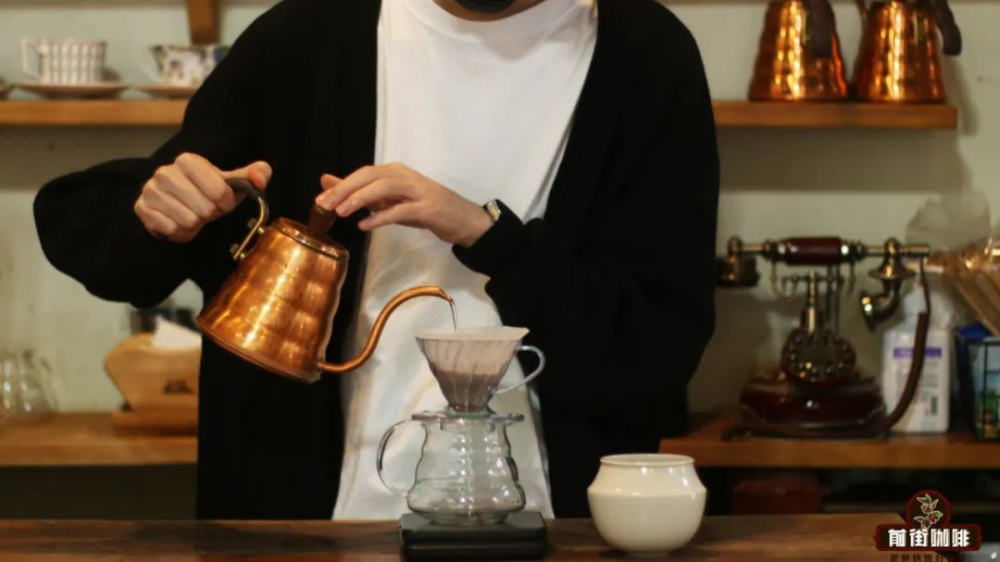
1. Appropriately Raise the Brewing Water Temperature
During actual brewing, the water temperature poured onto the coffee bed is often not consistent with the temperature displayed in the kettle. For example, suppose the temperature-controlled kettle is set to 92°C, but once the stream leaves the spout and contacts the outside air, it begins to lose heat, and by the time it reaches the coffee bed only about 87°C remains.
And with temperatures dropping noticeably recently, the air itself has become colder, so hot water loses even more heat before it reaches the coffee bed. If you still use the originally set water temperature, the actual temperature reaching the coffee bed will be lower than before, extraction efficiency will decline, and ultimately the body and flavor layers of the coffee will suffer.
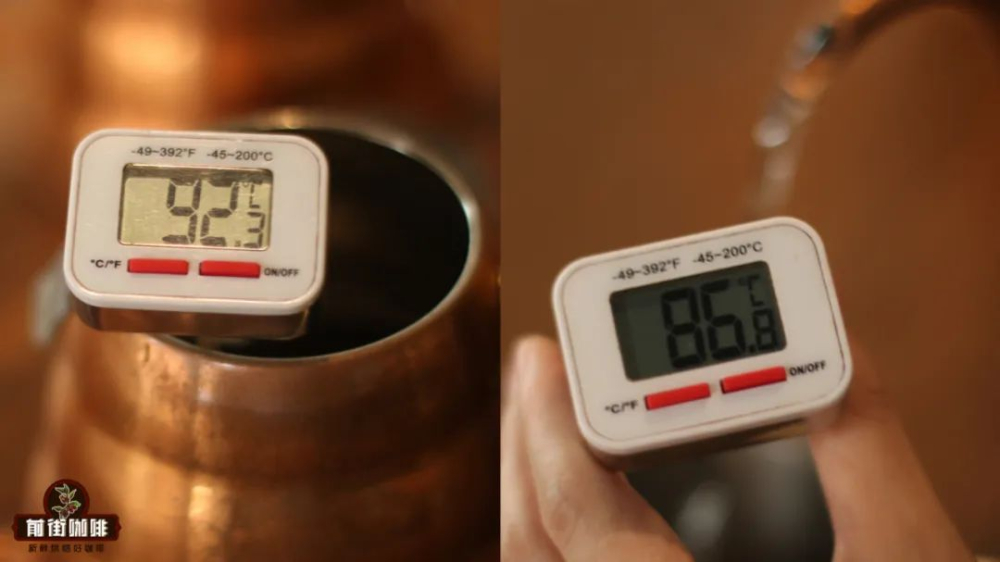
Therefore, to compensate for under-extraction caused by the low-temperature environment, you might raise your usual set temperature by 1~2°C, or lower the height of the water stream when pouring to shorten the path of contact between hot water and cold air, ensuring the water reaching the coffee bed still has enough extraction power.
2. Preheat Coffee Equipment in Advance
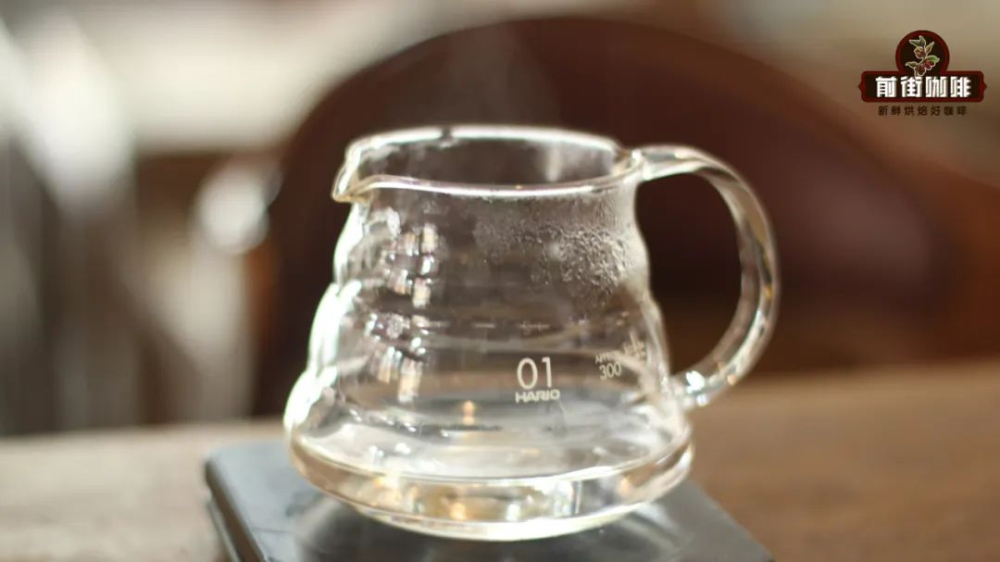
Front Street Coffee previously discussed the importance of preheating the dripper in the article "Should Wet Filter Paper Be Rinsed with Hot Water?" In fact, it is not only the dripper—the container receiving the coffee liquid can also help with heat retention after preheating.
Take the server as an example: if it is not preheated, the brewed coffee flowing into the pot will be only about 69°C, because the room-temperature vessel absorbs some of the heat.
After preheating, however, the coffee liquid in the server can remain at around 75°C, which means the heat is retained for a much longer time and the cooling rate slows noticeably.
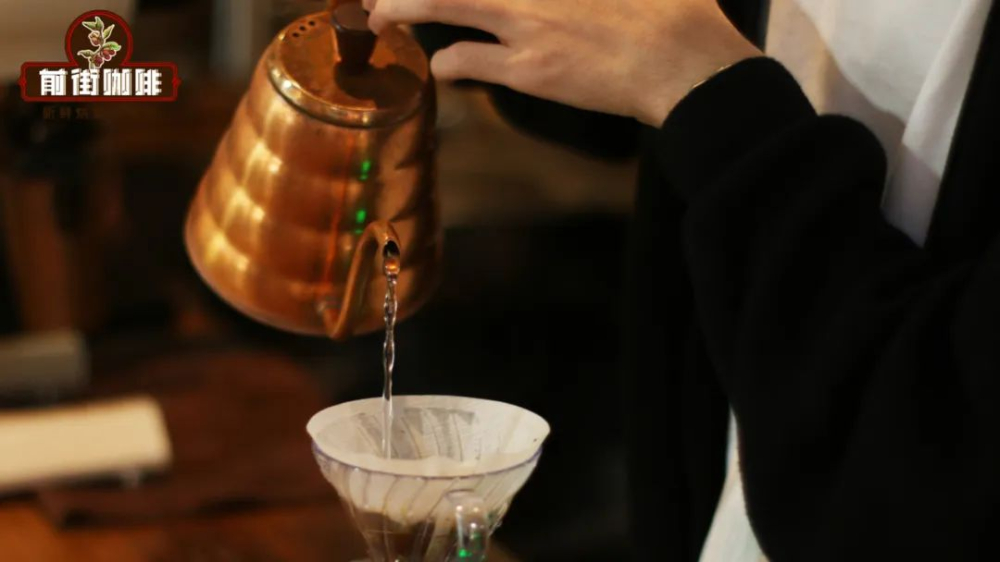
(Left: temperature of an unheated server; Right: temperature of a preheated server)
3. Eliminate the Effects of Static Electricity on Coffee Grounds
The lower the temperature, the easier it is for static electricity to accumulate after friction and collisions between objects—and the same is true for coffee grounds. The finer the grind, the more pronounced the static phenomenon.
Static electricity causes two problems: first, the powder clumps together; second, some coffee grounds get "eaten" by the grinder—for example, if you put in 15g of beans but end up with less than 15g after grinding, the difference is the portion attracted inside the machine by static electricity.
Although many grinders are equipped with an anti-static device at the discharge chute, the actual effect is limited. At this point, a distribution needle and a blower can come in handy.
Before extraction, use a distribution needle or other needle-like tool to break up clumped coffee grounds, which allows water to penetrate the coffee bed more evenly and makes the extraction result more stable; a blower can blow out the fine powder remaining at the discharge chute, ensuring as much as possible that the weight before and after grinding stays consistent.
In addition to the above points, if you are using a non-temperature-controlled pour-over kettle, it is recommended to pour in more hot water than the target amount to slow the cooling rate of the hot water in the kettle; while those using a temperature-controlled kettle can place the brewing kettle back on the temperature-controlled base to keep it warm during the intervals of blooming and waiting for drainage, thereby ensuring normal coffee extraction to the greatest extent.
- END - Front Street Coffee
No. 10, Baoqian Street, Yandun Road, Dongshankou, Yuexiu District, Guangzhou, Guangdong Province
The above content is compiled by CoffeeHunters, a coffee news website.


