







What Is the Latte Origin Story and Where Did Mocha Come From?
Espresso takes its name from the Italian word for fast, a nod to early twentieth-century machines that cut brewing time sharply. Americano emerged during World War II, when US soldiers in Italian cafés asked baristas to dilute the strong espresso with water. In Italian, the latte origin is simple: it means milk, and the drink only became coffee with milk once cafés in the United States adapted it.
Mocha points to a port, a coffee bean and a chocolate-flavored drink at once. Mocha was a Red Sea trading port that shipped Yemeni coffee, and the beans carried a natural chocolate note. Over time the name attached itself to the drink. The same naming drift runs through cappuccino, whose title is often linked to a monk's robe, and caramel macchiato, which arrived in the 1990s.
Behind every classic Italian coffee lies an interesting history. Why is Espresso called "fast"? Was Americano really invented by American soldiers? Is Latte originally just milk in Italian? Does Cappuccino's name really come from a monk's robe? And Mocha—does it refer to a port, a coffee bean, or that chocolate-flavored drink? In this article, Front Street Coffee walks you through the naming logic and historical origins of these common Italian coffees, from the espresso machines of the early twentieth century, to the American military cafés of World War II, to the arrival of caramel macchiato in the 1990s, explaining the stories behind the names all at once.
Today, Front Street is here to chat with you about how those Italian coffees we all know so well actually got their names.
Espresso
In the early twentieth century, with the advancement of the European Industrial Revolution, the first generation of espresso machines came into being. For the first time, people discovered that coffee could be made this quickly. The machines of that era were nowhere near comparable to today's equipment in terms of either extraction speed or pressure control, but compared with other coffees that required long soaking to complete, it fully deserved the title of "cheetah" of the coffee world.
For this reason, this quickly made coffee was named "Espresso"—in Italian, the word itself carries the meaning of "fast."
Americano
During World War II, American soldiers drank coffee in Italian cafés. They were used to lower-strength drip coffee or immersion coffee, and faced with the strong, bitter espresso in the cafés, they simply found it hard to accept.
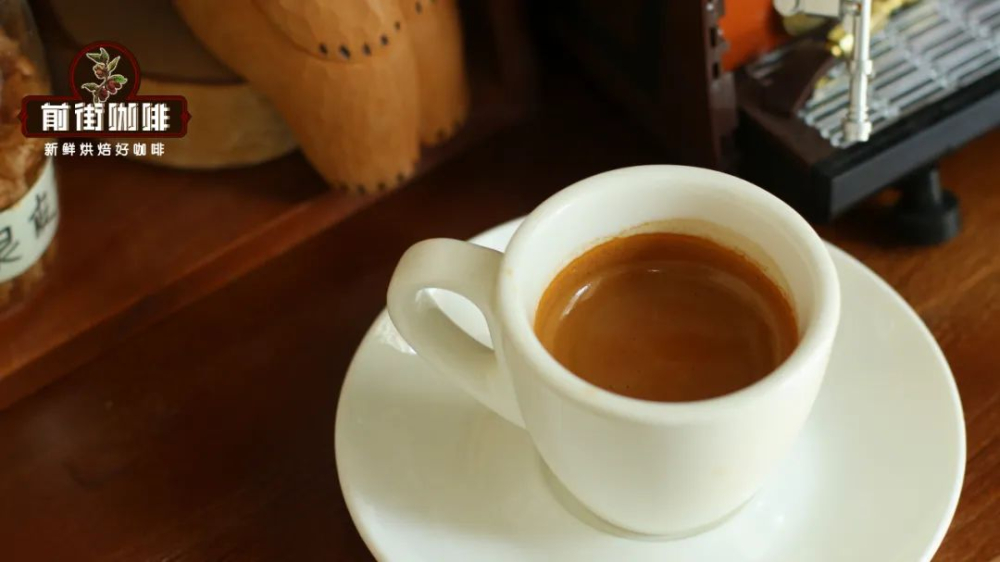
So they asked the barista to pour the espresso into water to dilute it. This watered-down espresso gradually became the preference of American soldiers, and Italian cafés also gave this diluted coffee a special name—"Americano," which is Americano coffee.
Latte
Everyone is more than familiar with latte. Originally, in Italian, "Latte" did not refer to latte coffee at all, but to milk.
Later, Italian cafés opened in the United States, in order to cater to local tastes, began mixing espresso with milk. In this drink, milk made up the larger proportion, so Italians called it Coffee latte. But people outside Italy, for convenience, simply called it Latte.
If you had walked into an Italian café in earlier times and only ordered a Latte without saying Coffee latte, what would most likely be served to you was a glass of pure milk. Because in the eyes of Italians, the word "Latte" always means milk and has nothing to do with coffee.
Cappuccino
The name Cappuccino comes from a direct translation of the Italian "Cappuccino." In Italian, it refers to a headscarf; and "Capuccin" refers to the Catholic Franciscan order. When the order went to Italy to preach, the locals gave it this name based on the dark brown robes and small pointed hats worn by the clergy.
The reason cappuccino got this name is that after people added steamed milk to coffee, they found that the resulting color was very close to the color of the Franciscan robes, while the milk foam floating on the surface of the coffee looked like the small pointed hats on the robes. And just like that, this cup of coffee was given the same name, "Cappuccino."
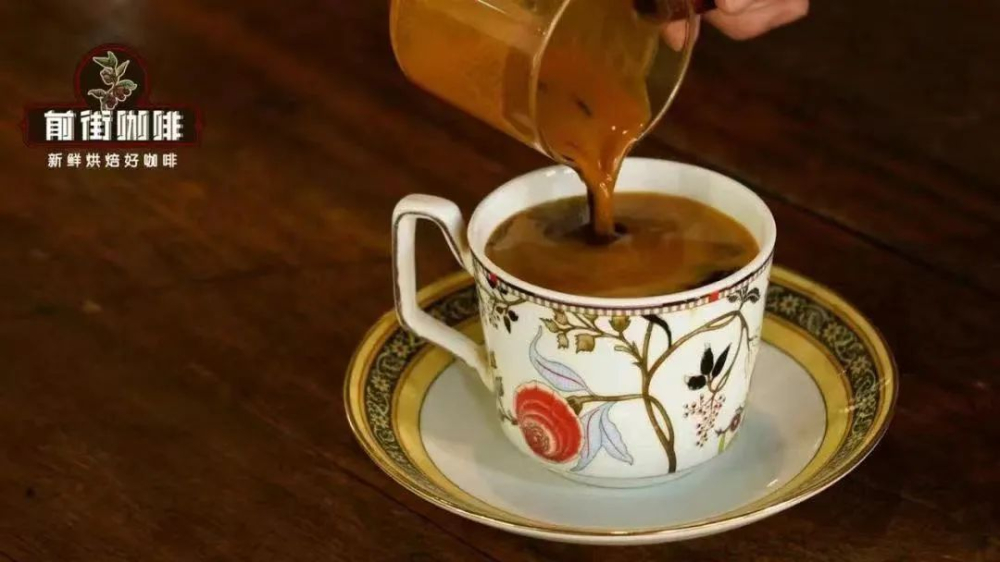
(A bit of trivia: cappuccino was actually born before latte appeared.)
Mocha Cafe
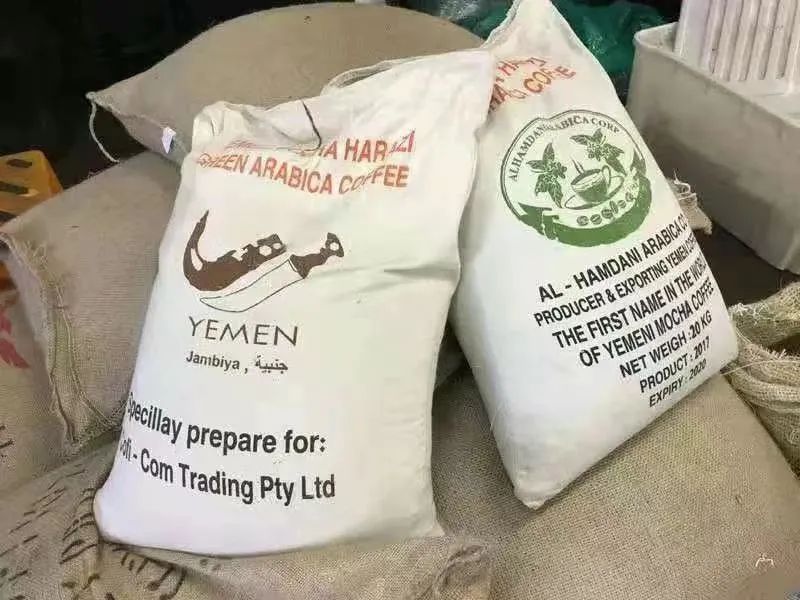
The special guest of this article—"Mocha." Its name contains three layers of meaning. The earliest Mocha referred to a port city in Yemen, a place name. For several hundred years starting in the fifteenth century, coffee beans from surrounding countries all had to be exported through the port of Mocha for trade, and Mocha Port thus became the button of the coffee world.
To prove that the coffee beans were exported from Mocha Port, the burlap sacks used for transport were specially printed with the word "Mocha." So Europeans began to call coffee shipped out of Mocha Port "Mocha coffee." This is the second meaning of Mocha—a place name became synonymous with coffee.
And these coffee beans exported through Mocha were rather small, and after dark roasting had moderate acidity, obvious sweet aftertaste, and also carried a very rich chocolate flavor.
By the eighteenth century, various places around the world gradually gained the ability to grow their own coffee, and Mocha Port lost its monopoly position in coffee. In addition, having long been under Ottoman rule, Mocha coffee beans became very scarce.
In order to taste the flavor remembered from before once again, people switched to using chocolate sauce to "season" espresso, turning traditional espresso into a drink with a "Mocha flavor." And so, Mocha has been passed down to this day as a rather special Italian coffee.
Macchiato, Caramel Macchiato
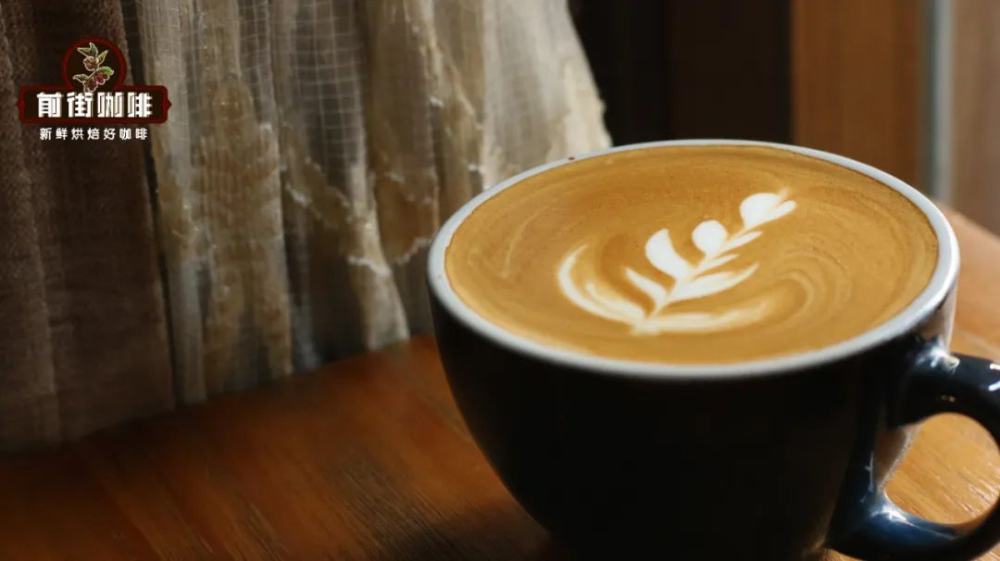
The earliest macchiato meant "mark." At the time, coffee bean quality was poor, and the extracted espresso was very bitter. People could not stand drinking the bitterness of espresso, so they asked the barista to add a little milk to the espresso to balance the bitter taste.
But after a small amount of milk was added, the color did not change noticeably, and it was hard to distinguish from a batch of espresso. To prevent confusion, the barista added a spoonful of milk foam on the surface of the coffee as a marker.
Later, as coffee bean quality improved, espresso no longer had a strong bitter taste, replaced instead by a rich and mellow mouthfeel. People naturally no longer needed to dilute espresso with milk, and macchiato gradually declined along with the improvement in coffee bean quality.
By the time the 1990s arrived, caramel macchiato appeared bearing the macchiato name. It was not meant to replace the declining macchiato, but was a brand-new product, and it gained a new meaning—"sweet brand." Because it is blended with caramel and vanilla syrup and is sweeter than the original coffee, caramel was used as the prefix, and it was named caramel macchiato.
Flat white
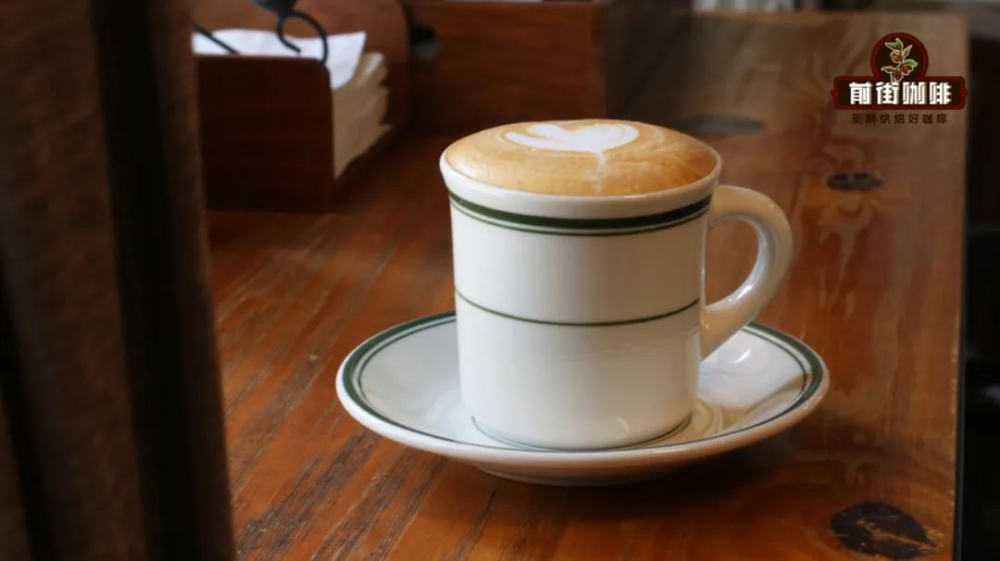
In the last century, Italians brought espresso to Australia, New Zealand, and other places. The thick milk foam of cappuccino and latte did not suit local preferences, so people began to steam the milk foam thinner. When thin milk foam blended into the coffee, the liquid surface became flatter and flatter, until only a thin layer remained, completely level with the rim of the cup, forming today's Flat White. Flat means "flat," while White refers to milk coffee.
For a long time, Flat White was considered a relatively niche choice. It was not until 2015, when Starbucks introduced it into its own product system, named it "馥芮白," and promoted it around the world, that Flat White turned around and became one of the most popular drinks in the mainstream coffee market. In China, we usually call this milk coffee from Oceania "澳白."
Dirty
Dirty means "dirty," so dirty is also called dirty coffee. People gave this cup of coffee this name mainly because when the espresso gradually flows downward from the upper surface, the brown of the espresso seeps bit by bit into the white of the milk below, just like a white canvas being stained. Therefore, people named it "Dirty" dirty coffee.
- END - Front Street Coffee
No. 10, Baoqian Street, Yandun Road, Dongshankou, Yuexiu District, Guangzhou, Guangdong Province
The above content is compiled by CoffeeHunters, a coffee news website.


