








Is Brazilian Bird Poop Coffee Worth the Price?
Civet coffee, often called kopi luwak, is made when a civet eats coffee cherries and the beans pass through its digestive tract. Enzymes and fermentation change the flavor, and the rarity of the process pushes the price up. Brazilian bird poop coffee follows a similar idea, using birds instead of civets to produce a costly cup.
Whether it is worth drinking depends on what you value. The flavor is often smoother and less acidic, but blind tests rarely rank it above well-processed specialty beans. Much of the price comes from scarcity and story rather than from measurable quality. If you are curious, try a small amount. If you want good coffee, a fresh single-origin bean costs far less.
Coffee culture is becoming increasingly popular, and all kinds of exotic coffees keep emerging. After Indonesia's civet coffee took the world by storm, Brazil in recent years has introduced "bird poop coffee"—made from beans that have been eaten by the red-wattled curassow as coffee cherries and excreted in its droppings. Locally called "the best coffee in Brazil," it sells for about 1,118 Brazilian reais per kilogram (roughly 1,650 yuan), placing it among the most expensive coffees in the world. Front Street Coffee takes you through the origins of bird poop coffee, its flavor characteristics, the reasons behind its high price, and whether it and other novelty coffees like civet coffee are truly worth public acceptance.
▲
Click to follow | Daily specialty coffee culture magazine Coffee Workshop
As coffee gradually becomes part of people's daily lives, all kinds of bizarre "poop coffees" have also begun to take their place in modern society.
After Indonesia's civet coffee swept the globe, the "bird poop coffee" launched by Brazil in South America in recent years has also slowly come into public view.
It is said that these coffee beans come from a bird species native to South America called the red-wattled curassow. They favor eating coffee cherries, and the beans excreted in their droppings after digestion are collected and processed to make bird poop coffee. However, finding the droppings of these birds and happening to come across undigested coffee cherries is quite difficult, so production is extremely limited. Compared with ordinary coffee, bird poop coffee has a richer, fuller body, with a nutty sweetness and a sweet aftertaste.
These birds generally live in Brazil's tropical rainforests and are good at selecting ripe, high-quality coffee cherries, giving local coffee production a distinctive flavor. It is also hailed as "the best coffee in Brazil," selling for up to 1,118 Brazilian reais per kilogram domestically (about 1,650 yuan), and retail prices may be even higher after export overseas.
In response, some netizens said bluntly on social media, "Just hearing the name makes me not want to try it," and "No matter how expensive it is, I wouldn't drink it even if it were free." Indeed, most people would find it hard to comfortably enjoy such a pricey coffee that is also psychologically hard to accept.

A media outlet contacted the person in charge of a coffee farm in Brazil, who explained why bird poop coffee is priced so high: these beans depend mainly on wild birds rather than captive breeding, so they cannot be produced at low cost, and the price naturally remains high.
In addition, scarcity and uncertainty are also important factors—once the environment changes, this product might even cease to exist.
In Brazil, many tourists come especially for it, hoping while buying beans to try their luck and see whether they can witness the red-wattled curassow feeding on coffee cherries, because it is rumored that it specifically picks the highest-quality beans to eat.
Besides bird poop coffee, there are also civet coffee, macaque coffee, raccoon poop coffee, Vietnamese squirrel coffee, and various other exotic coffee beans.
Speaking of civet coffee, it was once a household name in the coffee world. At first, wild civets foraged for coffee cherries in the jungle on their own, and the beans came from their droppings. But later, some merchants, driven by profit and unsatisfied with the sparse output from the jungle, began cruelly locking civets in cramped cages, feeding them only coffee cherries, and force-feeding them in large quantities to obtain more beans, forcing them to eat and excrete, then excrete and eat again. For civets, which are naturally timid and freedom-loving, this was undoubtedly a catastrophe. Later, after many animal protection advocates learned of this, they began to boycott civet coffee, and only then did it gradually fade from discussion.
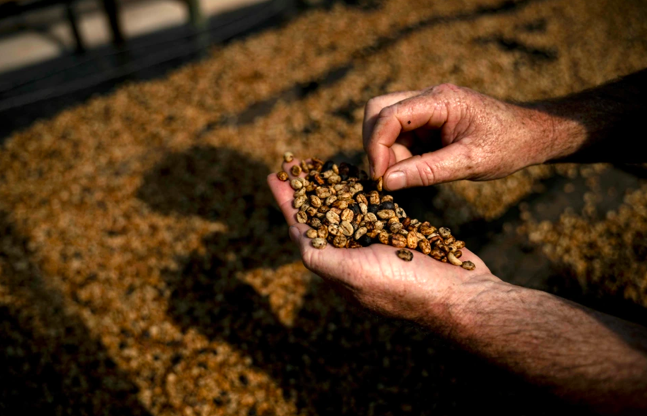
Because bird poop coffee is precious due to its scarcity, selling for about 1,600 yuan per kilogram, it has already ranked among the world's most expensive coffees. Overall, bird poop coffee is undoubtedly a new attempt, but whether it is civet coffee or this one, they are probably only a fleeting trend. As things stand, this kind of novelty coffee is not suitable for mass consumption.
What's more, is this coffee really fragrant? It is probably clearly the aroma of money.
Image source: Internet
Disclaimer: Some images in this article are from the Internet. For some content on the website, such as images, we will respect the original author's copyright and indicate the source. However, due to the large volume, a few images and texts may not have been credited in time; please forgive us. If the original author has any dispute, they may contact the website for handling. Once verified, we will correct it immediately. Compiled and edited by "Coffee Workshop." Please indicate the source when reposting. If there is any infringement, please inform us for deletion. Thank you~!
The above content is compiled by CoffeeHunters, a coffee news website.


