







Which Pour-Over Coffee Mistakes Slow Down Beginners?
Pour-over coffee attracts home learners because it offers pure flavor, low entry cost and flexible operation, but scattered online tutorials lead many people into the same mistakes. Six common pitfalls stand out: treating every parameter as roughly right, rushing or mistiming the bloom, misreading the hamburger bed, circling the wrong way, cutting the flow too early or late, and misusing Golden Cup theory.
Each pitfall shows up in the cup. Loose dosing lets coffee particles vary, so the bed extracts unevenly and the taste drifts. Beginners improve faster by fixing a brewing framework first and then executing it strictly, weighing the dose, timing the bloom and controlling the pour. Reviewing one change at a time makes it easier to find why a brew tastes off and to correct it on the next attempt.
Pour-over coffee, with its pure flavor, low barrier to entry, and flexible operation, has attracted a large number of enthusiasts to teach themselves at home. Although there are many tutorials online, they are often scattered and lack a system, causing many people to unknowingly fall into pitfalls during practice. From parameter control to bloom timing, from observing the "hamburger" to the direction of circling, to the timing of flow cutoff and the trade-offs of the Golden Cup theory, every step can affect the final flavor. This article sorts out six common self-learning pitfalls in pour-over coffee, analyzing them one by one based on practical brewing experience, to help you avoid detours on your self-learning journey, truly understand the essence of extraction, and thereby brew a cup of coffee that satisfies you.
The advancement of the specialty coffee wave has brought pour-over coffee into more and more coffee shops of various styles. With its advantages of pure flavor expression, low entry cost, and relatively low operational threshold, it has become the first choice for many people starting their self-learning journey in coffee.
In the internet age, channels for self-learning pour-over coffee are becoming increasingly abundant. Not only are there extraction theories with key points distilled, but tutorials can also be found for various equipment, steps, techniques, and details. However, precisely because this knowledge is so easily obtained and often lacks a clear system, many self-learners easily step into pitfalls during operation.
Pitfall One: All parameters are "roughly about right"
Many friends who are just starting out plan their pouring scheme before extraction, but once they begin actual operation, they do not strictly execute the set parameters. "A few tenths of a gram less in coffee dose doesn't matter," "just let the water sit for a bit after boiling," "just eyeball the water amount, a little more or less doesn't matter"... If every item deviates a little, the final taste in the cup will be more than just a little off.
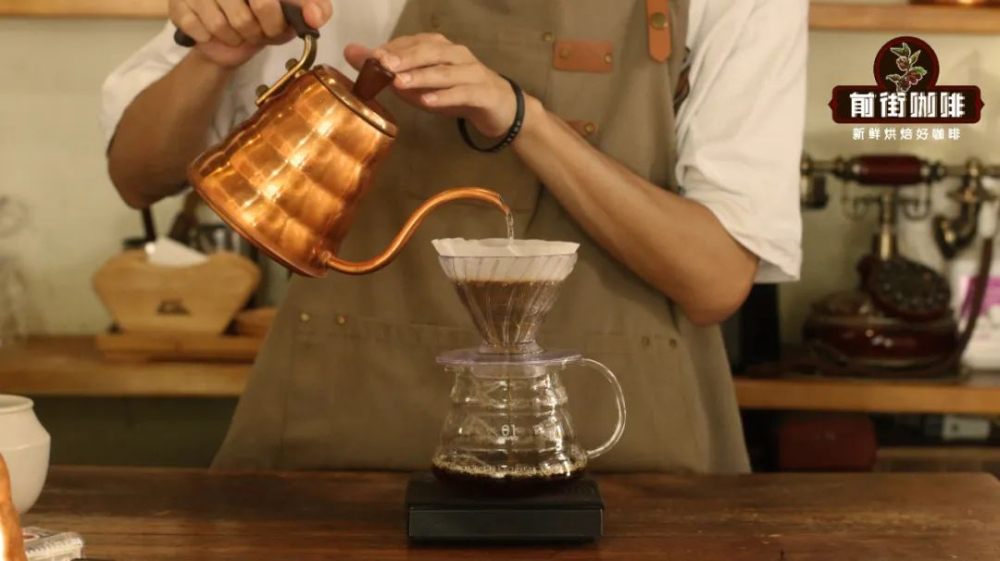
For beginners, after setting the brewing framework, strictly executing according to the established parameters is very crucial. Only in this way, when reviewing your parameters later, can you eliminate unstable factors from the source and more directly identify the reasons why the coffee doesn't taste good.
Pitfall Two: Starting the timer only after the bloom ends
A 30-second bloom is a point almost every tutorial will mention, but some people think the timer should be started after pouring is completed, while others think it should be started when pouring begins—a difference of about 7 to 9 seconds.
Usually, when we talk about extraction time, we mean the total duration from the start of brewing to the end of dripping. As soon as coffee grounds and water contact, extraction has already begun, so the moment the first drop of hot water falls onto the coffee grounds is the starting point of the bloom, and timing should begin immediately. If you wait until pouring is finished to count 30 seconds, the actual bloom time will be stretched to about 37 to 39 seconds, and the total extraction time will also exceed expectations.
Pitfall Three: No "hamburger" during the bloom means the beans are not fresh
In many promotional advertisements or video tutorials, after hot water is poured onto coffee grounds, the coffee bed slowly rises to form a "hamburger"-shaped dome. The visual effect is very soothing, and this is also regarded as one of the signs of fresh beans. Over time, some beginners assume: when brewing fresh coffee, the bloom must produce a "hamburger," and if it doesn't rise, the beans are not fresh.
In fact, light-roasted beans that highlight floral and fruity notes are inherently harder, with a complete and compact structure, and they release gas more slowly when encountering water, so they will not show an obvious dome. In addition, when the grind is coarser, the coffee particles are larger, and saturated water absorption takes longer, so the degassing effect is poorer and the expansion is naturally smaller.
Pitfall Four: Pouring must circle clockwise
Circle pouring is our most commonly used agitation method, circling evenly from the inside outward to fully extract soluble flavor substances. Many friends who are just getting started, after learning about circle pouring, immediately fall into another blind spot—the direction of circling. In response, Front Street once brewed two pots of coffee with the same parameters, changing only the circling direction, and found no obvious difference.
In principle, pouring clockwise or counterclockwise will not bring much change. The size of the circle, the height of the pour, the thickness of the stream, the speed, the pouring duration, whether the flow is stable... these can all affect the final flavor expression of the coffee, while the circling direction is only an extremely minor factor. As for choosing clockwise or counterclockwise, it entirely depends on personal habit; as long as you always circle in the same direction, that's enough.
Pitfall Five: Removing the dripper before the coffee liquid has finished dripping
Some friends rely heavily on flow cutoff in their daily brewing, always feeling that the last 10 to 20 milliliters of tail liquid is the source of bitterness and astringency, so they often choose to discard it. There are also brewers who are overly cautious, always staring at the extraction time on the electronic scale. Once it exceeds 2 minutes and still hasn't finished dripping, in order to "protect" the coffee in the server from being affected, they hurriedly remove the dripper.
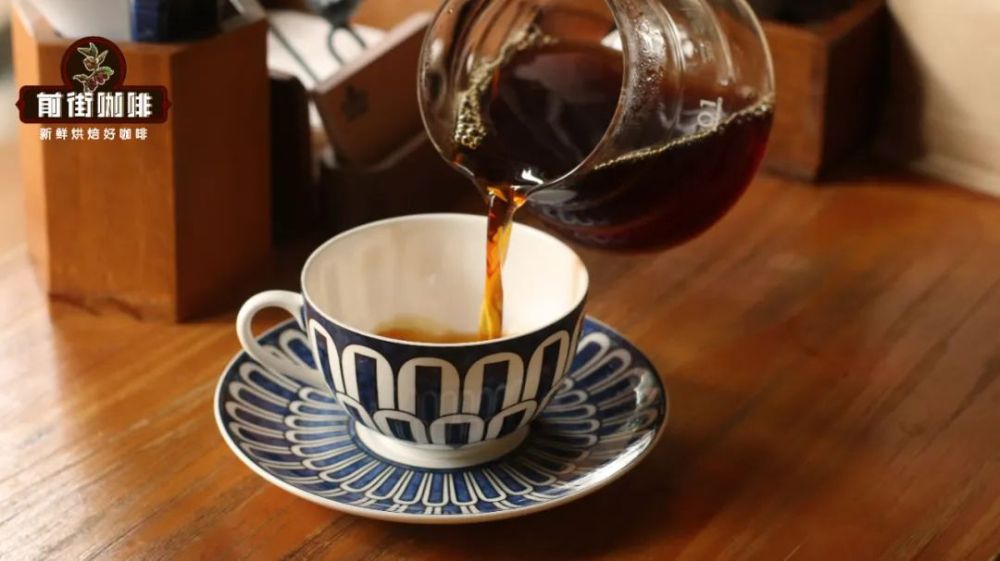
In either case, flow cutoff means the coffee-to-water ratio becomes inaccurate, and the actual coffee liquid is less than the set value. Front Street once conducted an experiment: pouring water according to a normal 1:15 coffee-to-water ratio and tasting the tail-end coffee liquid from flow cutoff, there were no negative flavors such as bitterness or off-flavors. Blindly relying on flow cutoff will instead lose some flavor substances and make the coffee lack a lingering finish. If the tail liquid really does taste distinctly bitter and astringent, then you should consider how to optimize the brewing parameters rather than relying solely on flow cutoff.
Pitfall Six: Talking about the Golden Cup theory before sensory perception
Some friends, after learning concepts such as extraction yield and concentration, constantly cling to a bunch of standard data. Before tasting, they emphasize terms like over-extraction or under-extraction, while neglecting the true charm of pour-over coffee: flavor.
First of all, for beginners who have not been learning pour-over coffee for long, Front Street does not advocate the view that "a one-degree difference makes a world of difference in taste." We suggest starting from your own senses, judging whether adjustment is needed, and then deciding the direction of adjustment based on your needs and ability combined with conservative brewing parameters. If you are not yet very familiar with many extraction principles and your water control ability is still rusty, yet you blindly pursue so-called "professionalism," it may be difficult to find effective room for progress on your learning path.
- END - Front Street Coffee
No. 10 Baoqian Street, Yandun Road, Dongshankou, Yuexiu District, Guangzhou, Guangdong Province
The above content is compiled by CoffeeHunters, a coffee news website.


