








How does milk temperature change how lattes taste?
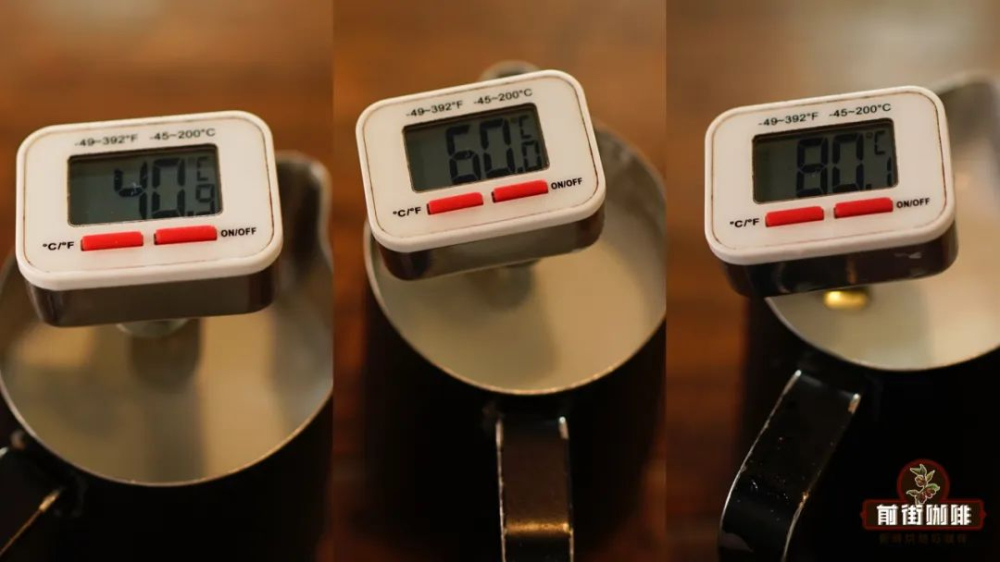
A side-by-side test steamed milk at 40°C, 60°C and 80°C and made one latte at each, using 20g of a blend extracted to 40ml and 210ml of fresh milk per cup. The 40°C milk had a weaker aroma but still noticeable sweetness; the 60°C milk sat in the range where lactose sweetness peaks, around 55–65°C; the 80°C milk rose fast and foamed heavily.
The higher temperature behaves differently during steaming. Once milk passes about 70°C, foam expands rapidly even without deliberate aeration, so steaming is stopped roughly five seconds after it rises. That is why many cafés hold to a conventional serving temperature rather than chasing a hotter cup, even for takeaway orders in cooler weather.
As the weather turns cooler, the demand for hot milk coffee rises noticeably. To make sure takeaway customers still feel warm when they receive their drinks, some coffee shops steam the milk far above the usual 65°C, even close to scalding. What changes does a higher or lower milk temperature actually bring to a latte? In this article, we steam milk at three temperatures—40°C, 60°C, and 80°C—and make lattes with each, comparing aroma, sweetness, milk foam texture, and overall balance one by one to find the ideal serving temperature, and explain why everyday cafés usually don't change their milk temperature lightly.
As the weather gradually turns cooler, in-store customers' demand for hot coffee is also increasing. To let takeaway customers receive a cup of warm, hand-holding milk coffee, many coffee shops steam what should originally be milk at around 65°C to near scalding. So here's the question: is a latte made with an unconventional milk temperature actually good?
What differences does milk temperature make in a latte Heating milk to a certain temperature activates lactose and increases the milk's sweetness—that is, in the 55–65°C range. So if it exceeds this temperature, can it still maintain that sweetness? Or, what different flavors would a latte made below this temperature express?

For this test, Front Street used 40°C, 60°C, and 80°C—three different milk temperatures—to make one cup of milk and one latte each. The coffee beans chosen were the Warm Sun blend used in Front Street stores (20g of coffee powder extracted into 40ml of coffee liquid); the milk was Guangming fresh milk (210ml per latte).
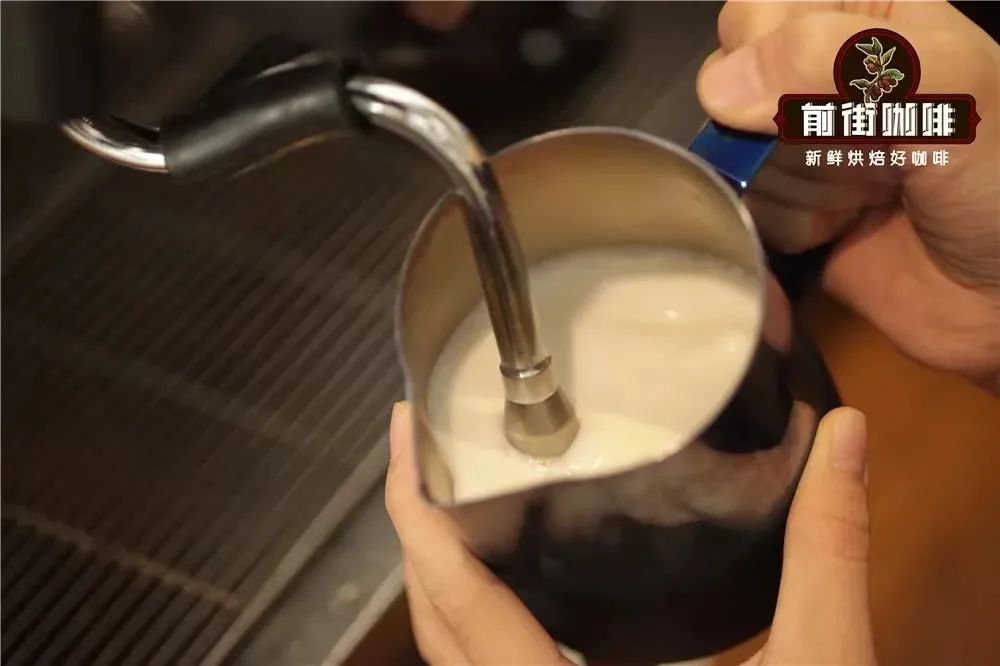
All using the conventional milk steaming method, an experienced barista can judge when to stop steaming by the temperature felt in the palm of the hand, while beginners can use a thermometer to get more accurate data.

For 40°C milk, you can stop steaming once it feels slightly warm in the palm; for 60°C milk, the stopping point is when it starts to feel a bit hot to the touch; 80°C milk is a bit special—when the milk reaches 70°C, even if you don't deliberately create foam, the foam still expands rapidly and keeps rising in height. What follows is a rapid rise in temperature, so when it has expanded and risen for about five seconds, we can stop steaming; the touch feels very hot. Milk tasting time
The 40°C milk has a weaker aroma but still a fairly noticeable sweetness when drunk. The 60°C milk has a more obvious aroma, and its sweetness is also very prominent. The 80°C milk is full of aroma, but because it's too hot to taste, after the milk temperature drops slightly, it tastes less sweet and carries some of milk's gamey smell. Next, we'll make them into lattes respectively and see what major differences there are. Latte tasting time
40°C latte: the milk foam on entry is rather coarse, the aroma is weak, and the sweetness is fairly noticeable. 60°C latte: the milk foam on entry is very fine and smooth. The flavors of coffee and milk are very balanced, neither overpowering the other, and it's full of sweetness. 80°C latte: it burns the mouth on entry, and the milk foam is separated from the coffee beneath. When the temperature drops to 60°C, it still feels like it burns the mouth, and the sweetness is far less than a latte made directly with 60°C milk. After the temperature drops below 40°C, you can taste the coffee and milk, but the overall mouthfeel is rather thin, with obvious bitterness.
Looking at the three temperatures together, around 60°C is indeed a relatively ideal temperature, showing a mouthfeel and flavor superior to the other two. And we can see that within this temperature range there is another advantage: the steamed milk foam is smooth and fine. The 40°C milk didn't have enough time to steam the foam fine, so its foam was the first among the three to show large bubbles; while the 80°C milk was too hot, causing the proteins in the milk to break down, so not only was the flavor not more prominent, it also developed negative flavors—even after cooling, its drinkability was far inferior to the first two cups.
So now everyone knows: unless there's a special need like takeaway, coffee shops mostly won't change the milk temperature, precisely in order to present a latte that is complete in color, aroma, and taste.
Front Street Coffee
No. 10, Baoqian Street, Yandun Road, Dongshankou, Yuexiu District, Guangzhou, Guangdong Province
The above content is compiled by CoffeeHunters, a coffee news website.


