







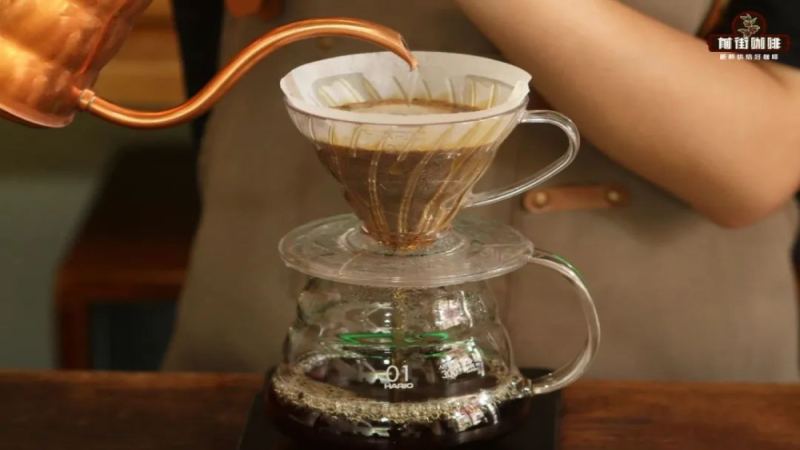
How should pouring circles change with each hand drip coffee dripper?
Circular pouring exists to agitate the coffee bed so water carries flavor compounds out evenly across all coffee particles. In a cone-shaped V60, the bed is thickest near the central hole and thinner at the edge, so pouring starts at the center and spirals outward. In Kalita and Wave drippers the flat or wedge bed calls for a different route.
With a wedge-shaped Kalita, the water stream should stay inside the flat bed area rather than run down the filter walls. For a flat-bottom Wave, pour in steady circles across the whole bed to keep the depth even. When the flow becomes unstable, slow the pour and keep the kettle spout close to the water surface, because even extraction stays the goal in hand drip coffee.
One of the joys of pour-over coffee lies in the extraction differences brought by different drippers. Front Street Coffee often receives questions from beginners: Do you also draw circles with a wedge-shaped dripper? What should you pay attention to when pouring water with a flat-bottom dripper? This article takes three representative drippers—V60, Kalita, and Wave—as examples, starting from the coffee bed structure, explaining the specific routes for circular pouring one by one, and including solutions for when the water flow is unstable. Whether you're just getting into pour-over or want to advance your understanding of how drippers and techniques pair together, you'll find practical references here.
Previously, Front Street Coffee published a post about how to brew a beautiful coffee bed. A beginner friend asked Front Street Coffee in the comments: "Do you also draw circles when pouring with a wedge-shaped dripper?" "Is there anything special to pay attention to when pouring water with a wedge-shaped dripper?"
To help newcomers who are just getting into pour-over and aren't yet familiar with various drippers understand, Front Street Coffee will now discuss the specific approaches to circular pouring with different drippers.
What is the purpose of circular pouring?
The reason we pour in circles is to use the impact force of the water stream to agitate the coffee bed, helping water more effectively carry out flavor compounds, ultimately achieving even extraction of the entire coffee bed. Key point: Even extraction is the fundamental purpose of circular pouring .
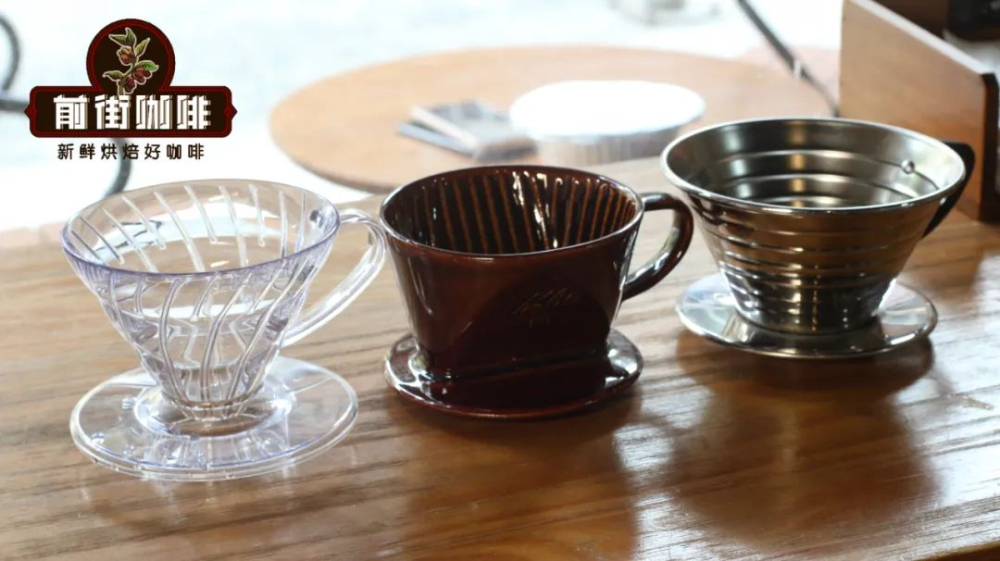
Currently, the common pour-over drippers on the market fall into roughly three categories: cone-shaped, wedge-shaped, and flat-bottom. Today, Front Street Coffee will use the V60 (cone-shaped representative), Kalita (wedge-shaped representative), and Wave dripper (flat-bottom representative) for a demonstration.
1. V60 Cone-Shaped Dripper
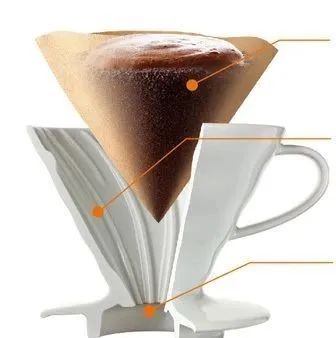
The V60 is arguably the most recognizable cone-shaped dripper, and everyone should be familiar with it. If you cut the dripper in half from the side, the coffee bed in a cone-shaped dripper forms a triangular distribution—the closer to the central drainage hole, the thicker the coffee bed; the farther toward the outer edge, the thinner it becomes.
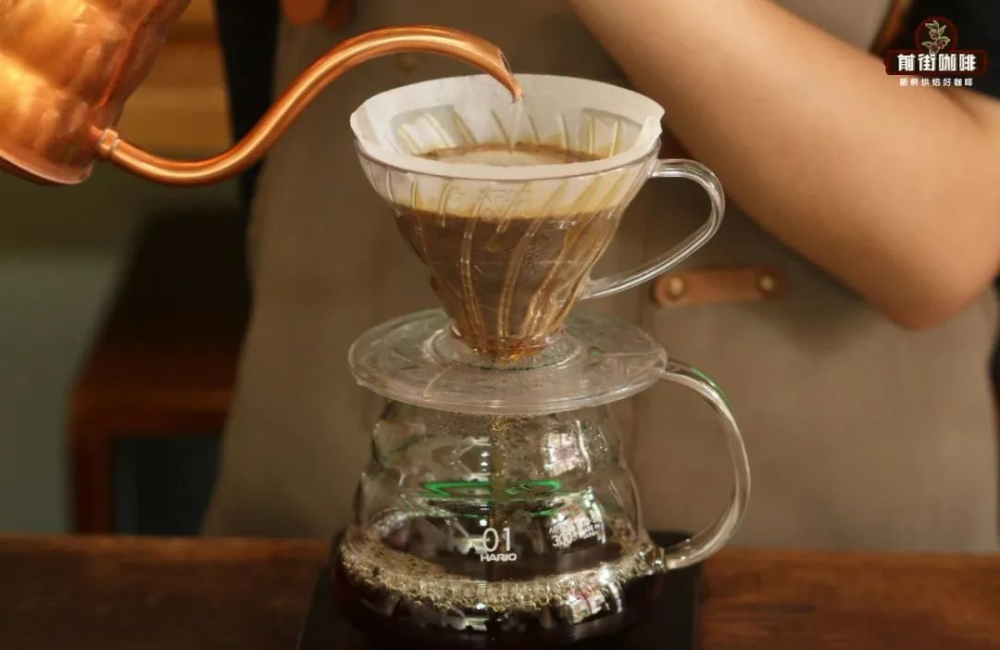
Therefore, when pouring in circles with a cone-shaped dripper, start from the center, slowly draw circles outward, expanding ring by ring like a mosquito coil, then gradually spiral back toward the center at the outermost ring, repeating this to achieve even extraction.
2. Kalita Wedge-Shaped Dripper
The Kalita is a classic three-hole wedge-shaped dripper. Viewed from the side, it is wide at the top and narrow at the bottom, resembling a fan shape—this structure helps concentrate the water flow. The opening is oval-shaped, leaving a wider area to allow coffee particles to distribute more evenly and reduce stacking, unlike cone-shaped drippers where the coffee bed thickness varies greatly from top to bottom.
Since the opening of a wedge-shaped dripper is oval, it's not as easy to pour evenly as with a cone-shaped dripper, so the circular route mainly follows an "oval mosquito coil." You still start pouring from the center, but the "mosquito coil" trajectory changes from a perfect circle to an oval, achieving even extraction.
3. Wave Dripper (Flat-Bottom Dripper)
The Wave dripper can be considered the pioneer of flat-bottom (also called cake) drippers, first designed and launched by the Kalita company (slightly later than the wedge-shaped dripper). The flat-bottom dripper retains a circular opening similar to cone-shaped drippers while adopting a special flat-bottom design, making the coffee bed more uniform from top to bottom in the dripper.
Flat-bottom drippers must be paired with special filter papers. Because the shape closely resembles a cupcake, flat-bottom drippers are also called cake drippers. This special filter paper shape weakens the effect of the dripper's flow channels, placing higher demands on pouring—when pouring in circles, the water stream must not touch the inward-folded edge of the filter paper, otherwise it's easy to collapse the coffee wall.
Like the cone-shaped dripper, start pouring from the center and slowly draw circular "mosquito coils" outward, but the maximum range of the circles can only reach the position of the cake filter paper's inward fold, then slowly spiral back to the center.
What to do if your hand is unsteady and the water flow fluctuates?
For friends just starting with pour-over, imperfect water flow control is perfectly normal. If you want to minimize the impact of pouring technique on extraction results, you can switch to a center-point pouring method after blooming, relying on the water's diffusion and immersion to complete extraction. This way, you only need to focus on keeping the water flow rate steady, without worrying about uneven agitation of coffee grounds and ultimately uneven extraction caused by unstable water flow.
The circular routes discussed here by Front Street Coffee are mainly to help friends new to pour-over more quickly understand and become familiar with their own drippers. In reality, drippers come in many classifications from model to material. When you've practiced to the point where your water flow is stable and controllable, you can advance to trying more drippers paired with different brewing techniques, experiencing the specific differences of each dripper through comparative experiments, and gradually developing your own understanding of drippers.
Finally, Front Street Coffee believes that there are thousands of paths to brewing a delicious cup of coffee. As long as you learn and practice more, effortlessly mastering various drippers and techniques is not difficult at all.
Front Street Coffee (FrontStreet Coffee)
No. 10 Baoqian Street, Yandun Road, Dongshankou, Yuexiu District, Guangzhou, Guangdong Province
The above content is compiled by CoffeeHunters, a coffee news website.


