







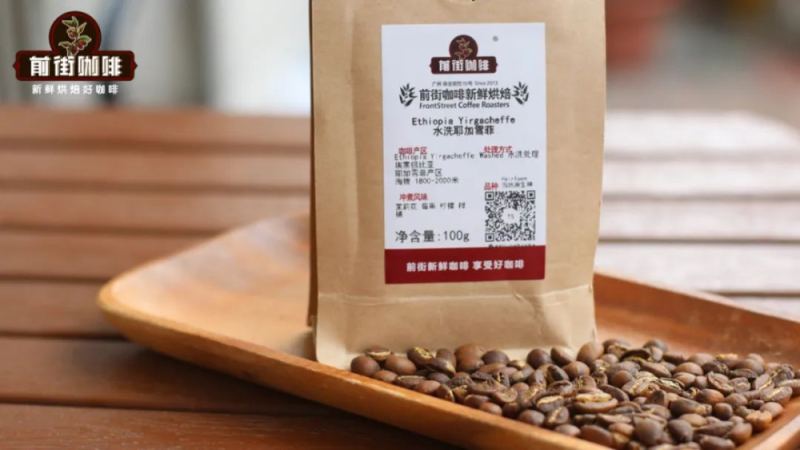
Why is Yirgacheffe usually lightly roasted?
Coffee beans are not lightly roasted just to create citrus flavors; under light roast conditions they more readily show them. Roast degree sets the basic direction of flavor, unfolding from acidity and aroma toward body and bitterness. Yirgacheffe, with its lemon and citrus acidity, has spread into specialty shops in small county towns and is commonly sold as a lightly roasted coffee.
Light-roasted coffee holds more compounds such as decanol, n-hexanol, vinyl formate and isopentenol, and these support the citrus aromas drinkers perceive. Roasters weigh first crack, second crack, bean density and origin traits, trading off even bean appearance against acidity. Drinkers raised on Mandheling for decades may find that bright acidity unfamiliar, while younger customers treat it as a break from older expectations.
As Yirgacheffe, with its bright acidity reminiscent of lemon and citrus, enters more and more specialty coffee shops in small county towns, many people begin to wonder: why do coffee beans need a light roast? And why does light-roasted coffee even exist? In fact, coffee beans are not light-roasted in order to express citrus flavors; rather, under light-roast conditions they more easily present citrus notes. The roast degree determines the basic direction of flavor, unfolding in sequence from acidity, aroma, to body and bitterness. This article starts from Front Street Coffee's roasting practice, combining first crack and second crack, bean density and origin characteristics, to explain the flavor logic between light roasting and Yirgacheffe, and how roasters trade off between uniform appearance and acidity expression.
Many people's first impression of coffee is still "with sugar and milk," yet Yirgacheffe has quietly entered specialty coffee shops in small county towns—such is the speed of specialty coffee's expansion. So why has Yirgacheffe, with its soft fruit acidity, become a representative of this kind of coffee? And why is it usually lightly roasted?
We often use lemon and citrus to describe the taste of Yirgacheffe, and in earlier years grapefruit was also popular for this purpose, which likewise applies to the flavor expression of most medium-light roasted beans. Light-roasted coffee contains more substances such as decanol, n-hexanol, vinyl formate, and isopentenol, and it is precisely these that let us perceive citrus-like aromas.
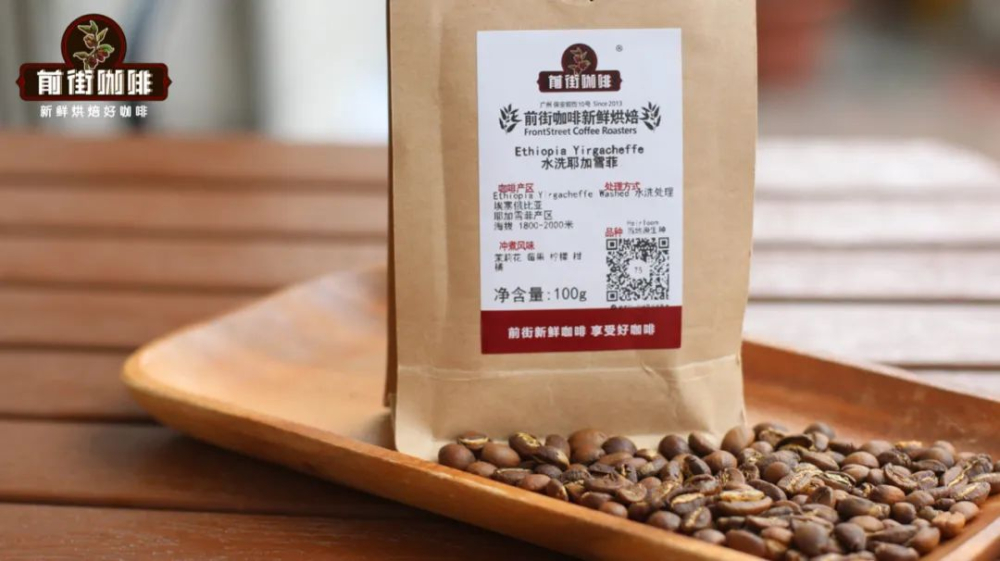
The emergence of fruit-acid flavors in coffee is partly because everyone had been drinking bitter coffee for many years, and the palate needed some variation; especially once regional flavors were specifically classified, acidic coffee gained a rationale for existence. For old coffee drinkers who have had Mandheling for decades, the somewhat sour feeling of Yirgacheffe may not suit them; but for young people, it is precisely a drink that thoroughly overturns the conventional impression of coffee.
Coffee beans are not lightly roasted in order to express citrus flavors; rather, when lightly roasted, coffee beans present citrus flavors. Besides being influenced by terroir, the taste of coffee beans is more often determined by roasting, which sets the basic framework of coffee flavor.
Anyone who has even a slight understanding of coffee roasting will know the concepts of first crack and second crack. Temperatures may differ somewhat across machines, but taking the machine used by Front Street Coffee (FrontStreet Coffee) as an example, the time coffee beans reach first crack is at around 183°C. For most beans, we define a drop temperature of 191°C as medium-light roast; when it reaches 193-195°C, it becomes a medium roast; developing for another twenty or thirty seconds brings it into second crack at 197-202°C.
With different machines and different beans, the rates of temperature rise and drop temperature will differ somewhat, and this difference comes from the heat conduction of the coffee beans. But basically, first crack and second crack are used as markers of the coffee beans' maturity. The difference between light roast and medium roast is just those 10 to 20 seconds, a difference of two or three degrees in drop temperature; although the difference is very small, the heat conduction mechanism of the coffee beans themselves will cause enormous differences in the coffee's taste. In this roasting process, as the roast degree goes from light to dark, the order in which coffee flavors appear is acidity—aroma—body—bitterness. In other words, if you want the flavor to tend toward pronounced acidity, the coffee beans' roast degree cannot be dark, nor can it possibly be dark.
The size, shape, density, and moisture content of green coffee beans should be considered comprehensively together with flavor. The larger the coffee bean and the higher the altitude, the greater the density, and the more roasting energy the moisture content will require. Next is the shape of the green beans: the closer the beans are in size, the closer the resulting outcome will be.
Because of the origin characteristics of Ethiopian beans, most belong to "Heirloom native varieties," and the bean varieties together with the local grading system mean that this origin naturally has beans both large and small, with uneven shapes. During roasting, small beans obviously cannot withstand the impact of heat as well. If the heat is not controlled well, the large beans may be roasted through while the small beans are burnt. Setting aside for now the effects on coffee beans during roast development, judging simply by underdeveloped, developed, and burnt, for roasting coffee of mixed sizes, the safest and most conservative approach is to get them developed and drop as soon as possible.
Some will ask: isn't good roasting just making the beans look uniform? This is indeed true for Mandheling, Colombia, Brazil, and Blue Mountain, where individual beans differ little and medium-dark roasting is dominant, because when individual differences are small, every bean needs the same amount of heat to reach the same degree.
Yirgacheffe can also use a "slow roasting" method to make the beans more uniform. Those who enjoy simmering soup will have this experience: after the water boils, turn the fire down very low—what Cantonese people often call old-fire fine soup. What is the cost? It is that with overly long simmering, the soup ingredients become tasteless.
Whether to seek a uniform appearance in exchange for some body, or to use a Nordic-style rapid ramp-up and rapid drop to obtain some pronounced acidic flavor, is a trade-off in roasting. There are also many who like to use Ethiopia as the base bean for blends; in such cases, beans that are fuller and more body-focused are usually needed to pair with it.
Because fruit acidity and floral notes are the signature impressions of medium-light roast acidity, some large-sized American beans are therefore also called light roast; but in fact, American beans that the same bean merchant calls medium-light roast very likely also need to be roasted darker than Ethiopian beans. This is merely a matter of wording or flavor description: larger beans naturally need more heat and temperature to be roasted to maturity.

The higher the altitude where the beans grow, the slower the growth they attract, the more intrinsic qualities they have, and the harder the beans are, so roasting also needs to go deeper. In the early stage of the Maillard reaction, more raw materials within the bean will cause the caramelization reaction to produce more aromatic substances, and the aroma will be more abundant. This is what roasting pursues—why not do it? And light roasting is also a choice made out of necessity.
The above content is compiled by CoffeeHunters, a coffee news website.


