








Why does Golden Mandheling dark roast pour-over coffee taste bitter?
Bitterness in dark roast coffee comes mainly from roast degree. During roasting, beans pass first crack, and the longer they stay in the roaster after that point, the more the acidic compounds are worn away and the more bitter-leaning flavors such as nutty and dark chocolate notes develop. Beans pulled right at first crack taste acidic instead.
Golden Mandheling is a useful example for brewing dark roast at home. Water temperature, grind size, dripper choice and pouring technique all shape how much bitterness lands in the cup. Lower temperatures and a coarser grind limit over-extraction, which is what turns a pleasant bittersweet finish into a harsh, dry one. The roasting process sets the ceiling; brewing decides how close you get to it.
Today, acidic beans dominate pour-over coffee menus, yet a group of seasoned enthusiasts remains devoted to the bitter taste of dark-roasted coffee. Where exactly does this bitterness come from? How does the degree of roast influence the flavor profile of coffee? The nutty aroma, full body, and bittersweet finish unique to dark-roasted beans are an experience that light-roasted beans struggle to replicate. Of course, a delicious cup of dark-roasted coffee also depends on proper brewing methods. Starting from the principles of roasting, this article analyzes the unique charm of dark-roasted bitter coffee, and using Golden Mandheling as an example, shares key parameters such as water temperature, grind size, dripper selection, and pouring technique, helping you brew a mild and smooth dark-roasted pour-over at home.

Walking into a coffee shop and ordering a pour-over these days, out of ten beans, probably eight carry some acidity. However, there is still a group of coffee lovers—like ascetic monks—who are devoted solely to bitter coffee. What exactly is the appeal of this bitter coffee? In an era where acidic coffee reigns supreme, why do so many connoisseurs still hold a torch for bitter coffee?
Where exactly does coffee's bitterness come from?
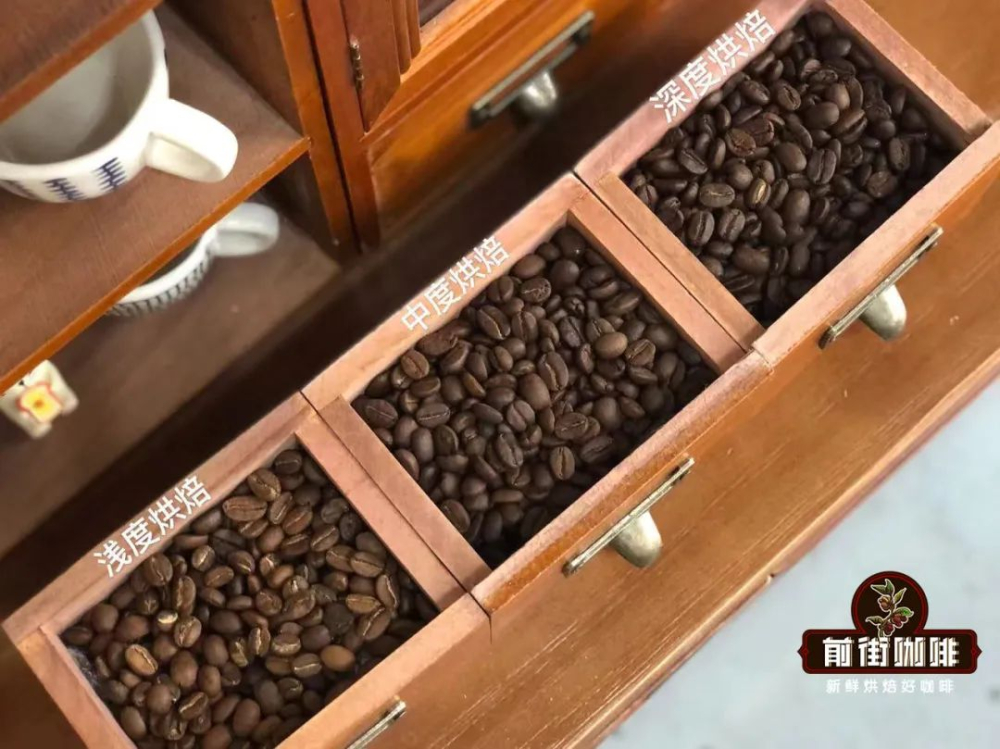
The acidity and bitterness of coffee are essentially determined by the degree of roast. There is a key term in the coffee roasting process called "first crack"—when coffee beans absorb heat to a certain point and can no longer accumulate energy, they release heat through cracking (accompanied by sound), and roasters use this to judge the roasting progress of the beans.
If the beans are removed right when "first crack" begins, the coffee will show pronounced acidity; if roasting continues after "first crack" starts and the beans are removed when the cracking sounds become密集, the coffee will have a sweet-and-sour flavor; if you still don't remove them and continue waiting until the cracking sounds completely stop, then the coffee removed after that begins to develop bitterness—the later the removal, the stronger the bitterness.
As the roast degree continues to deepen, the acidic compounds in the coffee beans are gradually worn away, and what ultimately emerges tends to be nutty, dark chocolate, and other bitter-leaning flavors. Therefore, compared with light-roasted beans, dark-roasted beans do have a considerable gap in flavor complexity. But dark-roasted bitter coffee still has its own unique charm—something you cannot experience when drinking light-roasted beans.
The unique charm of dark-roasted bitter coffee
Coffee aroma: Dark-roasted coffee also possesses a captivating aroma. Unlike the floral and fruity acidity of light-roasted beans, these aromas manifest as complex notes of nuts, caramel, toast, chocolate, and more. What many coffee connoisseurs seek is precisely this nutty, bitter fragrance.
Full body: Dark-roasted coffee delivers a mouthfeel that light-roasted coffee cannot match. Many coffee lovers who favor Blue Mountain and Mandheling do so largely because dark-roasted coffee provides a fuller body—while perceiving the flavor, you can also savor the plump, smooth volume of the coffee in your mouth.
Sweet finish: Yes, even dark-roasted bitter coffee hides its own sweetness—what we often call "sweetness within bitterness." A properly extracted cup of dark-roasted bitter coffee, though dominated by bitterness on the first sip, may reveal caramel, maltose, and similar sweetness upon careful tasting. After swallowing, bitterness gives way to sweetness, and the sweet fragrance lingers in the mouth—a characteristic that light-roasted coffee struggles to replicate.
Of course, the unique charm of bitter coffee described above must be built on the premise of proper brewing. If you don't want to brew an unforgettable bitterness, Front Street Coffee suggests choosing conservative parameters when brewing.
Front Street Coffee uses brewing Golden Mandheling as an example: water temperature controlled at 86–88°C, grind size with a 20-mesh sieve passing rate of 70% (ek43s 11 clicks), using a Kono dripper, coffee-to-water ratio of 1:15, extraction time of about two minutes.
Compared with brewing light-roasted beans, using a lower water temperature and coarser grind for dark-roasted beans makes the coffee's bitterness milder and avoids extracting off-flavors; in terms of dripper selection, using slower-flow drippers like Kono and Kalita makes it easier to brew a heavy body and mild flavor.
When brewing dark-roasted beans, the bloom must be ensured to be thorough. You can judge this from two points: first, confirm that all coffee grounds are saturated and some coffee liquid has already been released at the bottom; second, the coffee bed remains stable after expanding and no longer releases gas outward.
Adjustments are also needed when pouring. It is recommended to slow the pouring rhythm as much as possible and make the stream correspondingly thinner to avoid over-washing the coffee bed, which would extract more bitter and off-flavors; pour in small circles, and the coffee wall will be slightly thicker than with light-roasted coffee.
If you've read this far and are starting to take an interest in dark-roasted bitter coffee, then go ahead and give it a try~
- END - Front Street Coffee (FrontStreet Coffee)
No. 10, Bao'an Qian Street, Yandun Road, Dongshankou, Yuexiu District, Guangzhou, Guangdong Province
The above content is compiled by CoffeeHunters, a coffee news website.


