







Why were unopened coffee ingredients poured into the sewer?
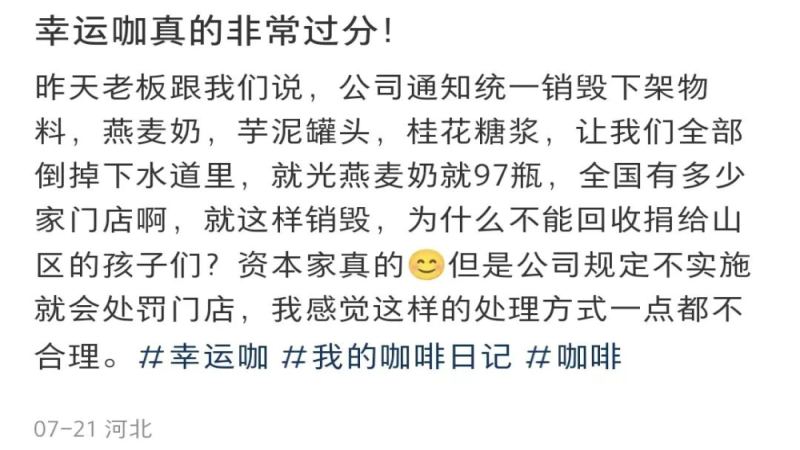
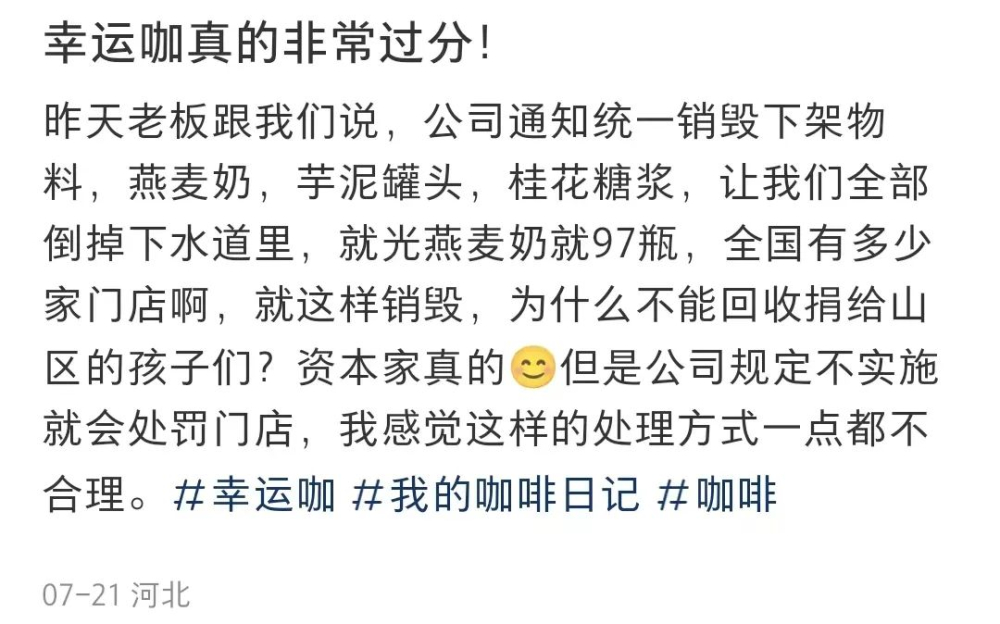
Chain brand Lucky Cup required stores to destroy ingredients for discontinued products, according to employees who posted evidence online. Unopened oat milk, taro paste cans and osmanthus syrup had to be poured into the sewer, with video and photos submitted as proof, or stores faced penalties.
Industry peers confirmed the destruction took place, and footage showed dozens of boxes of oat milk and hundreds of bottles of syrup opened one by one and emptied into drains before the packaging was recycled. The products have since been removed from the brand's ordering mini-program, while questions about food waste, environmental pollution and compliance remain open.
The chain coffee brand Lucky Cup has recently drawn attention due to the way it disposed of ingredients for discontinued products. According to multiple netizens claiming to be store employees, the company required that unopened materials such as oat milk, taro paste cans, and osmanthus syrup be uniformly poured into the sewer for destruction, with video and photo evidence required, or else the stores would be penalized. After footage of large quantities of perfectly good ingredients being dumped directly spread, many industry peers confirmed that this did happen, while netizens discussed food waste, environmental pollution, and compliance. The brand has now removed the related products from its ordering mini-program, but whether the destruction method is reasonable still deserves further consideration.
▲
Click to follow | Daily specialty coffee culture magazine Coffee Workshop
Generally speaking, when the food and beverage industry disposes of ingredients, it is mostly because the packaging is damaged, the quality has deteriorated, the shelf life has expired, or they have been contaminated and can no longer be used, leaving no choice but to do so.
However, recently, a netizen claiming to be a Lucky Cup employee posted on an online platform that the company notified stores to uniformly destroy related materials because products were being discontinued, requiring ingredients such as oat milk, taro paste cans, and osmanthus syrup all to be poured into the sewer. If stores failed to carry this out on time, they would also face penalties.
In other words, as long as stores nationwide still had the above raw materials in stock, even if they had never been opened, they all had to be destroyed, and the process had to be recorded with videos and photos as evidence.
Image source: Diligent Pandora
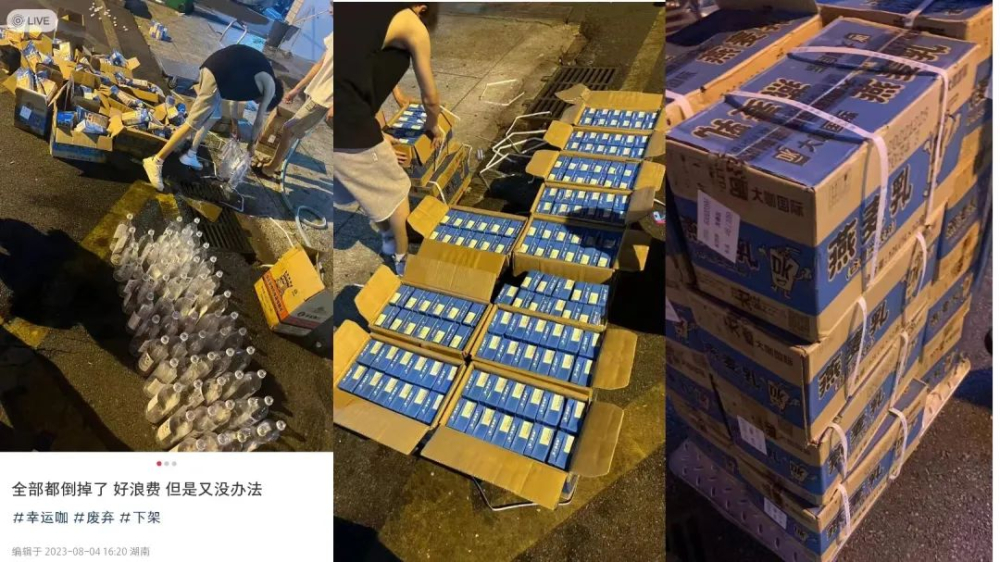
Yesterday, another Lucky Cup employee posted on social media the process of pouring out oat milk and syrup. From these images and videos, it can be clearly seen that dozens of boxes of unopened oat milk and hundreds of bottles of osmanthus syrup were opened one by one and poured directly into drains, after which the empty boxes and bottles were recycled.
Shortly after the content was posted, many Lucky Cup peers also confirmed in the comments that the destruction of ingredients did indeed happen. No matter how much material remained, it all had to be poured out. After finishing, the entire destruction process also had to be recorded with videos and photos and uploaded to the work group before the company would issue the corresponding subsidy.
In response, many netizens admitted that although they understood the employees were not to blame, this practice was simply too wasteful. Perfectly good food had to be thrown away directly, making people lament that it was "a reckless waste of God's gifts." If it could be handed over to people in need and put to good use, that would be even better. Some said bluntly, "Although I know capital has money, I still feel it is such a waste," while others suggested, "The company might as well donate it to disaster-hit areas."
From the footage, the amount of remaining raw materials was indeed considerable. Some netizens believed the brand could have set a buffer period before delisting, allowing individual stores to sell off this batch of products as quickly as possible, which would still be better than wasting on such a large scale. As for pouring raw materials directly into drains, some netizens also pointed out that stormwater drains (sewers) are originally meant to discharge excess rainwater, and discharging such a large amount of materials on site could very likely cause environmental pollution and also does not comply with relevant regulations.
When the topic turned to channels for free donation, some netizens also analyzed that giving things away for free requires considering storage, transportation, and distribution, and once the recipients have problems after consuming them, the donor would still have to bear responsibility, so the cost and risk would actually be higher.
It is understood that the several materials mentioned above were mainly used to make Lucky Cup's previously launched osmanthus oat latte and coconut taro paste ice cream. At present, both products have been removed from Lucky Cup's ordering mini-program.
In fact, when many food chain brands on the market handle expired but unsold goods, they basically also choose destruction, and throwing them away directly is the most time-saving and labor-saving method. Considering that the goods have already expired, this practice is understandable. But unlike expired food, requiring all ingredients to be poured into the sewer and destroyed immediately simply because a seasonal product is planned to be delisted inevitably makes people feel that these foods have been wasted. From another perspective, if these raw materials were not destroyed but handled through other internal methods, it could also trigger other food safety issues and make operators bear risks, which is likewise a dilemma for companies.
Disclaimer: Some images in this article are from the internet. For some content on the website, such as images, we will respect the original author's copyright and indicate the source. However, due to the large volume, some images and texts may not have been credited in time. Please understand. If the original author has any disputes, they may contact the website for handling. Once verified, we will correct it immediately. Compiled and edited by "Coffee Workshop." Please indicate the source when reposting. If there is infringement, please inform us for deletion. Thank you~!
The above content is compiled by CoffeeHunters, a coffee news website.


