








How Does Honey Coffee Process Differ From Natural and Washed?
Honey processing sits between natural and washed methods. After floatation sorting, the pulp and part of the mucilage are removed, then the beans dry on raised beds without touching water, leaving sticky mucilage that looks like honey. Natural coffee dries whole cherries on beds or ground; washed coffee ferments in water tanks after pulping, then dries.
The method began in Costa Rica, where a 2008 earthquake caused power outages and water shortages, so depulping machines and washing could not run, and honey processing became the practical choice. It later spread worldwide, and grades range from white to yellow, red, and black based on how much mucilage remains during drying.
Many people, upon first hearing "honey process," mistakenly think it involves fermenting coffee beans with honey. In fact, it is a processing method that falls between natural (dry) and washed processes. Later, a new variant called "raisin honey process" emerged within the honey process family. In this article, Front Street Coffee will guide you through the core differences between honey, natural, and washed processes, revisit the origin story of honey processing, and analyze the characteristics of white, yellow, red, and black honey one by one. Finally, we will compare the similarities and differences between Brazil's "raisin process" and Costa Rica's "raisin honey process," helping coffee enthusiasts fully understand the ins and outs of these processing methods.

Before truly understanding "honey process," did you also once think that honey processing meant using honey to ferment coffee beans?
Actually, it is a processing method that falls between natural and washed processes. After honey processing became popular, a new method called raisin honey process emerged. Today, Front Street Coffee will briefly discuss these two processing methods with you.
Origin
Most of the honey-processed coffee beans we commonly encounter today come from Costa Rica, which is also the birthplace of honey processing. The initial popularity of honey processing in Costa Rica was not driven by a pursuit of a specific flavor, but rather because the 2008 earthquake caused power outages and water shortages. Depulping machines could not operate, and the coffee could not be washed, so honey processing naturally became the primary choice for processing plants at the time. Afterward, with the promotion of various industry players, honey processing spread from Costa Rica to the rest of the world, opening a new chapter in coffee processing methods.

Differences
In traditional natural processing, the processing plant spreads the selected and cleaned whole coffee cherries on the ground or raised drying beds for dry fermentation. In washed processing, the cherries are first soaked in water to remove floating beans, then the pulp is removed, followed by fermentation in water tanks where microorganisms break down the remaining mucilage, and finally drying and dehydration (sun-drying or machine-drying).
In honey processing, after floatation selection of the coffee cherries, the pulp and part of the mucilage are removed, and then the beans are placed directly on raised drying beds to dry without coming into contact with water. During this process, some pulp and mucilage adhere to the coffee beans, and the sticky mucilage takes on a honey-like appearance, which is why this processing method is called "honey process."
A Spectrum of "Honeys"
Costa Rican coffee farmers discovered that the less mucilage removed, the shorter the fermentation and sun-drying time, and the longer the drying time, resulting in darker parchment bean color and deeper fermentation; conversely, the lighter and less fermented. With the help of precision depulping machines developed by Colombia's Penagos company, Costa Rican coffee farmers experimented with various degrees of mucilage removal, leading to derivatives such as black, red, yellow, and white honey. (
PS: In reality, the main factors affecting the final color of parchment beans are the sugar content of the coffee cherries and the fermentation state—that is, factors such as the frequency of turning during drying, and humidity levels.)
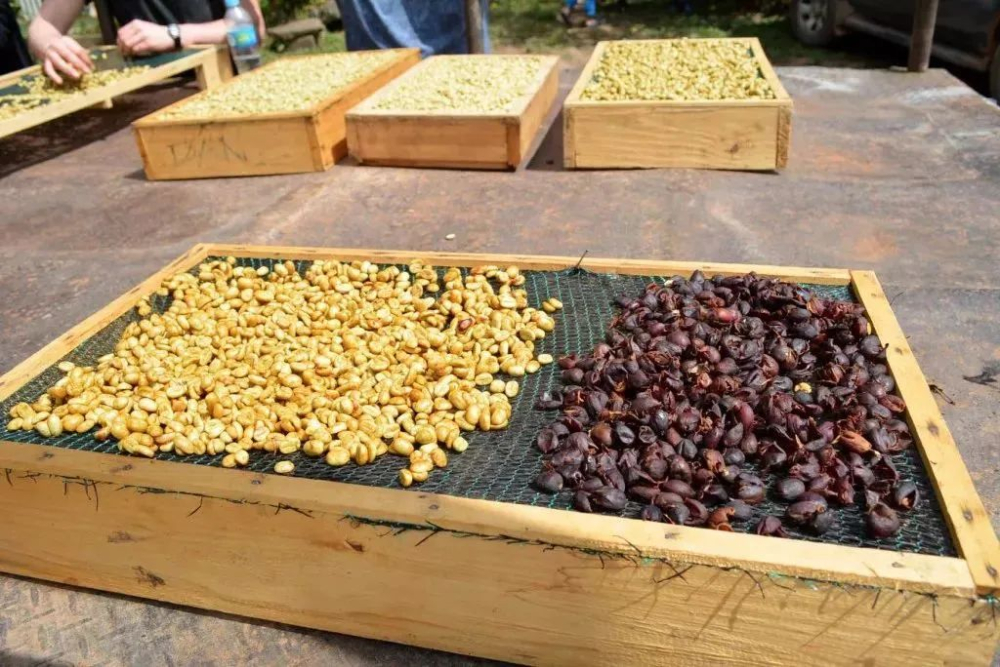
White Honey : Almost all mucilage is removed, and the beans are dried directly without any mucilage remaining. This is the fastest drying method, resulting in parchment beans that appear whitish, similar to washed coffee. Yellow Honey : The remaining mucilage layer is thicker than white honey, and the drying speed is slower than white honey. The parchment beans appear yellow, and the degree of fermentation is higher than white honey. Red Honey : The mucilage is thicker than yellow honey, and drying is slower than yellow honey. The beans appear reddish-brown, and the degree of fermentation is higher than yellow honey. Black Honey : The mucilage layer is the thickest, making it the hardest to dry, taking the longest time, with the highest degree of fermentation, appearing dark brown. Black honey has the thickest mucilage layer, so it is also the most difficult to control in terms of fermentation. If the wine-like fermentation is properly managed, the flavor is rich and full-bodied, and in terms of flavor, it is closest to naturally processed coffee beans.
Raisin Honey Process
The so-called "raisin honey process" originated from the 2017 Cup of Excellence in Brazil. The champion, Gabriel Alves Nunes, used a Yellow Bourbon in the competition with a "raisin process," and went on to win first place. International judges gave it a high score of 92.33, and the auction price reached $124.5 per pound, breaking historical records. This previously obscure processing method quickly became famous at the time.
The two processing methods are different. Brazil's "Raisin process" leaves the fresh cherries on the tree without harvesting, allowing them to overripen until the skin shrivels to a dark purple, resembling raisins, before picking. The flavor is more intense.
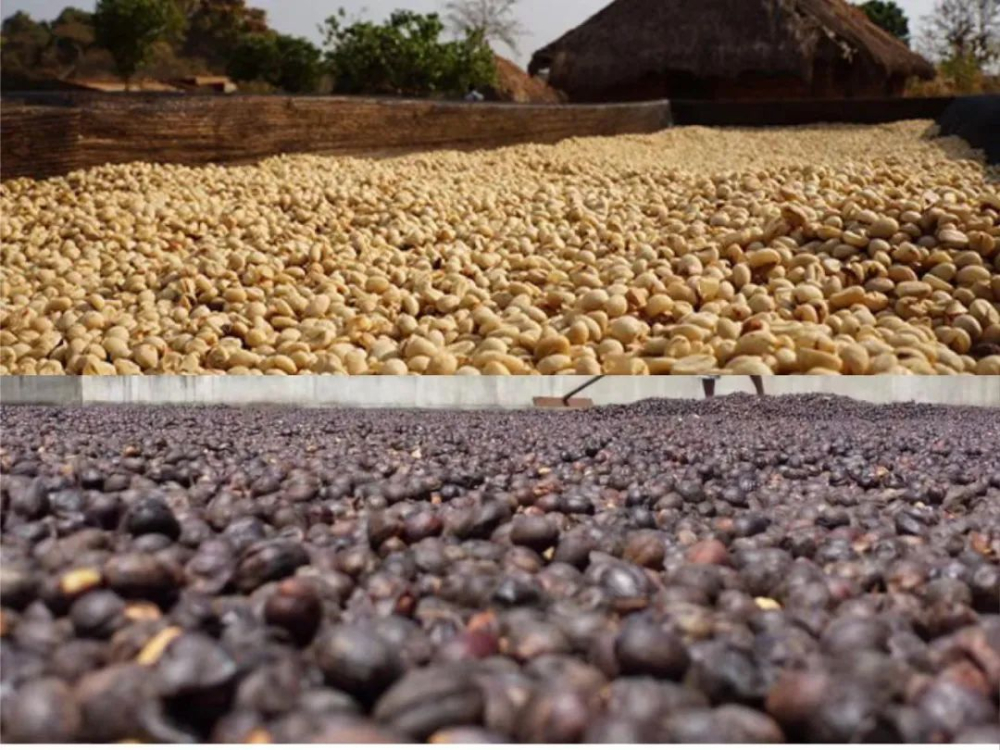
In contrast, Costa Rica's popular "raisin honey" is more refined compared to Brazil's "raisin process": cherries are hand-picked, floatation-selected for fully red ripe fruit, and the high-quality fruit is spread out to dry for 2–3 days until the skin wrinkles like raisins. Then the skin and pulp are removed, and the semi-dry mucilage is retained for drying. This involves two stages of fermentation—whole fruit and honey-process mucilage—making the entire process complex and labor-intensive.
In both processing methods, the whole fresh cherry is fermented to a raisin-like state before further processing, and Costa Rican coffee farmers adopted the Brazilian name to distinguish it from traditional honey processing.
- END -
The above content is compiled by CoffeeHunters, a coffee news website.


