








How Does Dripper Design Affect Extraction and Temperature?
Dripper design comes down to two things: flow rate and temperature control. Body shape, internal ribs and the size and number of bottom holes set how long coffee stays in the dripper, and that dwell time decides whether the cup tastes thin and under-extracted or bitter and over-extracted. Material governs how heat moves.
Ceramic, resin, glass and metal differ in thermal conductivity and specific heat capacity, which affects the water temp for brewing coffee as it passes through the bed and the stability of that temperature across the pour. Cone, fan and basket shapes, ribbed or smooth walls, and single or multi-hole bases all tune flow, so match the dripper to the brewing method.
Faced with drippers of all shapes on the market, friends new to pour-over coffee are often baffled by names like V60, Kono, and Origami, as well as materials such as ceramic, resin, and metal. This article starts from the fundamental structure of the dripper, breaking down what the body shape, internal ribs, bottom hole, and material each mean. You will learn that these designs ultimately point to two core elements: flow rate and temperature control, and understanding the differences in thermal conductivity and specific heat capacity can help you match a more suitable dripper to your brewing method. Front Street Coffee takes you through the principles, so you no longer blindly follow trends, and find that perfect cup of coffee for yourself.

There are now countless types of drippers on the market, each with increasingly unusual shapes, and sellers tout different advantages, leaving beginners who have just become interested in pour-over coffee often overwhelmed. V60, Kono, Origami, Melitta, and so on—is higher price always better? Among ceramic, silicone, resin, and metal, which material has the advantage? Does switching to a specific material or a specific dripper guarantee a tastier cup of coffee? Faced with these questions, rather than giving direct answers, it is better to teach everyone how to analyze. This time, Front Street will provide a detailed interpretation of the dripper's construction, understanding this tool from the most basic level.
Each dripper has its own unique appearance: the body can be conical, fan-shaped, or basket-shaped, while the inner wall features ribs of varying curves and numbers, some even with no ribs at all. The number and size of the holes at the bottom also differ. These variations叠加在一起,确实让刚入门的人难以抉择。
However, all these shapes, wall ribs, and hole designs ultimately serve the same element—flow rate. Flow rate refers to how long the coffee stays in the dripper during brewing. Too short, and the coffee is prone to under-extraction, tasting thin and lacking flavor; too long, and it easily leads to over-extraction, producing bitterness and unpleasant flavors. Under the same conditions of dose, grind size, and pouring method, simply changing the flow rate can yield coffee with completely different flavor characteristics.
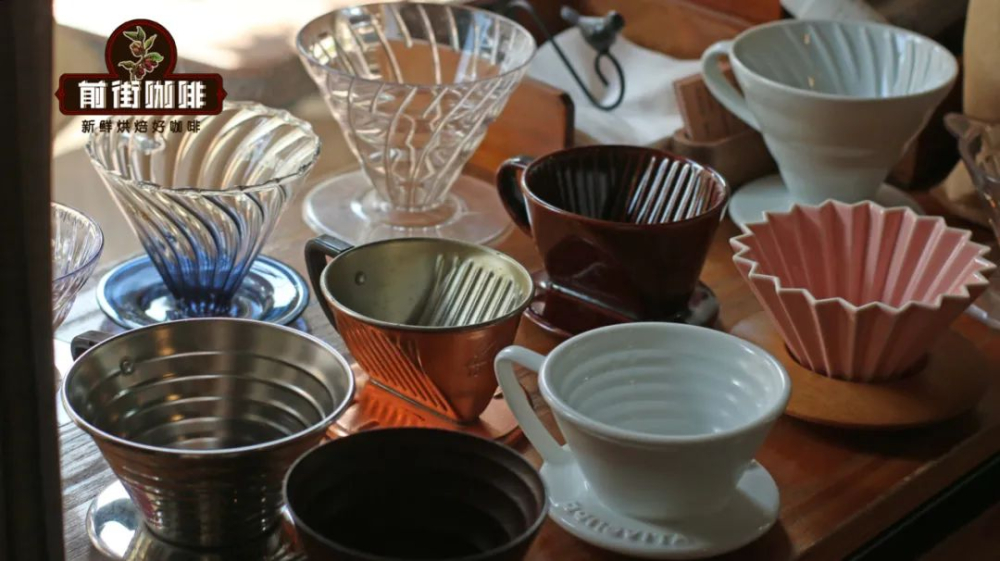
But it's important to understand that the dripper itself is not the only thing that can change the flow rate; we can also adjust it through brewing techniques. Depending on the method, you can slow down a fast-flowing dripper or speed up a slow-flowing one.
Having covered the dripper's shape, next is the second feature—material. For each shape, drippers come in different materials such as resin, glass, ceramic, and metal, and these materials ultimately affect the core element: temperature control.
Here we need to introduce two technical terms: "thermal conductivity" and "specific heat capacity." "Thermal conductivity" refers to the speed of heat transfer. When the dripper contacts hot water, whether heat spreads quickly or slowly corresponds to high or low thermal conductivity. Undoubtedly, metal and ceramic have the highest thermal conductivity; as soon as the dripper touches hot water, heat rapidly spreads through the entire body, making it feel very hot to hold. In contrast, materials like resin and rubber are the opposite—temperature changes only begin to manifest after brewing for some time.
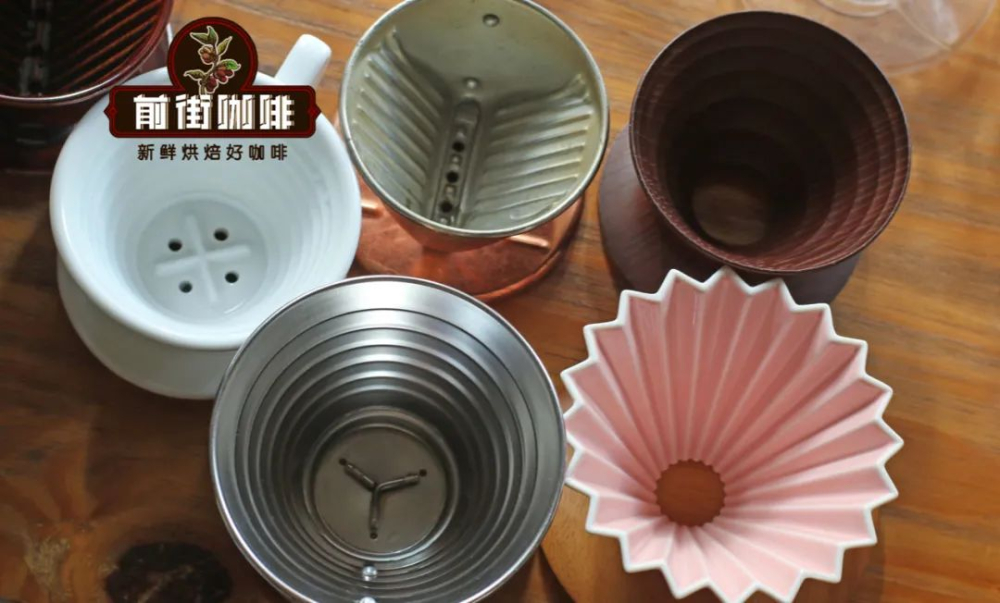
"Specific heat capacity" refers to an object's heat capacity, i.e., its ability to retain heat. The higher the specific heat capacity, the stronger the ability to absorb and release heat, and vice versa. Plastics and resins have relatively high specific heat capacities, with a stronger ability to absorb and release heat; if you want to change the temperature of such drippers, they need to be exposed to high temperatures for longer to store heat. Metals and ceramics are on the opposite end: although they conduct heat quickly, they cannot store heat for long.
So at the beginner stage, we should first understand the basics of drippers before choosing one that suits us. Resin and plastic materials are more suitable for long brewing methods because they can maintain temperature for a long time; metal and ceramic are better for short brews, as rapid heat conduction allows the coffee grounds to extract fully in a short time, and proper cooling prevents over-extraction—stopping at just the right point. There is no perfect dripper, nor a perfect method, but we can pair the right method with a suitable dripper to ultimately produce a nearly perfect cup of coffee.
Front Street Coffee (FrontStreet Coffee)
No. 10, Bao'an Front Street, Yandun Road, Dongshankou, Yuexiu District, Guangzhou, Guangdong Province
The above content is compiled by CoffeeHunters, a coffee news website.


