







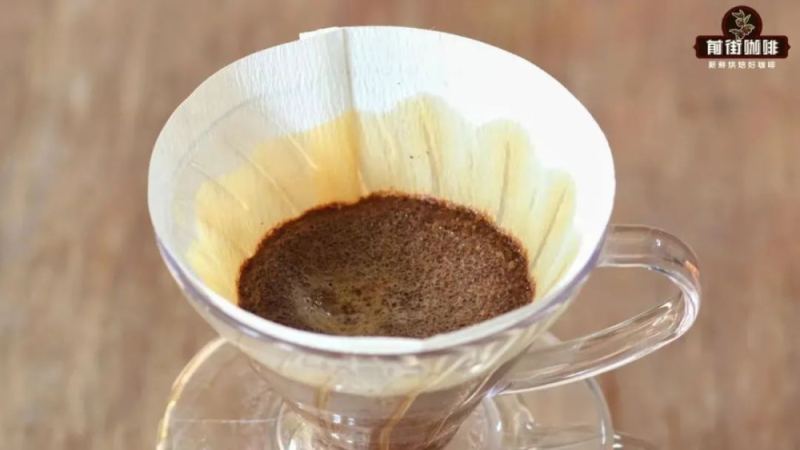
What makes the bloom dome disappear in pour-over coffee?
The bloom dome collapses for five main reasons: stale beans, overly coarse or fine grind, uneven saturation, pouring too forcefully, and dark roast levels. Freshly roasted coffee holds carbon dioxide that escapes during the bloom and lifts the bed into a rounded hamburger shape. When gas has already escaped or the pour disrupts the bed, the dome flattens or sinks.
During roasting, heat expands the bean structure and carbon dioxide collects inside; after cooling, that gas slowly releases. The bloom lets grounds vent most of it so soluble compounds extract evenly. Front Street Coffee's brewing trials show that controlling bloom water volume and circling technique helps produce a consistent dome, even with roaster coffee of varying freshness.
When the coffee bed expands into a rounded "hamburger" dome during the bloom of a pour-over, it is an important visual signal for many enthusiasts to judge the state of the beans and whether the brewing is on track. But when the dome refuses to appear, or the coffee bed even collapses downward, which step has gone wrong? This article breaks down, one by one, the specific reasons why the bloom fails to form a dome, from five dimensions: coffee bean freshness, grind size, the degree to which the coffee bed is saturated, pouring force, and roast level, and offers actionable adjustment suggestions. The article also draws on Front Street Coffee's brewing experiments to share practical tips for controlling bloom water volume and circling technique, helping you consistently produce an ideal hamburger-shaped coffee bed.
When brewing freshly roasted coffee, watching the hot water contact the coffee bed and slowly puff up into a rounded degassing dome is a scene many pour-over enthusiasts take delight in. But once the coffee bed fails to swell during the bloom and instead collapses downward, it is only natural to wonder: which step went wrong? Can this cup of coffee still taste good?
Why does coffee grounds puff into a "hamburger" during the bloom?
During roasting, the roaster inputs a large amount of heat into the coffee beans, the internal structure of the bean continuously expands, the pores on the cell walls of the green bean are further stretched open, and a large amount of carbon dioxide is stored within. After roasting ends and the beans return to room temperature, these gases begin to gradually release outward.
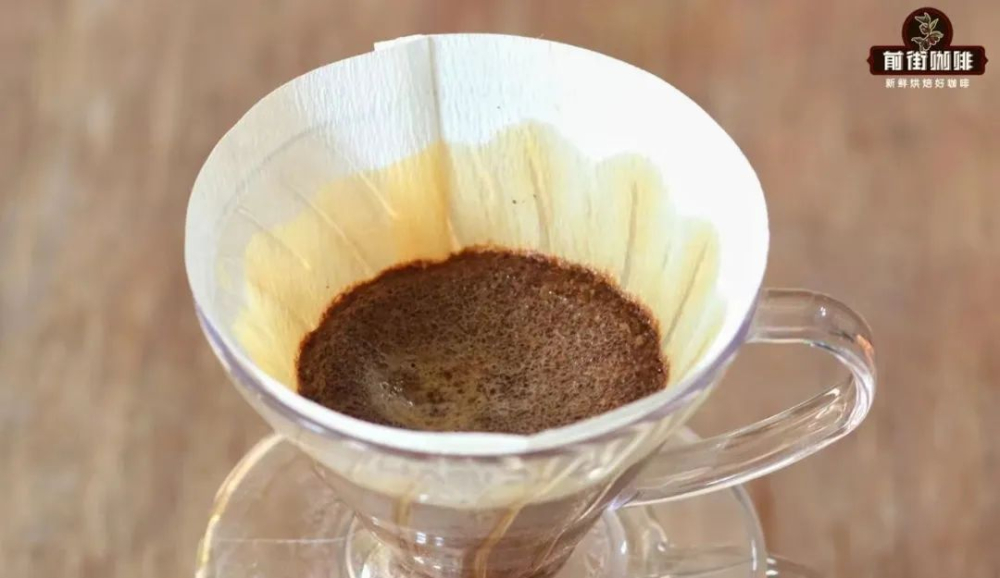
The core purpose of the bloom is to let the coffee grounds release most of their carbon dioxide at the right moment, while also "awakening" the soluble substances inside, making it easier to capture various aromatic flavors more precisely afterward. The "hamburger" we see is essentially the external manifestation of gas emissions from the coffee grounds. The higher the dome and the longer it lasts, the more intense the gas release.
What are the reasons no dome forms during the bloom?
1. The coffee beans are not fresh
From an extraction standpoint, the carbon dioxide in coffee beans is a double-edged sword. During everyday storage, the abundant gas inside unground beans can slow the loss of flavor substances; but once brewing begins, these gases that "run wild in all directions" upon contact with water hinder our extraction of aromatic components. It is precisely for this reason that the bloom, as an auxiliary extraction step, is especially important.
Generally speaking, for properly stored coffee beans, their carbon dioxide is basically fully released within forty to fifty days after roasting. Once the gas has escaped, the bloom naturally cannot form a "hamburger," and the aromatic substances lose their resistance and dissipate along with it, so the quality of the final brewed coffee declines noticeably.
2. The grind is too coarse
When the grind size is on the coarse side, the gaps between particles increase, and under the force of gravity, the hot water poured in flows into the lower pot before it can even penetrate the interior of the coffee grounds. With no water supporting the spaces between particles, the gas escapes through the cracks that have broken open, and the entire coffee bed collapses.
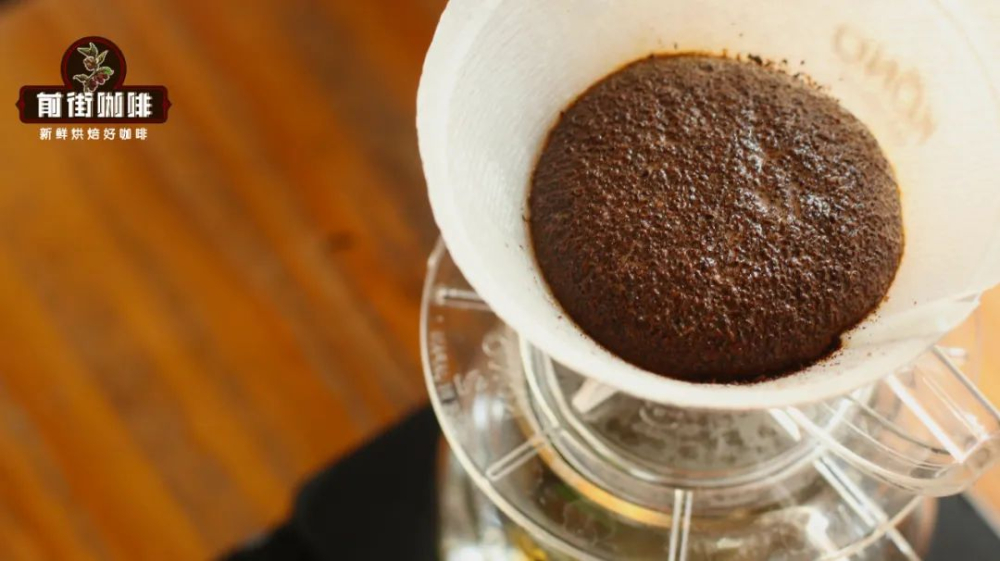
This situation is common when switching to new beans. For example, if the original grind setting suited a medium-dark roast coffee and you later switch to an anaerobically fermented bean (far more porous than a traditionally processed bean of a similar roast level), the grind being too coarse will cause no "hamburger" to appear during the bloom. If the coffee you brew also has no dome, tastes "watery," and has an extraction time shorter than 1 minute 55 seconds, Front Street Coffee recommends adjusting the grind finer (caster sugar coarseness) to bring the extraction yield back into balance.
3. Not all the coffee grounds were saturated
Some people worry too much about the bloom water volume and time, but still have room to improve their water control. After pouring the first bloom pour, some grounds remain dry, and the raised coffee bed tilts to one side, making it hard to form a "solid dome." The bloom is not thorough enough, and the brewed coffee will most likely be unevenly extracted. If you truly cannot saturate all the coffee grounds within twice the water volume, then pour a little more water (about 5 grams) to ensure all the coffee grounds are saturated and the gas can be released smoothly.
4. Too much water poured, or too much force
When devising a brewing plan, we default to the bloom formula of "twice the coffee weight in water, degas for 30 seconds," which is also a relatively safe approach when brewing an unfamiliar bean. But once you pick up the pour-over kettle, water flow control sometimes inevitably deviates from the plan, and the most common issue is accidentally pouring too much water. Coffee grounds can only absorb about twice their own weight in bloom liquid; the excess water runs along the edge of the dripper and, under gravity, flows into the lower pot early, causing the dome to sink.
Front Street Coffee once conducted a comparative experiment: during the bloom, as long as the water volume is well controlled and the coffee bed is evenly saturated, the direction of the circling pour and the size of the water stream have little effect on the extraction result. But if the pouring force is too strong, the water column directly strikes the particles in a localized area of the coffee bed, gas emissions become greater on one side and less on the other, and the coffee bed struggles to form a stable supporting surface, so it naturally collapses downward.
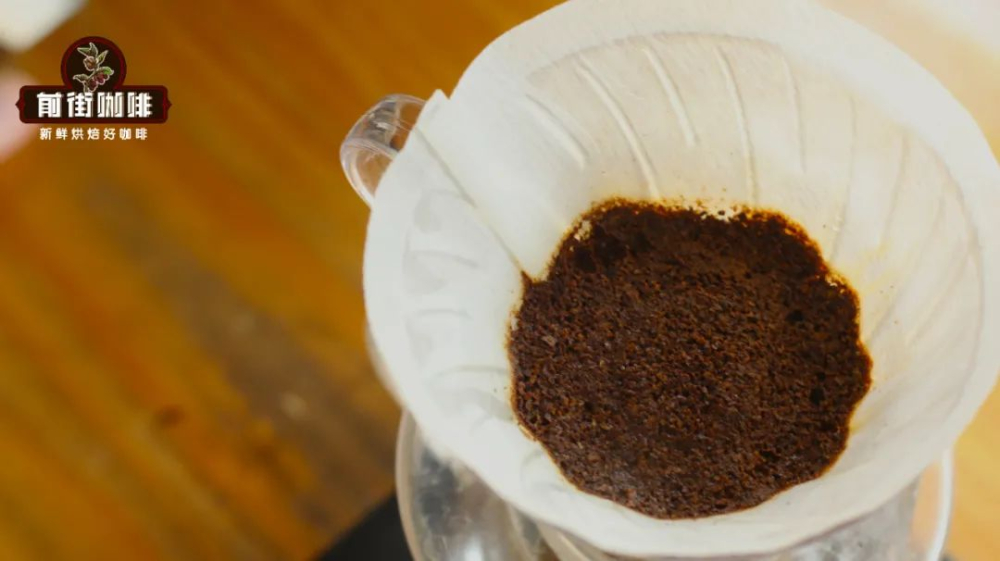
So to achieve an ideal bloom dome, Front Street Coffee recommends using a smaller water volume (for 15 grams of grounds, keep the bloom water within 35 grams), pouring from the center outward in an even, gentle circling motion, so the coffee grounds are evenly saturated and form a rounded "hamburger" shape.
5. The roast level is too light, so the dome formed is not obvious
Extremely light-roasted coffee beans are released from the roaster earlier, the bean body is hard in texture, and the gas content is on the low side, so no obvious expansion appears during the bloom, behaving similarly to stale coffee beans, and the golden foam that appears during subsequent pouring is also relatively thin. But this does not affect its flavor. Some light-roasted beans show a similar phenomenon, with no obvious dome during the bloom, only a slight, shallow puff, and this is normal.
The above content is compiled by CoffeeHunters, a coffee news website.


