








Is black sediment in espresso related to why coffee tastes like soy sauce?
Fine black powder at the bottom of an espresso or latte is made of ultra-fine grounds that pass through the filter basket holes during extraction. A small amount is normal and does not affect flavor or health. Visible black particles, however, mean too many fines, and some off notes that make coffee taste like soy sauce come from similar over-extraction problems.
Espresso is ground to roughly 150 to 300 microns, fine enough that the grind cannot be judged by eye, only by how the shot flows. If sediment is heavy, the usual fixes are coarsening the grind, changing the filter basket, or adding a paper filter beneath the puck for a cleaner cup.
Many people, after finishing a latte or espresso, notice a layer of fine black powder left at the bottom of the cup, and sometimes dark particles float at the bottom of an iced latte as well. Is this actually normal? Does it affect flavor or health? In fact, these sediments are ultra-fine particles that pass through the filter basket holes during espresso extraction. A tiny amount is normal, but if you can see a large amount of grounds with the naked eye, it means something went wrong in the extraction process. This article starts with the source of fine particles, analyzes possible factors such as grinding, the filter basket, and operation, and provides practical solutions such as adjusting the grind size, changing the filter basket, and adding a paper filter, to help you drink cleaner coffee.

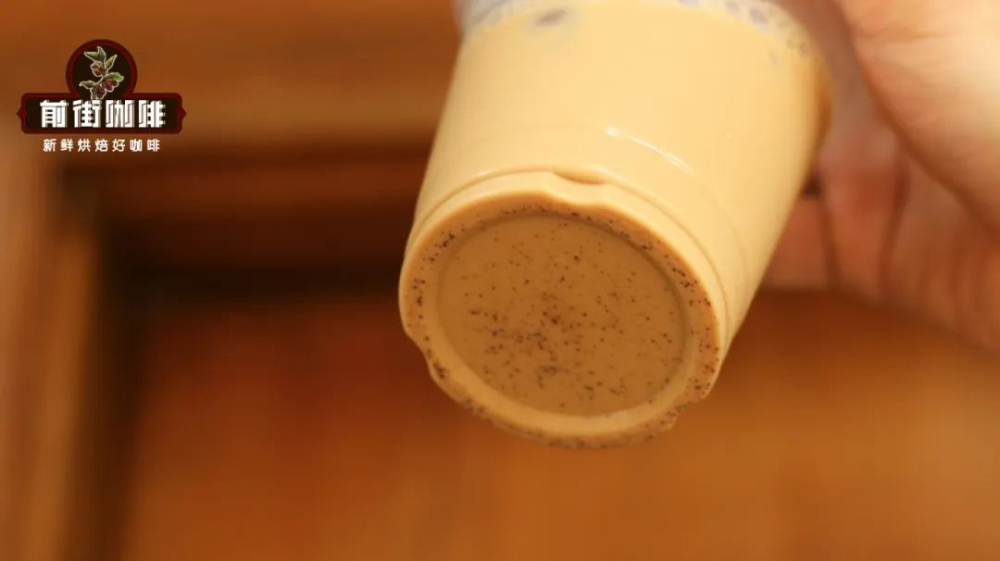
After finishing a cup of coffee, when you look down at the bottom of the cup, you can often see a layer of fine powder particles deposited there. Sometimes when you buy an iced latte at a shop, you also find black sediment when you drink to the bottom.
Is this situation normal? Will it affect drinking?
These black particles deposited at the bottom of the cup are actually ultra-fine grounds that pass through the holes of the filter basket and fall down together with the coffee liquid. To use an analogy, it is like how soy milk will have soy sediment after sitting for a while, and fresh juice will also retain a little fruit pulp; the principle is the same.
If a single shot contains only a very small amount of ultra-fine grounds, that is within the normal range. It will neither noticeably change the coffee's taste nor cause harm to health, and it can be completely ignored. But if you can clearly see black particles mixed into the coffee with the naked eye, then that indicates the amount of grounds is too high and not very normal, and it is very likely that some step in the extraction process went wrong.
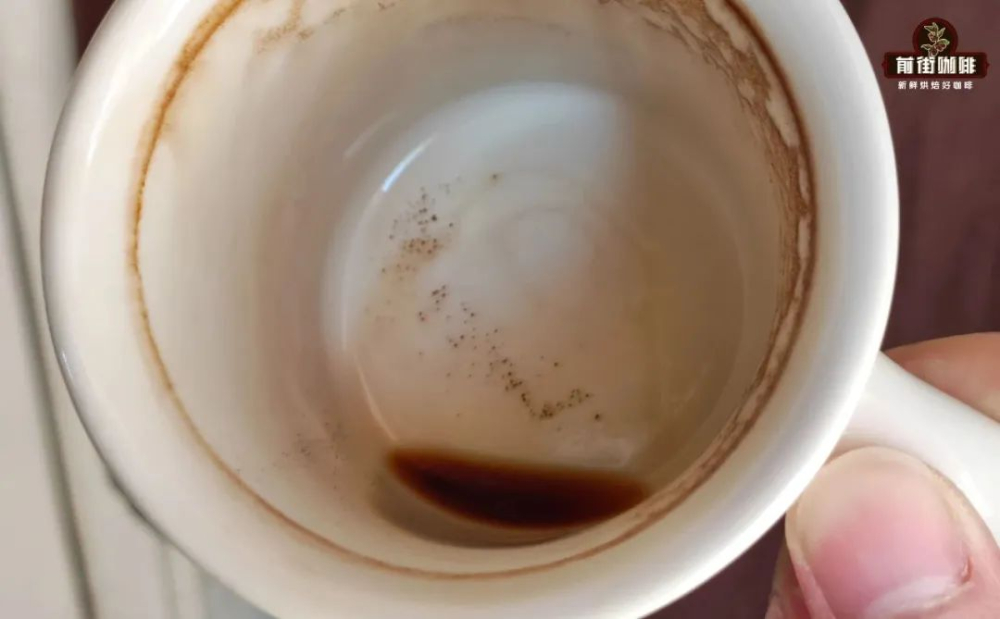
Why are so many fine particles produced?
Espresso is ground very finely, with particle sizes roughly between 150 and 300 microns. The naked eye simply cannot distinguish the coarseness and uniformity, so you can only judge whether the grind is suitable by observing the extraction state of the coffee liquid. The filter basket used for extracting espresso is itself a mesh filter made up of countless small holes. Lift the filter basket toward a light source, and the small holes that let light through are the size of the filter holes.
The finer the coffee is ground, the more ultra-fine particles there will be. Under high-pressure extraction, particles smaller than the mesh holes will be pushed out by the hot water and enter the coffee liquid. Fine grounds that have just fallen into the coffee will not sink immediately; without stirring, it takes several minutes for them to slowly settle to the bottom of the cup. If you drink directly in large sips, most of the fine grounds will be consumed along with the coffee.
In addition to grinding factors, some operational oversights can also lead to abnormal grounds in the final cup. For example, grounds from the previous shot remain on the group head and are not rinsed away with water; or a little powder sticks to the portafilter, either of which may be brought into the cup.
So how should this be solved?
1. First confirm whether the grounds are caused by your own improper operation. If so, develop the habit of cleaning the group head and portafilter at all times to avoid turbidity in the coffee.
2. The filter basket is subjected to high temperature and high pressure for a long time, and the mesh may deform, allowing more fine grounds to pass through. However, this situation is not common, and usually only possible after one to two years of high-intensity use. Hold the filter basket up to the light and check whether any individual holes among the fine holes have become larger. If so, it is time to replace the filter basket.
3. If the espresso extraction flow is slow and the distribution of fine grounds is high, Front Street recommends adjusting the grind coarser so that the overall particles become larger and the ultra-fine grounds decrease accordingly. If after coarsening the flow becomes faster and the flavor becomes weaker, you can appropriately increase the dose to balance it.
4. Paper filters are currently the best filtering tool, able to block solids and oils and other substances, and coffee extracted with a paper filter has the highest cleanliness. If after coarsening the grind there are still a small amount of grounds in the coffee and you find it hard to accept, try placing a round paper filter on top of the filter basket before extracting.
Front Street has also tried to verify this method, and it can indeed effectively solve the problem of fine grounds falling into the coffee. However, because the paper filter blocks the vast majority of fine grounds, the coffee flow will speed up, and the concentration and extraction yield will also decrease. Therefore, when using a paper filter to extract espresso, the grind size needs to be adjusted accordingly (slightly finer), otherwise the flavor of the espresso will definitely change.
- END - Front Street Coffee (FrontStreet Coffee)
No. 10, Baoqian Front Street, Yandun Road, Dongshankou, Yuexiu District, Guangzhou, Guangdong Province
The above content is compiled by CoffeeHunters, a coffee news website.


