








How Do Coffee Particles and Grind Size Change Pour-Over Flavor?
Grind size sets the ceiling on a home pour-over. Fine coffee particles pack the bed tightly, slowing water and stretching contact time, which pushes extraction toward bitterness, saltiness, sourness and astringency. Coarse particles let water pass quickly, cutting contact time short and leaving a hollow, bland cup. Matching grind to method and roast level is the first skill a pour-over beginner needs.
Beyond grind, the even distribution of coffee particles matters as much: a wide spread of sizes, or a heavy share of fines, brews unevenly. Other variables can also spoil the result, including an uneven coffee bed, mismatched parameters and technique, and water quality. Watching the bed and the drawdown speed helps diagnose which one is off.
The same bag of coffee beans, brewed at home, always tastes worse than in the shop—this is a confusion almost every pour-over enthusiast encounters. The root of the problem often lies not in the beans themselves, but in several variables during extraction—whether the grind size is appropriate, whether the coffee bed is evenly distributed, whether the parameters and technique match, and even water quality, an easily overlooked factor, can significantly affect the final flavor. Starting from Front Street's practical experience, this article breaks down one by one the mechanism by which grind size affects taste, the brewing framework beginners should master first, and how to diagnose problems by observing the coffee bed and drawdown speed, helping you find that cup of good coffee belonging to your own home.

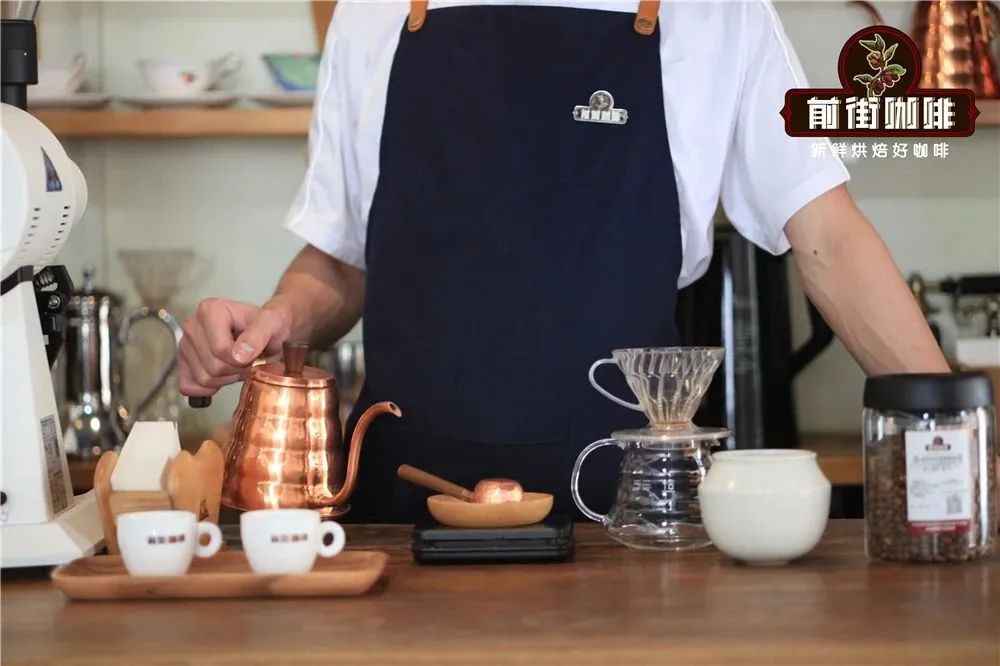
Yesterday, when Front Street was pouring water into the dripper, a curious friend nearby raised a confusion about making pour-over at home: with the same bag of beans, why is the taste I brew so different from the store? No matter how I adjust, I can't get that flavor back—which step went wrong?
Since it's the same coffee bean, the difference clearly lies in the extraction process. Next, Front Street will talk with everyone about what factors might make home pour-over results unsatisfactory.
Is your grind size really adjusted correctly?
Pour-over is a filtration extraction method, and the coarseness of coffee particles and whether their distribution is even directly determine the upper limit of quality in the cup.
The finer the grind, the greater the resistance water encounters when passing through the coffee bed, and the contact time between coffee and water lengthens accordingly, easily leading to over-extraction and bringing negative sensations like bitterness, saltiness, sourness, and astringency.
Conversely, the coarser the grind, the less water resistance, and the contact time between coffee and water is insufficient, resulting in under-extraction and a hollow, bland taste.
Therefore, being able to accurately judge grind coarseness and find a suitable uniformity setting is a fundamental skill for pour-over beginners.
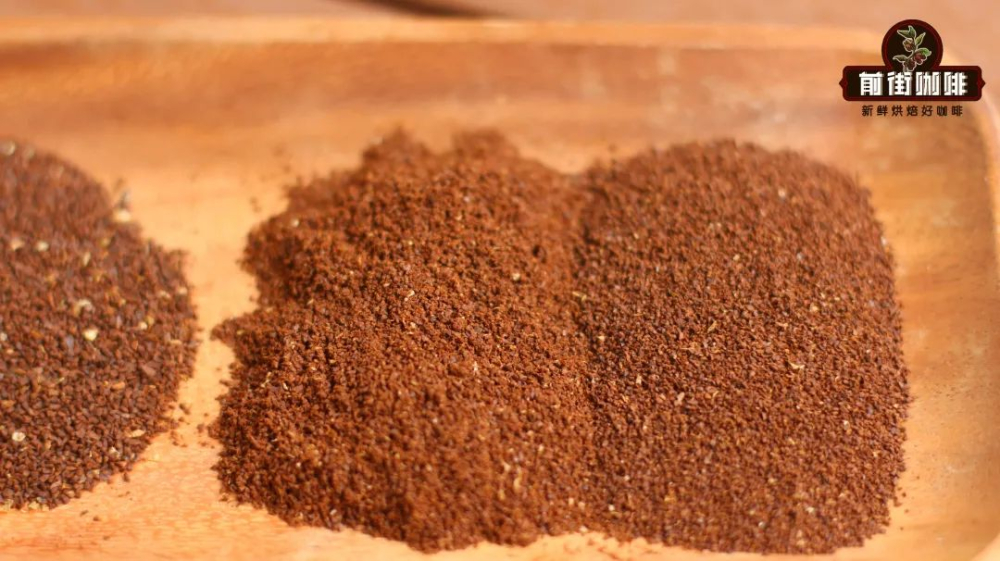
Comparison with a large amount of fines versus after sieving out the fines
For beans of different roast levels, different extraction methods, and taste preferences, Front Street provides corresponding grind recommendations, and for pour-over the most commonly referenced are the two coarseness levels of fine granulated sugar and coarse granulated sugar. Some friends judge by eye, feel the particles are about the same size as granulated sugar, and start brewing, only to find the tail end clogs and drawdown becomes difficult—this is usually caused by too many fine particles.
The higher the quality of the grinder, the more concentrated the particle size distribution of the coffee grounds, with fewer both coarse and fine particles, and extraction naturally more uniform. By the same token, if the grinder's grinding quality is average, with many fines and many coarse particles, even if the sieving rate looks acceptable, during actual brewing the fines will absorb water first, sink, and accumulate, while the coarse particles float on top, causing the water to flow down slowly and extraction to be uneven.
Fines and coarse particles
Therefore, when you feel the coffee you brewed tastes off, take a look at the particle state in the coffee bed (the pit): are there obviously oversized particles? Is there a muddy sensation (indicating excessive fines)? Then recall whether the drawdown during brewing was fast or slow. Using this troubleshooting approach, you can pinpoint the crux of why the coffee doesn't taste good.
"Conservative" parameters and techniques are the stepping stone for beginners learning to brew coffee
Front Street repeatedly emphasizes the importance of brewing parameters because the influence of each basic parameter on extraction is interconnected, and with auxiliary tools the entire brewing process can be made quantifiable. In this way, if the coffee doesn't taste good, there is a basis to trace back.
Parameter setting actually revolves around four basic elements: coffee-to-water ratio, grind size, water temperature, and extraction time, which Front Street has summarized in many previous articles. As for technique, Front Street always recommends the three-pour extraction, because under reasonable parameters, the three-pour method can more fully extract the pleasant flavor compounds of the front and middle stages, while also moderately extracting the bitter components of the latter stage, enhancing the coffee's body.
Sometimes, brewing tutorials circulate online, such as performing a "swirl" or "stir" during the bloom phase, with different techniques often paired with specific parameters to enhance a certain mouthfeel of the coffee. But Front Street believes that for beginners, rather than challenging these fancy actions with uncertain results, it's better to focus on how to extract the right flavor compounds from 15–20 grams of coffee grounds within 1 minute 50 seconds to 2 minutes 20 seconds. Once you've figured out the patterns, it's not too late to try advanced techniques.
The last easily overlooked variable: water quality
According to research by some mainstream institutions, when water contains appropriate amounts of calcium and magnesium ions, the brewed coffee performs better in taste and mouthfeel. But too much magnesium ions makes coffee tend toward bitterness; excessive calcium ions make the taste messy and astringent.
So, if you find that no matter which beans you switch to, and the brewing parameters and technique are already in place, yet every cup made with your home filtered water still has negative flavors, then the problem is most likely in the water, which accounts for the largest proportion. At this time, Front Street suggests trying Nongfu Spring, commonly available on the market, with a TDS value of about 50ppm, and see if the flavor and mouthfeel improve.
- END - Front Street Coffee
No. 10, Bao'an Qianjie, Yandun Road, Dongshankou, Yuexiu District, Guangzhou, Guangdong Province
The above content is compiled by CoffeeHunters, a coffee news website.


