







How Long to Froth Milk and Pour Latte Art Patterns?
Latte art relies on crema and milk foam floating while the denser milk and coffee sink, so the two colors contrast into a pattern. Practice alone is not enough for beginners; identifying the real cause of each failed pour, from espresso quality to frothing and pitcher positioning, matters more. Work through two stages: blending first, then drawing the pattern.
Crema quality starts with the beans. A blend of Brazil and Mandheling gives one profile, while a nutty formula with a little Robusta boosts crema richness and its golden color. A progressive path, fresh milk, then water, then back to milk, builds control. Watch how long to froth milk, since over-aerated foam pours stiff and blurs shapes.
Wanting to learn latte art from scratch, repeated practice alone isn't enough—finding the real reasons behind your mistakes is key. This article systematically sorts out common latte art pitfalls for beginners, from espresso and crema, the principles of milk frothing, pouring techniques, and pitcher positioning, to tips for efficient practice. It also uses two coffee beans—Front Street Classic Blend and Front Street Commercial Blend—to explain how crema and milk foam together determine the pattern effect, and provides a progressive practice path from fresh milk to water and back to milk, helping coffee lovers avoid detours.
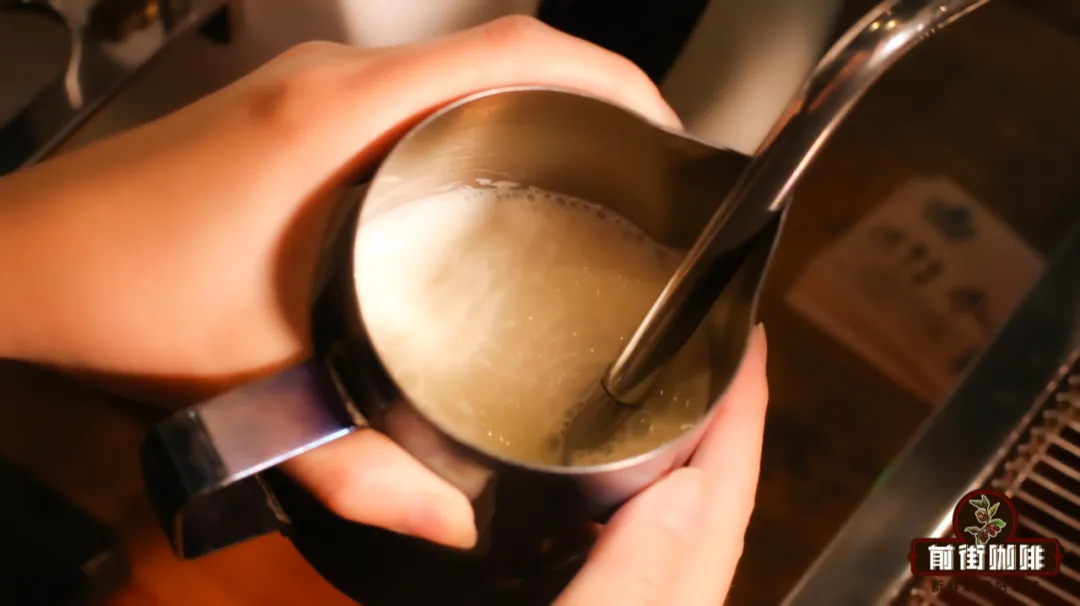
Whenever a new member joins the Front Street team, latte art training sessions begin. During practice breaks, the "hiss~hiss~" sound of the steam wand often echoes throughout the shop.
Some people grasp the knack in just a few days and can easily create various beautiful patterns with a little practice. Others regress the more they practice—they could make a heart before, but now they can't even produce a basic shape. The more they practice, the worse they get; the worse they get, the more anxious they become; the more anxious they are, the more they want to give up… So what should they do?
In Front Street's view, as a beginner, wanting to learn and master latte art, finding the real reason behind your failures is the key.
Only by understanding the principles can you be invincible
It must be admitted that the prerequisite for beautiful latte art is a perfect espresso, so the choice of coffee beans is very important. Front Street believes that espresso with fine, smooth, and rich crema is the best standard, and you can use Front Street Classic Blend and Front Street Commercial Blend, two best-selling products. The former combines the wild character of Brazil and Mandheling, while the latter is a formula rich in various nutty aromas, with a small amount of Robusta added to enhance the richness of the crema and its golden color.
The crema of espresso and the milk foam produced during the milk frothing process (air wrapped in protein), due to their lower density, float on the surface of the liquid. When the two blend, the milk and coffee liquid sink while the crema and milk foam float up, relying on the sharp contrast between the two colors to form beautiful patterns.
Latte art consists of two main stages: blending + pattern creation. With the same pitcher of milk foam, during the blending stage, you need to appropriately raise the pitcher spout to pour in the milk, so the foam is pushed into the coffee with force, and no white appears on the surface. When creating the pattern, you need to lower the pitcher spout, so the foam gently lands on the top layer, and combined with different pouring techniques, it can form varied white lines.
The prerequisite for latte art is being able to create fine milk foam
Many friends fail to form ideal patterns when doing latte art, always ending up with a "blob," and then directly blame it on incorrect posture, milk separation, the cup opening being too small (or the cup too deep), the espresso crema being too stiff, etc., while overlooking one point: the importance of creating a pitcher of dense milk foam.

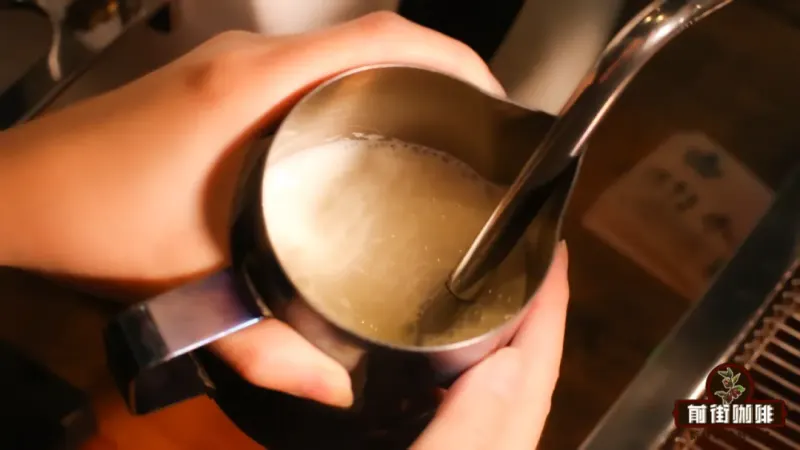
Milk frothing also consists of two steps: the air intake stage and the texturing and heating stage. The steam wand sprays high-temperature steam, which enters the milk from the steam holes to heat it. When the steam holes are exposed, the steam passes through the air before entering the milk, and the air "forced" into the milk makes a "hiss hiss hiss" sound. So whether there is air intake can be judged by listening for this "hiss" sound; for example, a latte generally only needs 2-3 seconds of air intake time.
To create foam with moderate thickness and a smooth, dense texture, besides controlling the air intake, you also need to provide sufficient time for texturing these gases, and the key is creating a vortex. To learn more details about frothing milk, everyone can revisit the notes Front Street has shared before (click here). Specific situations require specific analysis, so we won't elaborate further here.
Blending is very important! Friends~
Well-blended coffee can present an even "golden base," with a rich and dense mouthfeel, both beautiful and delicious. If a hot milk coffee is not blended well, it not only loses points in appearance, but the coffee may also taste bitter one sip and weak the next, and even show foam separation.
There are also certain techniques for evenly blending foamy milk with coffee. Generally, hold the cup with your left hand at a 45-degree angle, hold the latte art pitcher with your right hand, and according to personal habit, maintain the spout at a distance of 5-8 cm from the liquid surface, stirring in a single direction with one hand higher and the other lower to fully mix them. As for how large a circle to make, Front Street suggests making the largest circle possible without hitting the edge of the cup.
Besides looking cool, your posture must also be correct
Taking the most basic heart pattern as an example, when the milk and coffee are blended to 7/10 full, you can lower the pitcher to push the pattern. Pattern formation technique: when the milk foam flows onto the coffee surface, adjust the angle of the cup simultaneously so the foam flows into the cup along the liquid. In other words, no matter what pattern it is, if you want the milk foam to appear on the coffee surface, you must straighten the cup while pouring.

Online, there are latte art videos at different stages, from big white hearts to leaves, from patterned tulips to various animals, and there are many learning channels. But Front Street has noticed that some friends always fixate only on high-difficulty patterns; in fact, the posture of these experts when doing latte art is more worthy of our observation and imitation.
Pitcher grip, pouring angle, blending technique, pattern sequence, cup-returning gesture, and so on. First observe carefully, then imitate, then repeat the practice, and it's best to have a bystander check whether there are any posture problems. After all, latte art technique is muscle memory built over long practice, and the formation of a pattern often lasts only about ten seconds, sometimes making it hard to explain clearly in words.
Tips for efficient practice
Learning latte art well cannot be rushed; in this process, you can only continuously summarize during practice, as milk frothing, pitcher grip, and pattern-pouring techniques all affect the final result.
If you are encountering latte art for the first time, Front Street suggests first trying fresh milk for a few practices, feeling the force of milk being frothed under steam and the sensation of pushing out white lines when blending with coffee. Then start practicing with water to master slight differences in air intake, vortex, temperature, and other details. Once your hands have enough muscle memory, switch back to milk for "real combat" practice, starting with basic patterns like hearts and tulips, gradually testing the results you've accumulated.
The above content is compiled by CoffeeHunters, a coffee news website.


