







Which coffee pot types and gear should a beginner buy first?
Beginners setting up pour-over at home should spend most of the budget on a grinder, because even particle size decides how evenly flavor compounds release. A cheap blade chopper leaves mixed coarse and fine coffee particles, which pulls uneven extraction. After the grinder, a gooseneck kettle gives the flow control that shapes the brew.
The rest of the setup is simpler: a dripper, matching filter paper and a digital scale cover most needs, and each can be bought at a modest price. Grinders cost more mainly because of their burrs, which set particle size distribution. Choosing everyday beans rather than rare lots keeps the first months affordable while technique improves.
You want to brew a good cup of coffee at home but don't know which equipment to start with? Faced with the wide variety of brewing devices on the market, beginners often get overwhelmed. This article will go through the various pieces of equipment needed for pour-over coffee one by one, in order of importance—from the grinder, which is most worth investing in, to the pouring kettle that affects water flow control, and then to accessories like the dripper, filter paper, and electronic scale—giving specific purchasing ideas and budget suggestions. At the same time, for what kind of coffee beans to choose at the beginner stage, it also provides reference directions for Front Street Coffee's everyday drinking beans, helping you put together a handy brewing setup within a limited budget.
One day you suddenly feel that just going to a café to drink coffee is no longer satisfying enough, and the idea pops into your head: "Why not brew a pot myself?" Then you open your phone and start browsing all kinds of equipment and adding items to your cart. Well, congratulations—from this point on, you have stepped through the door of pour-over coffee.
There are now many types of brewing equipment on the market, and at every price range there are corresponding brands and products to choose from. Everyone wants to buy outstanding value-for-money gear within a limited budget. But with so many choices, how exactly should beginners get started?
Prioritize the Budget for the Grinder
No matter how much you plan to spend, a delicious cup of pour-over coffee always depends on a handy grinder. By "handy," the most basic requirement is that it grinds evenly enough.
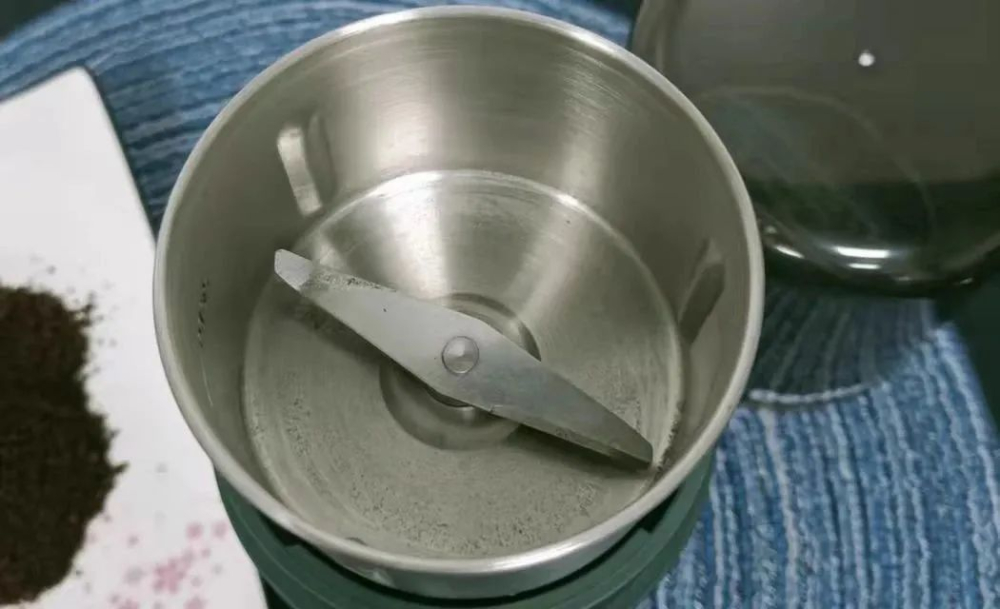
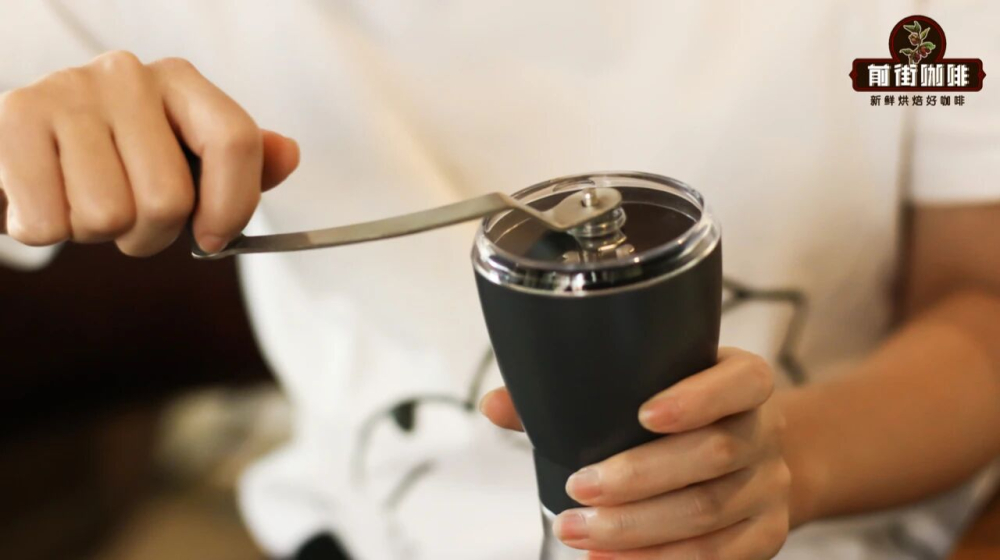
Some people feel that popular grinders are too expensive, so they casually buy a hand grinder for around a hundred yuan, or even a "bean chopper" that cannot really be considered a coffee grinder at all. As a result, it is laborious to use, and the grounds come out mixed with coarse and fine particles, with uniformity far below the requirements for pour-over.
You need to understand that grinders are mainly expensive because of the burrs. The type of burr directly determines the particle size distribution of the coffee grounds and also determines whether the grind size is consistent. Only when the coffee particles are uniform in size and moderate in coarseness can they evenly release flavor compounds when in contact with hot water, thereby reducing the probability of under-extraction or over-extraction. So among all pour-over equipment, the grinder is the most worth spending money on.
Of course, price determines the quality and performance of a grinder. The more ample your budget, the greater your range of choices. For those just getting into pour-over, Front Street Coffee suggests a budget of no less than 200 yuan for a hand grinder. As for the specific approach to choosing a grinder, you can refer to "Hand Grinder or Electric Grinder? How to Choose a Grinder That Suits You?"
Once the grinder is in place, you still need to find the right grind setting. We often see that pour-over grind size should be medium or medium-fine, but across different grinders, the scale standards are not unified. Therefore, Front Street Coffee keeps a No. 20 standard sieve with a 0.85 mm aperture for sieve verification. It only costs around a dozen yuan, which is not expensive.
How to Choose a Pour-Over Kettle
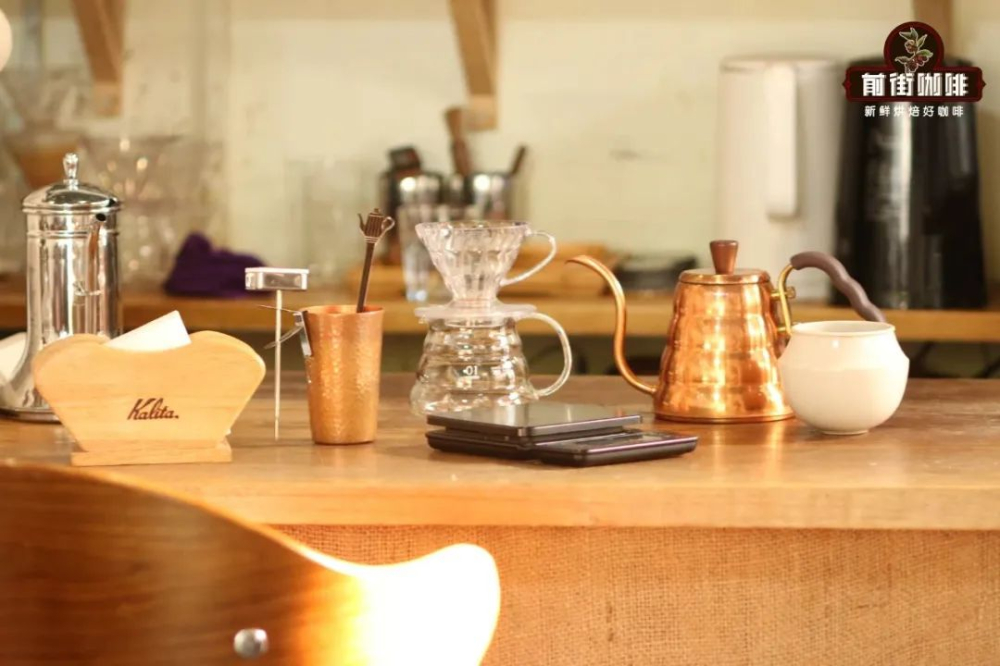
A pour-over kettle is the tool used for pouring water. For beginners, whether it is easy to control is most important, which is mainly reflected in two aspects: spout shape and capacity.
The design of the spout affects how easy it is to pour water and the shape of the water stream. Front Street Coffee recommends a gooseneck fine-spout kettle, as this makes it easier for beginners to control the flow. The size of the pour-over kettle affects the center of gravity when pouring. If the body is too small, the center of gravity leans forward and the water stream tends to sway unsteadily; if the body is too large or too heavy, it is not handy to use. Front Street Coffee suggests choosing a pour-over kettle with a capacity between 500 and 600 ml.
Functionally, pour-over kettles come in temperature-controlled and non-temperature-controlled types. If you already have water-heating equipment at home, choosing a pour-over kettle without a heating function can save some money. Taking the most common B kettle as an example, the non-temperature-controlled version can be bought for under 300 yuan, but you need to pair it with a fast-reading thermometer to measure temperature.
Dripper and Filter Paper
The dripper can be said to be the signature piece of equipment for pour-over coffee. A practical dripper can make the brewing performance of each bag of beans more consistent. Generally speaking, price differences among drippers are reflected in design patents, materials, and appearance. If you are pursuing high value for money, Front Street Coffee recommends the resin version of the V60 dripper.
Filter paper does not account for a large share of the overall pour-over process, but it has a considerable impact on the quality of the coffee's flavor. Front Street Coffee's advice is to prioritize major brands, such as the Kono filter paper that Front Street Coffee uses itself. As for how to choose between natural wood filter paper and bleached filter paper, Front Street Coffee leans more toward bleached filter paper, because its papery taste is less noticeable and will not interfere with the coffee's flavor. As for size, buy according to the model of the dripper you use—matching is enough.
The Electronic Scale Cannot Be Skipped
Front Street Coffee has noticed that some people feel pour-over can be done by feel, so they do not plan to use an electronic scale. As a result, every cup they brew changes with their mood—sometimes bitter, sometimes sweet. Therefore, Front Street Coffee believes that if you want to brew good coffee, it is very necessary to have a fast-reading electronic scale with a timing function.
The remaining sharing pot is an optional container. Functionally speaking, any cup will do, because it will not affect the taste of the coffee. But if you want a complete sense of ritual, then buy professional coffee equipment, priced at about 100–150 yuan.
Regarding the price choices for the above equipment, Front Street Coffee believes that beginners are still at the stage of just getting familiar, so aside from the grinder, which should be chosen well, other equipment can be made do with for now. Start with lower-spec versions and practice well by trying different flavor types of coffee beans. After you gradually understand the extraction principles and find your preferences, then decide how to upgrade your equipment based on whether you have more advanced needs.
Front Street Coffee believes that beginners are still at the stage of just starting to get familiar. Aside from the grinder, which should be chosen a bit better (with more budget invested), other tools can actually be made do with for now. Then, with a lower-spec setup, try different types of coffee beans, and thereby gradually improve both your brewing and tasting abilities.
Coffee beans used for pour-over are generally single-origin coffees, from a single origin, usually in specifications of half a pound or less. Different producing regions, varieties, processing methods, grades, and roast levels all affect the final taste of the coffee. The most common mistake beginners make is easily "following the crowd" and buying some expensive coffee beans, often labeled with words like "competition-grade," "auction lot," or "rare variety," and then using up the whole bag before they even understand what the flavor is about.
Based on Front Street Coffee's experience, at the beginner stage it is best to first choose beginner-friendly everyday drinking coffee beans according to your own taste preferences. First, it helps me quickly distinguish regional flavors; second, even if you practice several more times, you won't feel bad about it. Taking Front Street Coffee's everyday beans as an example, if you can accept acidity, you can first try Front Street Coffee Ethiopia Yirgacheffe;
If you like soft sweetness and acidity, you can choose Front Street Coffee Costa Rica Tarrazu or Front Street Coffee Rwanda Red Bourbon; if you want lower acidity, you can try Front Street Coffee Yunnan Small Bean; if you want no acidity and at the same time nutty, chocolatey aromas, you can choose Front Street Coffee Brazil Cerrado or Front Street Coffee Colombia Huila; if you are afraid of acidity and love a rich, full-bodied taste, choose Front Street Coffee Indonesia Mandheling... When you find an origin that suits your liking, you can continue to "dig deeper" into more specific regions, estates, and varieties there.
The above content is compiled by CoffeeHunters, a coffee news website.


