







Does Espresso or Water Go in First for Americano?
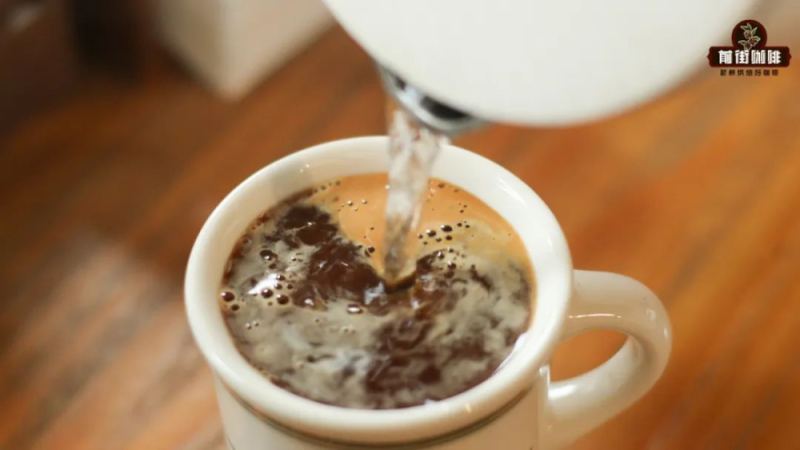
The order changes appearance more than flavor. Pour espresso into the cup first, then add water, and the stream breaks up the crema, leaving a thin, pale layer. Add water first and pour espresso over it, and a thick golden crema stays on top. Most drinkers cannot taste a clear difference.
When water goes in first, the first sip can feel stronger because crema carries more aroma and bitterness than the liquid below, and the coffee sinks slowly. Espresso first gives a more even cup. In Australia, the same base poured over water is called a long black. This matters for ice american coffee, where ice and dilution shift the balance further.
The composition of Americano seems simple—nothing more than a combination of espresso and water. However, whether to add espresso first or pour water first during preparation has always been a hot topic among coffee enthusiasts. This difference in order not only affects the presentation of the crema on the coffee's surface but may also bring subtle taste variations. This article will deeply analyze the visual and taste differences between the two methods, trace the historical origins of Americano, and explore the real differences between Australia's Long Black and Americano. At the same time, we will also mention related products from Front Street Coffee to provide references for your coffee-making.
Many coffee enthusiasts have struggled with a question: when making Americano, should you pour espresso into the cup first and then add water, or add water first and then pour in the espresso? This seemingly insignificant difference in steps actually brings some interesting distinctions.
Let's first understand a basic fact: the ingredients of Americano are very simple—just a mixture of espresso and water. However, the different order of addition does affect the appearance of the final product. If you pour espresso into the cup first and then add water, the impact of the water stream will disrupt the crema on the surface of the espresso, leaving only a thin, lighter-colored foam on the coffee's surface.
Conversely, if you prepare water in the cup first and then pour in the espresso, the final product will have a rich, golden-colored crema floating on the surface.
So, is there a difference in taste? Frankly speaking, the vast majority of people can hardly detect any difference. Of course, if one must nitpick and compare, an Americano made with water first and then coffee feels more intense and stronger at the first sip. This is because the crema floating on the surface has more prominent aroma and bitterness than the coffee liquid below, and the coffee liquid penetrates downward slowly, easily creating a taste experience where the upper layer is strong and the lower layer is weak.
Whereas adding espresso first and then water, under the agitation of the water stream, the concentration of the entire cup of coffee becomes more uniform. However, it must be emphasized that this subtle difference caused by the order is far less impactful than the taste changes brought by extracting espresso for two more seconds or two fewer seconds.
Looking back at history, the most traditional method of making Americano is indeed to first extract espresso into the cup and then add hot water to dilute it. This habit stems from the convenience of the serving process: the top of an espresso machine is usually filled with coffee cups, which can preheat the cups on one hand and make it convenient for baristas to grab them on the other. When making espresso, baristas often place the coffee cup under the spout right after locking in the portafilter. After the espresso extraction is complete, they then add milk or water to the cup.
The method of pouring water into the cup first and then extracting espresso is not a recent development either. This method is very popular in Australia, where locals call this water-diluted coffee Long Black. (The key difference between Americano and Long Black lies not in the order of coffee and water, but in the ratio of coffee to water. For details, click here to learn more.)
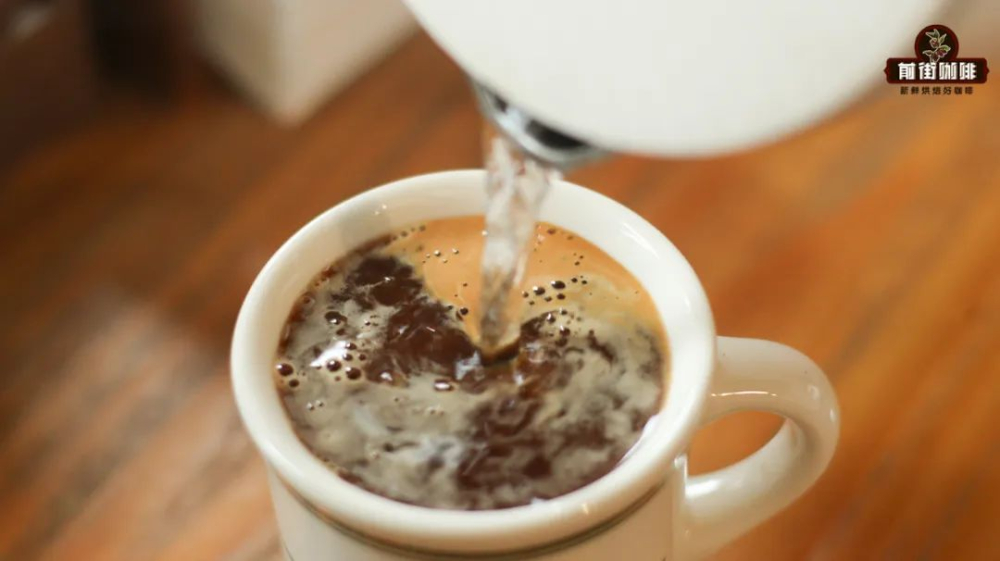
Later, with the widespread use of small cups specifically for catching espresso, the order of water and espresso when making Americano became less particular, basically determined by convenience and time-saving. However, since the method of adding water first and then pouring espresso allows the liquid surface to retain a rich crema, compared to a final product without crema, the former is visually more appealing and scores much higher in impression. Therefore, the method of water first and then coffee has become more common today.
In summary, when making Americano, adding water first or adding water later are both viable choices, and there is no so-called "most authentic" order requirement.
The above content is compiled by CoffeeHunters, a coffee news website.


