







Why is the oat milk coffee boom cooling in cafes?
Oatly, the brand most tied to oat milk coffee, reported cumulative losses above US$641 million from 2019 to 2022, roughly RMB 4.41 billion. Cafes that once featured oat milk drinks have pulled back as consumer enthusiasm cooled, and the company's heavy reliance on business-to-business coffee shop sales left it exposed.
The pandemic closed cafes worldwide for long stretches, cutting off that B2B channel, while consumer-market expansion stayed weak and prices remained high. Health debates around plant-based milk added pressure. The company is now looking at Asian markets, including China, where 2022 sales still grew despite the overall losses.
Once upon a time, oat milk coffee was regarded as a star product among plant-based beverages, and Oatly quickly rose to fame through it. However, as the market environment changes and consumer enthusiasm wanes, oat milk's position in coffee shops is quietly declining. This article sorts out the reasons behind Oatly's cumulative losses exceeding US$641 million (approximately RMB 4.41 billion) from 2019 to 2022: over-reliance on the B2B market, the impact of the pandemic, weak expansion into the consumer market, and a series of controversial marketing moves. At the same time, the article also explores the health controversies surrounding plant-based milk and future strategies for the Asian market. To follow coffee industry trends, you are welcome to add Front Street Coffee's personal WeChat (WeChat ID: qjcoffeex) for more specialty coffee bean information.
Professional coffee knowledge exchange. For more coffee bean information, please follow Coffee Workshop (WeChat public account: cafe_style).
For more specialty coffee beans, please add the personal WeChat of Front Street Coffee (FrontStreet Coffee), WeChat ID: qjcoffeex.
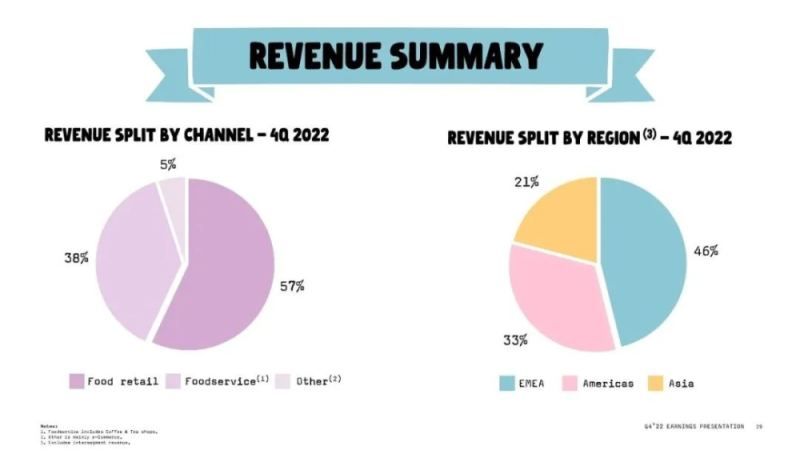
And this data is still under the condition that Oatly's sales volume in the Asian market (mainly the Chinese market) achieved growth for the full year of 2022... In fact, from 2019 to the 2022 financial report, Oatly had already lost more than US$641 million (approximately RMB 4.41 billion). There are reasons for such losses. One is that the marketing space for oat milk is limited. Oat milk has from beginning to end been based on a strategy targeting the B2B market (that is, business users), because it is relatively weak in the C-end market (that is, the consumer market). Although there are also oat milk products targeting the C-end market, their prices are also relatively high, so sales are far below those of the B2B market.
For brands, although the B2B market is stable, and if done well it can mean no worries about food or drink, once unavoidable factors arise, it can be wiped out all at once... For example, the COVID-19 pandemic in recent years dealt a heavy blow to Oatly, which had consistently used the "coffee + oat milk" format to successfully bring "plant-based" into consumer markets in various countries. Because coffee shops around the world were closed for a long period, and even after reopening, coffee shops did not dare to use large amounts of oat milk due to cost concerns. After all, after the long pandemic, consumers had different views on coffee consumption and tended to favor affordable and practical products.
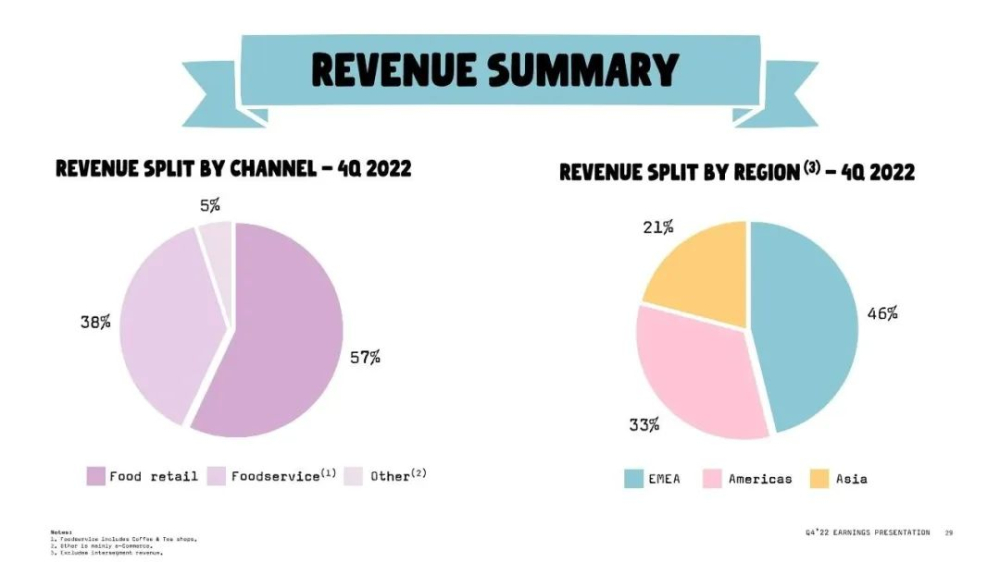
Therefore, many coffee shops no longer stocked large amounts of oat milk, and their products also used more conventional milk/other plant-based milk that could make prices more affordable. One reason Oatly lost so much in 2022 was that Oatly had not "learned its lesson," and another was that in 2021 it bet its sales on the Chinese market, using Starbucks China to help Chinese consumers become aware of oat milk. However, the lockdown management in Shanghai in 2022 directly panicked the Oatly CEO, who said: "In China, our team is going through a very difficult environment. We have a large part of our business in Shanghai. Among the Chinese retail and foodservice stores where OATLY is present, the number of stores that needed to close in the first quarter of this year due to lockdowns exceeded 17,000."
At the same time, in the Chinese market, the lactose-intolerant population is not that large. Most people choose oat milk more because it is novel, and a small portion because plant-based milk is "healthy" and "environmentally friendly." But in the retail market, the price of a bottle is not cheap, so when a crisis appears in the B2B market, few consumers in the C-end market choose Oatly oat milk.
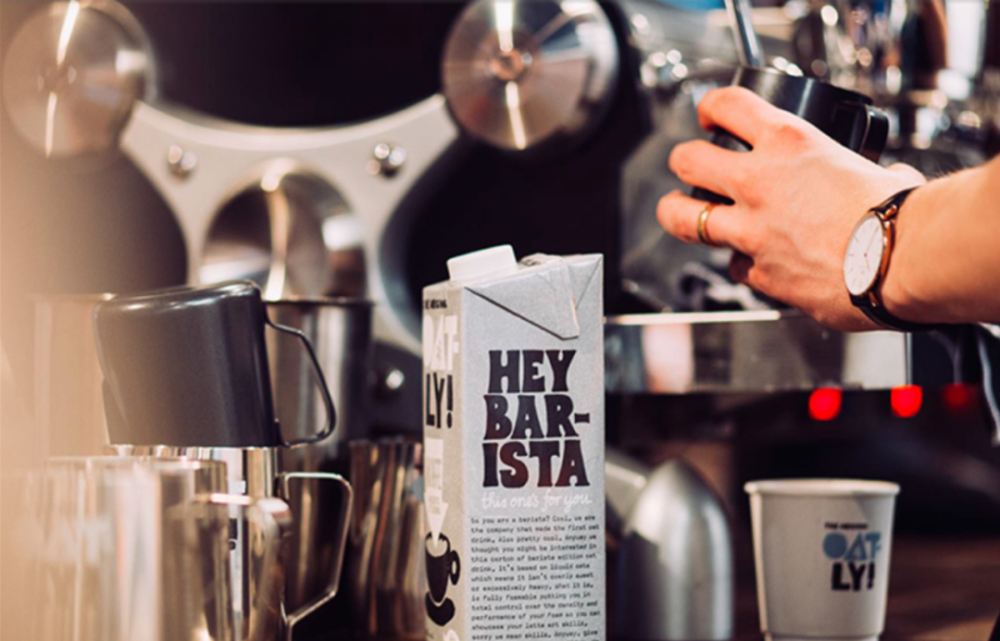
In addition to the fact that sales targeting the B2B market cannot be applied to the C-end market, Oatly's repeated bizarre moves after its losses have made the coffee industry find the brand increasingly annoying, and many consumers have also become averse to the way Oatly promotes oat milk. At the beginning, the direction of oat milk promotion focused on environmental protection and vegetarianism. On one hand, it promoted through environmental journals that oat milk is more environmentally friendly than milk, because it reduces environmental pollution, reduces carbon dioxide emissions caused by cattle breathing, and reduces water use. On the other hand, it recommended itself to coffee shops as a coffee lover, constantly touring major high-end coffee shops in the United States, chatting with different baristas, and promoting how healthy and environmentally friendly oat milk is...
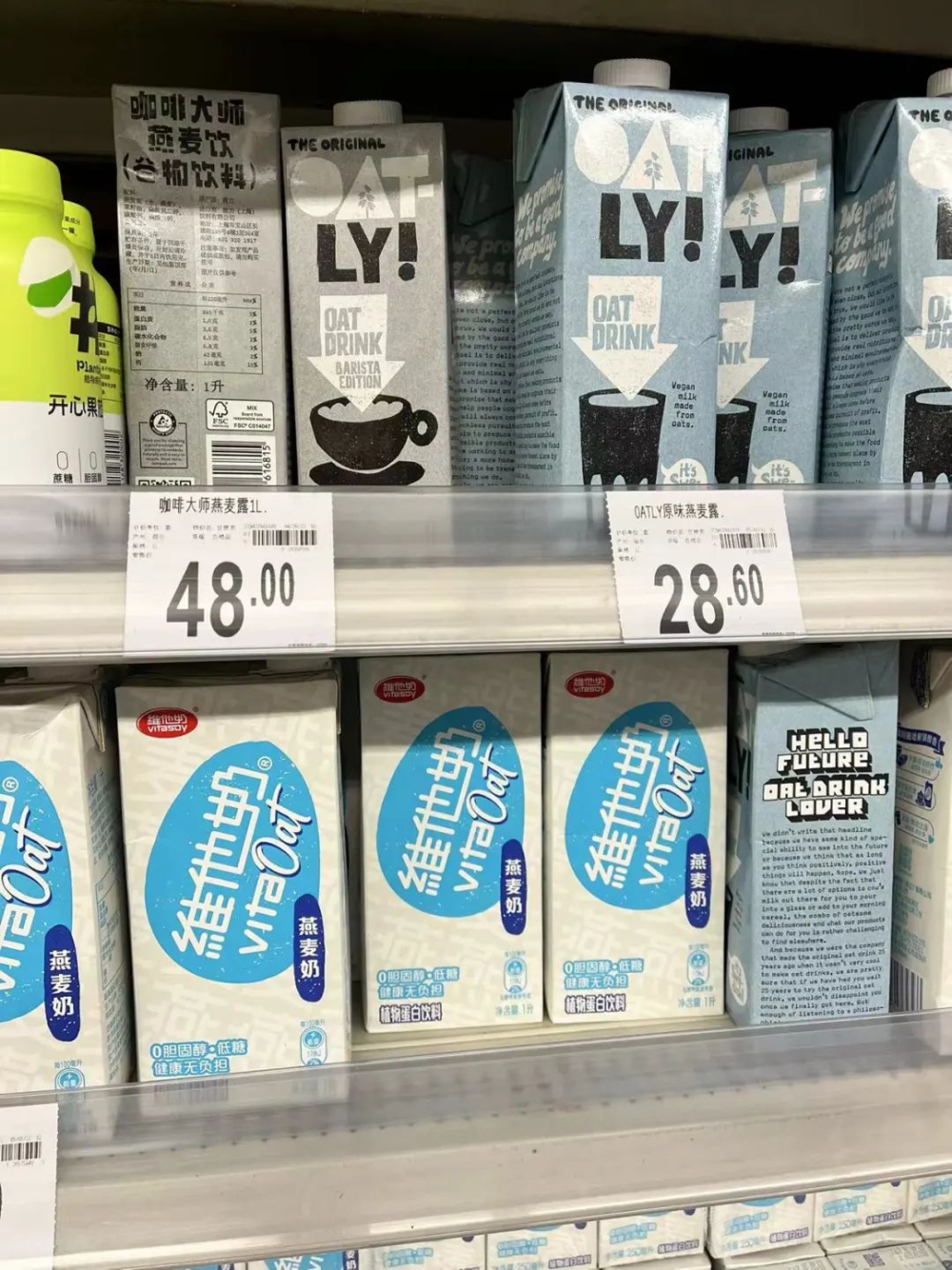
However, the mouthfeel and taste of oat milk are somewhat one-dimensional, and it cannot blend well with more flavoring ingredients. So after consumers rushed to try it for a period of time, they reduced their attention to oat milk because it lacked novelty. With the emergence of the pandemic, Oatly became anxious. In order to make the coffee market pay more attention to its own oat milk, in 2022 it tried to register "barista" as a trademark. In September 2022, Oatly submitted an application to the New Zealand Intellectual Property Office to register the "Barista" trademark, and Bidfood immediately raised an objection. Bidfood stated that for nearly a decade the word "Barista" had been used on various plant-based milk products in the country, that it was a generic term, and that no company had previously registered the word as a trademark.
But Oatly stated that "Barista" is not a generic term, because in recent years, when everyone sees "Barista," the first thing they think of is its own company's oat milk, rather than other plant-based milk/dairy alternatives.
But Oatly stated that "Barista" is not a generic term, because in recent years, when everyone sees "Barista," the first thing they think of is its own company's oat milk, rather than other plant-based milk/dairy alternatives.
By October 2022, Oatly published an open letter on its official website stating that the rule in the WBC competition that contestants could only use milk was outdated! This could be described as publicly challenging the Specialty Coffee Association.
The brand believes that oat milk coffee products in coffee shops today are deeply loved and welcomed by mass consumers, and that modern consumers are also using more and more oat milk. As the globally recognized Specialty Coffee Association, SCA's mission, purpose, and core values include the notion of "sustainability."
It even invested in a film in 2021, invited vegan actors to appear in it, and produced a film called "Coffee Wars," which was released on multiple online platforms on March 7.
The content is about a barista who, because they open a coffee shop insisting on using only oat milk, ends up poor and destitute due to lack of public understanding and recognition. But the protagonist is unwilling to give up, and then forcibly takes oat milk to participate in a barista competition, hoping to prove through the competition that using plant-based milk can also deliver extraordinary performance.
But these repeated moves also made many coffee lovers feel averse. Whether it was the public challenge, which left most netizens discussing it extensively, or the newly released film, which had very few viewers, one reason was that it was paid, and another was that, apart from coffee lovers and industry people who strongly insist on plant-based milk, it could not attract the general public to watch.

After the release of the 2022 financial report, Oatly's CEO stated that with the lifting of pandemic restrictions, the company was ready to aggressively attack the market again in 2023. At the same time, he also announced the latest strategy for the Asian market, namely expanding distribution, launching new products, and improving efficiency. However, today's Asian consumers have a very large demand for flavor innovation, and monotone mouthfeel and taste cannot satisfy consumers' pursuits for a long time. In addition, for many years there has been controversy over whether plant-based milk is truly healthy, because for oat milk to taste good, a large amount of vegetable oil and sugar must be added for blending, and these two are often the root causes of obesity.
This has also led the public to begin taking a reserved attitude toward whether oat milk is healthy and whether it can "replace milk" as oat milk brands advertise. Image source: Internet
The above content is compiled by CoffeeHunters, a coffee news website.


