







Where do tea-like notes in coffee flavor come from?
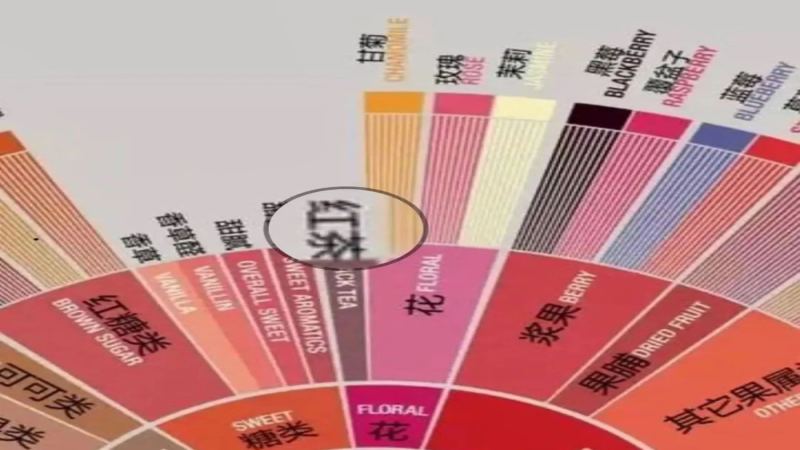
Tea has almost no place on the coffee flavor wheel, where the only close entry, black tea, sits under floral. Yet green tea, black tea, and oolong appear often on Chinese coffee labels. The tea-like impression comes from tea polyphenols and glycosides that create a mild roughness on the tongue, prompt salivation, and leave a sweet aftertaste.
Glycosides cling to the mouth and release glucose as they break down, which is why water tastes sweet afterward. Astringency is not automatically a tea note, so tasters separate positive from negative astringency. Organic acids drive the salivation and sweetness that frame how tea-like flavors show up in different beans.
In the coffee flavor wheel, tea is almost nowhere to be found—the only related entry, "black tea," is even classified under the floral category. Yet in the flavor descriptions of coffee beans sold domestically, words like green tea, black tea, and oolong tea are exceedingly common. How exactly should tea-like notes be judged? Is astringency equivalent to tea-like notes? This article starts from the mechanisms of tea polyphenols and glycosides, distinguishes positive astringency from negative astringency, analyzes how organic acids bring about salivation and sweet aftertaste, and, combined with the tasting experience of several Front Street Coffee beans, explains the specific manifestations of different tea-like flavors in coffee, as well as why domestically produced coffee beans prefer to use tea-like notes as a descriptor.
For professional coffee knowledge exchange and more coffee bean information, please follow Coffee Workshop (WeChat public account: cafe_style)
For more specialty coffee beans, please add the private WeChat of Front Street Coffee (FrontStreet Coffee), WeChat ID: qjcoffeex
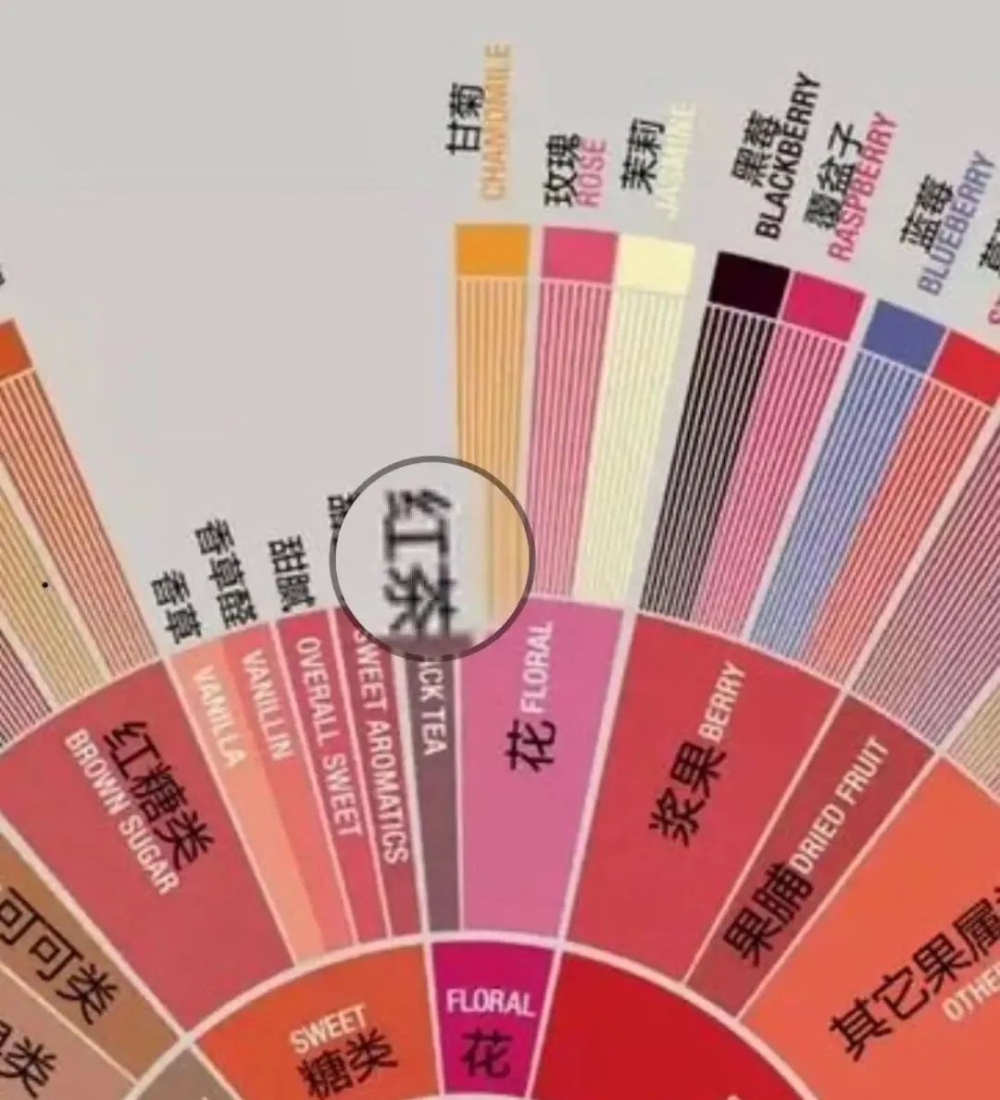
Looking through the coffee flavor wheel, tea is almost nowhere to be found... The only "black tea" entry is also placed under the floral category.
Even so, tea flavor descriptions frequently appear on the flavor labels of many coffee beans in China—such as green tea, black tea, oolong tea... How exactly are these tea flavors judged? Can astringency be directly equated with tea-like notes?
What are tea-like notes?
Everyone should have had this experience: when drinking tea, a slight roughness spreads across the surface of the tongue (note, the degree is very mild—just a faint astringency on the tongue), accompanied by a sweet aftertaste. At this point, if you take another sip of plain water, even the water tastes sweet.
The emergence of this sweet aftertaste is mainly due to the tea polyphenols and glycoside components in the tea infusion. The core function of tea polyphenols is to promote accelerated secretion by the salivary glands, thereby bringing about a sensation of salivation.
Glycoside substances, meanwhile, quietly adhere to the inner walls of the mouth during tea drinking. After being decomposed by water over time, they release glucose, and then sweetness emerges—this is what is called sweet aftertaste. The higher the content of hydrolyzable tannins in tea leaves (that is, the more fully energy substances are retained), the stronger and longer-lasting the sweet aftertaste and salivation will be.
What is the difference between astringency and the roughness on the tongue during salivation and sweet aftertaste?
Astringency is essentially an oral tactile sensation. The reason "astringency" appears is that polyphenol compounds in food make their presence felt in the mouth, causing the mouth to produce a rough tactile sensation.
Although astringency is unwelcome, it still needs to be divided into two categories: positive astringency and negative astringency.
Positive astringency can add layers to coffee. For example, a slight citrus peel astringency, with clean acidity paired with a faint peel-like astringency, will make people think of the experience of biting into the inner peel (the layer wrapping the flesh) when eating pomelo segments—sweet and sour with a touch of slight bitterness, not only not repulsive, but instead drawing out a sweet aftertaste.
Negative astringency, on the other hand, is difficult to reverse. For example, if the coffee variety itself has a relatively high chlorogenic acid content, during roasting it degrades into quinic acid. Quinic acid is a phenolic acid and is non-volatile, so the sense of smell cannot detect it, but its taste is both bitter and strongly astringent.
Another example is when coffee beans are not thoroughly dehydrated during roasting. Moisture in the green beans interferes with heat conduction, easily causing a situation where the surface of the bean is roasted but the core remains underdeveloped. When drunk, it carries a somewhat herbal note, accompanied by a grassy, pungent feeling.
Positive astringency only causes a slight roughness on the surface of the tongue, and this sensation quickly fades, followed by the sweetness of a sweet aftertaste. Negative astringency, however, leaves the tongue surface with a dry/acidic astringent/bitter astringent feeling for a long time. Even after rinsing with plain water, the roughness on the tongue remains obvious.
Why do coffee beans have tea-like notes?
There is another reason why salivation and sweet aftertaste can be felt when drinking tea: the organic acids in tea leaves (one of the main components of aroma). Organic acids stimulate salivary gland secretion, thereby producing the experience of "salivation and sweet aftertaste." It is like when we eat fruits such as green plums, bayberries, and plums, the mouth tends to flood with saliva.
Coffee itself is extremely rich in organic acids. Coffee's excellent acidity is precisely formed by various organic acid substances in green coffee beans after roasting and transformation. Therefore, the amount of organic acid substances in coffee beans also directly determines the acidity performance of the coffee.
Generally speaking, the lighter the roast level, the more prominent the sourness, but not all sourness is positive. Growing altitude and soil fertility play a positive role in the formation of organic substances in coffee beans.
For example, Kenyan coffee beans grown at an altitude of 1,600 meters, when roasted to a light level, can display bright and solid acidity. But if Brazilian coffee beans grown at around 1,000 meters are roasted to a light level, they can only show hollow acidity and strong nutty flavors.
Generally speaking, only coffee beans grown at high altitude and given a light roast with an appropriate method will display lively, bright acidity. When these acidic notes also carry a slight astringency and combine with a certain aroma in the cup, people will associate it with the feeling of drinking tea and experience salivation and sweet aftertaste—and this feeling is the tea-like note in coffee.
How many kinds of tea-like notes are there in coffee?
Whether tea-like notes can be tasted in coffee depends on whether the coffee drinker is familiar with the aroma and taste of tea and the salivation and sweet aftertaste it brings. Most Chinese people have a certain impression and memory of the feelings brought by different types of tea, so when they drink coffee that brings a slight roughness to the tongue surface, they always associate it with a certain kind of tea.
For example, when we taste green tea, green tea itself retains a large amount of tea polyphenols, so the mouth has a rough sensation (slight astringency), and the aroma is fresh. At the same time, you will also feel the savory note of seaweed-like foods. This taste is called umami (meaning savoriness, a special taste brought by amino acids).
And at Front Street, when tasting washed Yirgacheffe coffee, one often feels that the finish has the distinctive umami of green tea or the fresh aroma of green tea itself.
For another example, when tasting oolong tea (oolong, Tieguanyin, etc.), because it is a semi-fermented tea, the tea-like sensation is smooth, the taste is mellow and refreshing, the sweet aftertaste is obvious, and the aroma is lasting.
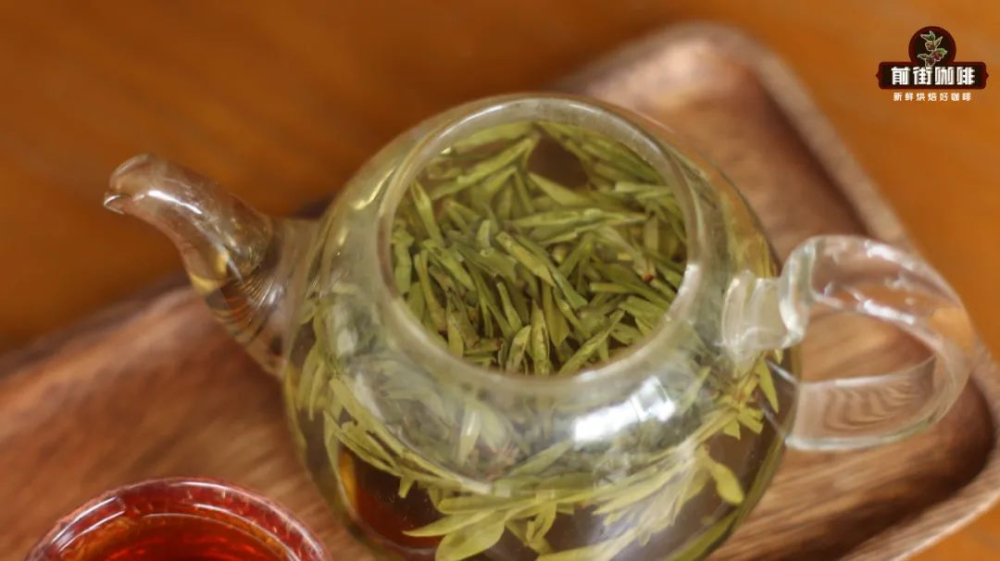
And at Front Street, when tasting the washed Emerald Estate green-label coffee, one feels an obvious sweet aftertaste and a light sensation, just like drinking Tieguanyin tea—both the aroma and the sweet aftertaste are very long-lasting.
Yet another example is when tasting black tea. Because it is a fully fermented tea, the tea-like sensation is full and solid, the aroma is rich, and the tea taste is deep and mellow with an obvious sweet aftertaste.
And at Front Street, when tasting our own home-grown Yunnan sun-dried Typica coffee, one feels that the finish has a solid sweet aftertaste, like the feeling of drinking black tea.
These different oral tactile sensations and tastes make Chinese people think of different types of tea. Therefore, descriptions of tea flavor/tea aroma/tea-like notes frequently appear in coffee beans bought in China.
Why is there only a "black tea" description on the flavor wheel?
Many flavor references in the flavor wheel come from North America. In foreign flavor descriptions of specialty coffee beans, there are also few descriptions related to tea, because they do not have much definition or concept of the aromas of different tea types or of salivation and sweet aftertaste. Therefore, even "black tea" is judged from the sense of smell and grouped into the floral category.
The reason coffee beans sold in China like to use tea-like notes/tea aroma as flavor descriptors is that Chinese people have an "innate" familiarity with tea-like notes. It is also hoped that through descriptions of tea flavor, more people will gradually change their fixed impression that coffee is only bitter and burnt, and let everyone know that coffee can also, like tea, have excellent aroma, a clean mouthfeel, and a pleasant salivation and sweet aftertaste.
The above content is compiled by CoffeeHunters, a coffee news website.


