







How Does Boiled Coffee Fit Into Chinese-Style Brewing?
Double-boiled coffee, purple clay pot steamed coffee and Macau clay pot coffee are three Chinese-style approaches that borrow local cooking and tea methods rather than imported espresso routines. All of them rely on low-temperature slow extraction and even, gentle heating to pull a smoother, richer cup from the same beans, treating the vessel itself as part of the recipe.
The wider wave of coffee brewing experiments in China has drawn criticism for odd pairings, yet the milk tea world shows a workable model: local Yunnan tea and milk, edible roses, red dates, goji berries and yellow rock sugar, chosen because they harmonize with the base drink. Coffee localization tends to work when the technique, not just the garnish, comes from local practice.
While the milk tea world perfectly combines ritual and local ingredients with jar-baked milk, the coffee world's "new Chinese style" frequently sparks controversy due to bizarre pairings. In fact, China's rich cooking techniques and tea brewing methods can fully serve as inspiration for coffee localization—double-boiled coffee, purple clay pot steamed coffee, Macau clay pot coffee—these attempts all use principles like low-temperature slow extraction and even heating to bring out a smoother, richer flavor in coffee. This article reviews the practices of these Chinese coffee schools, explores how innovation can stay true to coffee's roots and soul, and offers new ideas for the local expression of specialty coffee.
For professional coffee knowledge exchange and more coffee bean information, please follow Coffee Workshop (WeChat public account: cafe_style)
For more specialty coffee beans, please add private WeChat Front Street Coffee (FrontStreet Coffee), WeChat ID: qjcoffeex
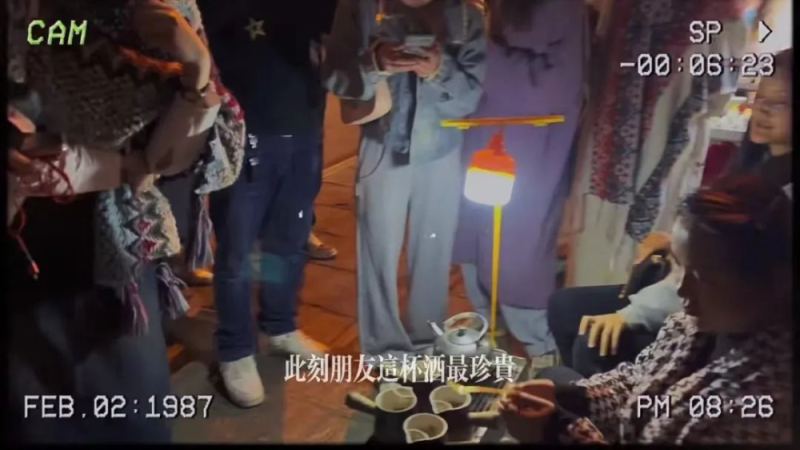
- ^ω^ This way of brewing milk tea is somewhat similar to the围炉煮茶 (stove-boiled tea) that was popular last year. Everyone sits around the stove, watching the tea slowly boil in the pot, and that warm atmosphere made it sweep through the entire autumn and winter.
After the weather turned warmer, the popularity of stove-boiled tea gradually faded, but consumers' pursuit of ritual did not disappear. So businesses skilled at capturing young people's preferences, riding on this residual warmth, launched "jar milk tea"—just wait a moment, and you can drink a cup of hot beverage full of ritual.
-Holding a cup of jar-baked milk
To give jar milk tea a spring vibe and Yunnan's local flavor, the tea leaves are selected from Yunnan, the milk also comes from Yunnan, and local edible roses are added, along with red date slices and goji berries to nourish qi and blood, plus yellow rock sugar to moisten the lungs. This combination firmly captures the health-conscious, ritual-loving younger generation.
The milk tea world's "new Chinese style" is worth learning from in the coffee world
Comparing milk tea and coffee together, we find that the milk tea world's interpretation of "new Chinese style" focuses on ritual, and the utensils and added ingredients not only reflect "Chinese style" but also harmonize with the milk and tea themselves. As for the coffee world... it has begun to move toward a state that ordinary people find hard to understand. Today a netizen's comment, the writer would like to quote here:
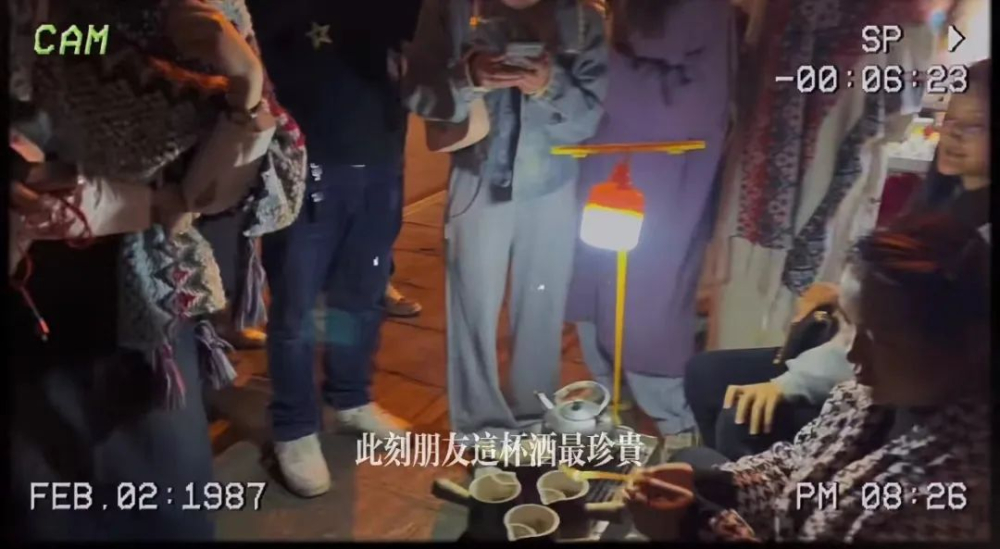
Previously, various coffees with added local specialty foods took turns flooding the screen, and an article "Coffee can be niche but not sinister" shot up to Weibo's hot search.
Cups of creative coffee full of "Chinese food culture" elements constantly refresh people's perception of coffee. Netizen comments are like this:
For the development of new Chinese coffee, there are clearly better choices
Surrounded by various bizarre creative products, the impression new Chinese coffee leaves on the public seems to be nothing but bizarre, and the rest is numbness. Facing the continuous emergence of innovative products later, everyone has entered a state of incomprehension. From common sense, this direction is not healthy, and continuing this way will only make mass consumers increasingly avoid coffee innovation.
The original intention of using "Chinese-style" to draw more people's attention to specialty coffee is good, but such a blunt collision can really easily "kill" coffee.
It can be seen that when other regions develop their own coffee culture, they all evolve their production methods.
Italy formed the Italian school because it invented the pressurized espresso machine, Japan formed the Japanese school because of its unique roasting and brewing, Australia formed the Australian school because of its dedication to the flavor expression of Italian milk coffee, so China should also have its own unique way of expressing Chinese coffee.
China has so many cooking methods and so many tea brewing techniques, all of which can become the weather vane for Chinese coffee.
For example, the "double-boiled coffee" that was highly discussed over a year ago. Using the method of double-boiling soup, coffee powder liquid at a certain temperature is placed in high-temperature water for long-term stewing. By controlling the coffee grind size and extraction time, the coffee particles release pleasant, rich flavor substances in the double-boiler container.
Although it is high-temperature stewing, the temperature inside the container stays within a certain range, effectively controlling the release of bitter substances from the coffee particles, ensuring the extracted coffee tastes rich and mellow, with a smooth mouthfeel and no bitterness.
Another example is the "purple clay pot steamed coffee" that appeared at a coffee exhibition half a year ago. This method actually shares something with double-boiling, namely low-temperature slow extraction. Although the temperature inside the steamer is high, the coffee in the pot heats up much more slowly than direct boiling.
- Coffee decides
At the same time, the water for extracting coffee is very little, and the coffee liquid quickly becomes saturated, so off-flavors and bitterness from the later stages of coffee are not easily released. In addition, the purple clay pot itself has the effect of adsorbing substances that produce off-flavors in coffee, effectively reducing the bitter taste of coffee.
Yet another example is the "clay pot coffee" that has become a specialty of Macau. Using a charcoal stove plus clay pot to brew coffee, the clay pot allows the coffee to be heated more evenly, and the low heat of the charcoal stove allows the aroma of the coffee powder to be fully released in the clay pot.
- Chen Xiaoke's Eat, Drink and Play
According to the recollection of the writer's grandfather, the key to brewing coffee in a clay pot is to first steam the coarse coffee particles without water for 1-2 hours before brewing, which can reduce the astringency of the coffee. The clay pot should be chosen with an unglazed inner wall, which can reduce the bitterness of the coffee, and roasted eggshells need to be added, which can make the coffee's aroma more unique and rich.
In fact, there really are many Chinese cooking methods and tea brewing methods that can make coffee different and also reflect Chinese flavor. Coffee brewing is not limited to changes in inherent coffee brewing methods, and the preparation of creative coffee is not limited to changes in flavor materials. Innovation requires stepping out of the original framework, and doing something uniquely different can be called true innovation.
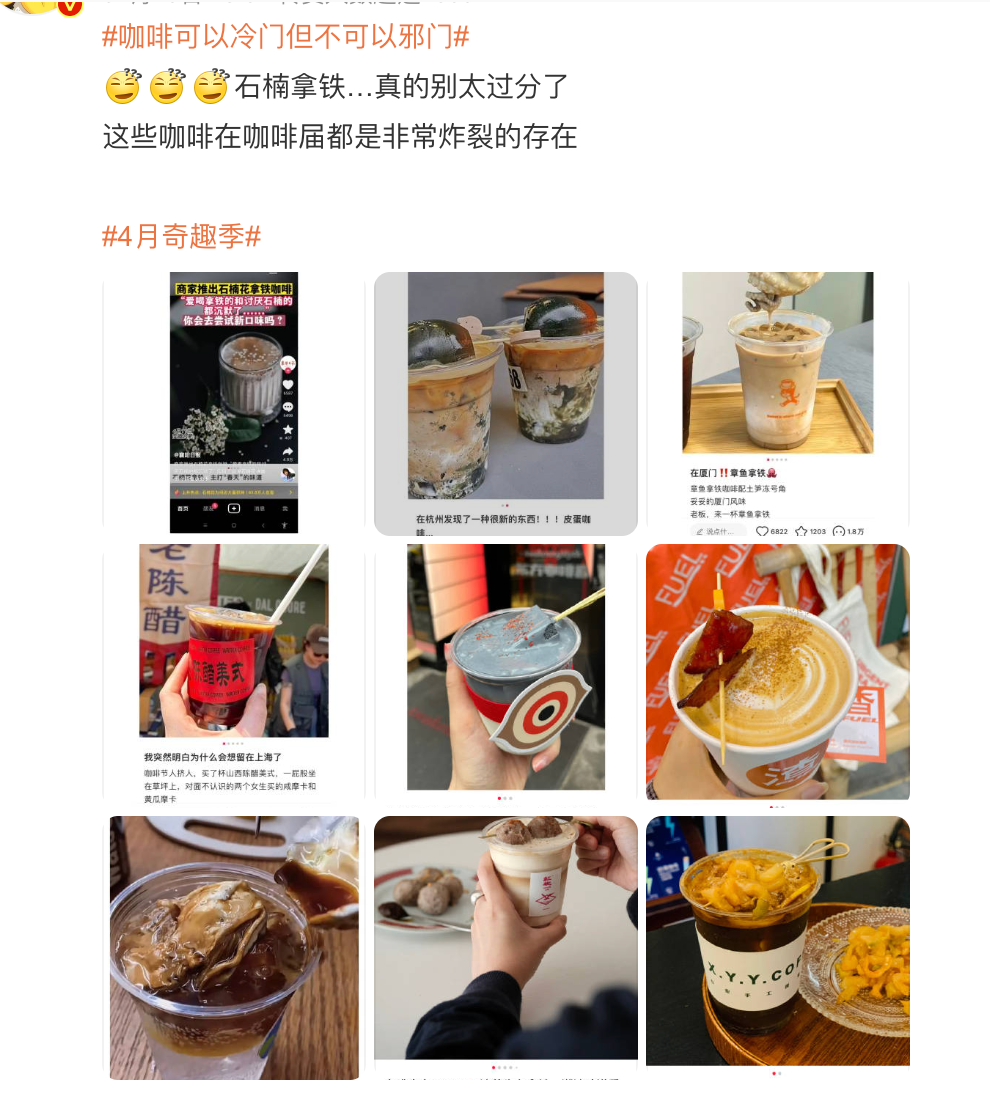
"Although coffee became popular late in China, it cannot lose itself." Innovation can draw more people's attention to coffee, but roots and soul are also needed to promote Chinese coffee, otherwise people will only remember the "appearance" of Chinese coffee and not its charm.
Image source: Internet
The above content is compiled by CoffeeHunters, a coffee news website.


