







Which Panama Varieties Could Go Into an SOE Latte?
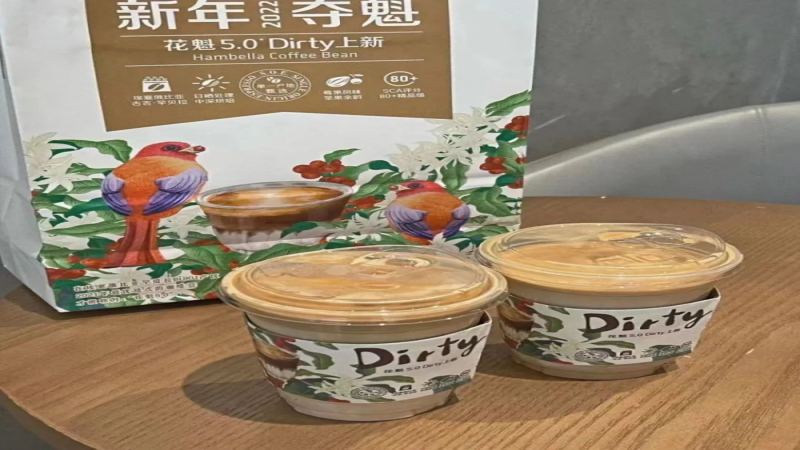
Luckin Coffee is expected to source Panama beans for its next single-origin espresso release, after earlier SOE launches with Ethiopian Sidamo Huakui and a Geisha product. The likely candidates are the Caturra and Catuai varieties, whose botanical traits and flavor profiles determine how they perform in an SOE latte or a Dirty, where milk and espresso are layered rather than fully blended.
An SOE latte uses one origin, so the bean's sweetness, body and acidity carry through the milk. Caturra and Catuai are common in Panama and give moderate acidity with nutty and caramel notes, which suits milk drinks better than delicate washed Panama Geisha. Chain brands buying in large volumes can also shift supply and prices in the specialty market, giving independent shops a reason to offer side-by-side tastings.
After launching the Huakui SOE and Geisha SOE, Luckin Coffee has once again set its sights on the Panama region, sparking widespread attention in the coffee community. This article starts from Luckin's past SOE strategy to analyze the possible direction of its Panama bean sourcing, focusing on interpreting the botanical characteristics and flavor profiles of the Caturra and Catuai varieties, as well as their suitability in SOE lattes and Dirty coffee. It also explores the impact of large-scale procurement by chain brands on the specialty coffee market and offers coffee enthusiasts ideas for visiting independent specialty coffee shops for comparative tasting. Relevant recommendations from Front Street Coffee are retained in the article for readers' reference.
Professional coffee knowledge exchange For more coffee bean information, please follow Coffee Workshop (WeChat public account: cafe_style)
For more specialty coffee beans, please add private WeChat Front Street Coffee (FrontStreet Coffee), WeChat ID: qjcoffeex
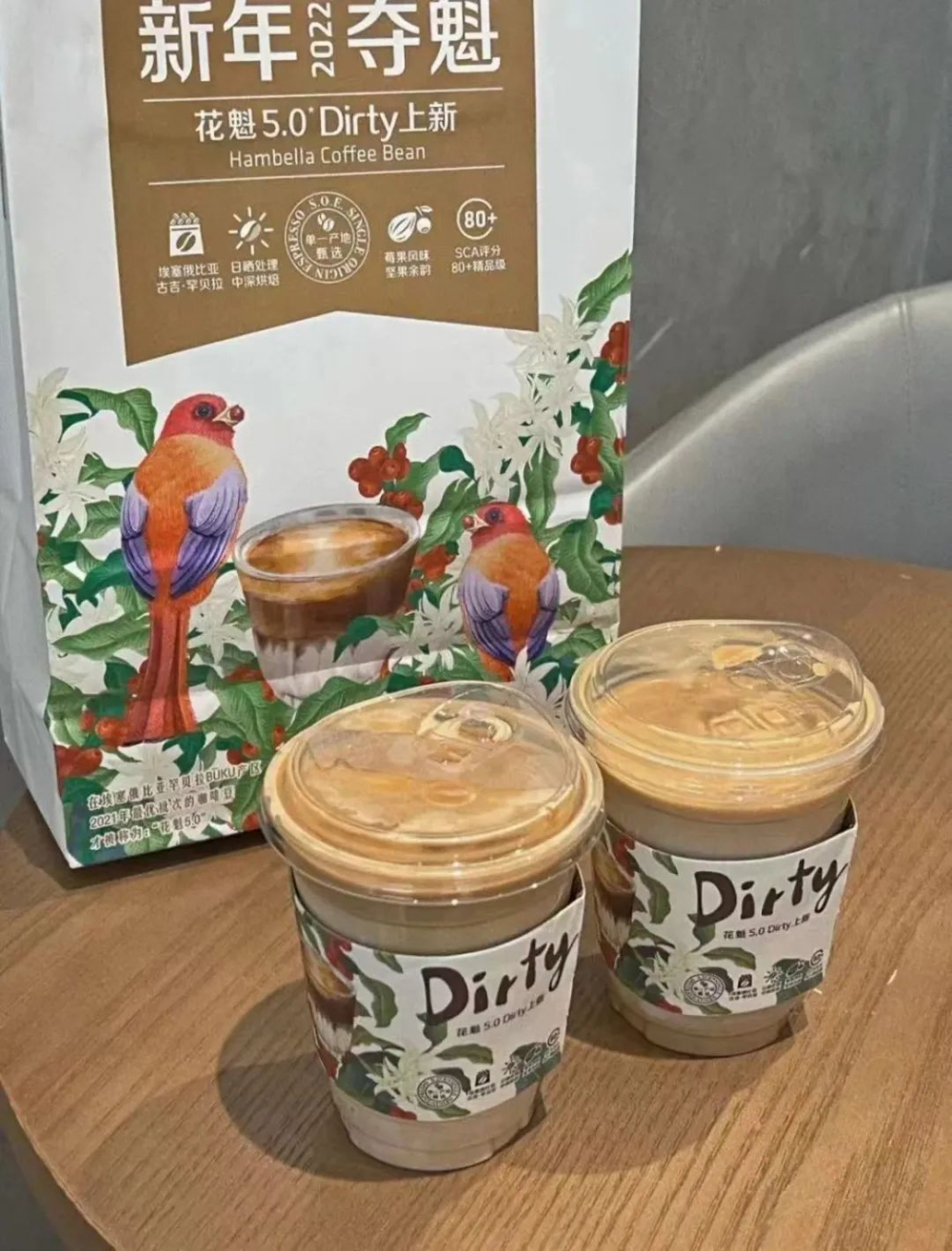
In January last year, Luckin launched an SOE product, using the Ethiopian Sidamo Huakui coffee beans that have been quite a hot topic in the coffee community. Shortly after, Dangdang founder Li Guoqing posted on multiple short video platforms criticizing Luckin, with the core point being to call on everyone not to buy up over ninety tons of Huakui beans to create a monopoly.
However, judging from subsequent market performance, the batch of Huakui coffee beans Luckin acquired at the time did not cause a noticeable impact on the supply or price of Huakui beans afterward.
By September last year, Luckin dropped another bombshell, announcing the launch of Geisha SOE. This move made quite a few people in the coffee community nervous again.
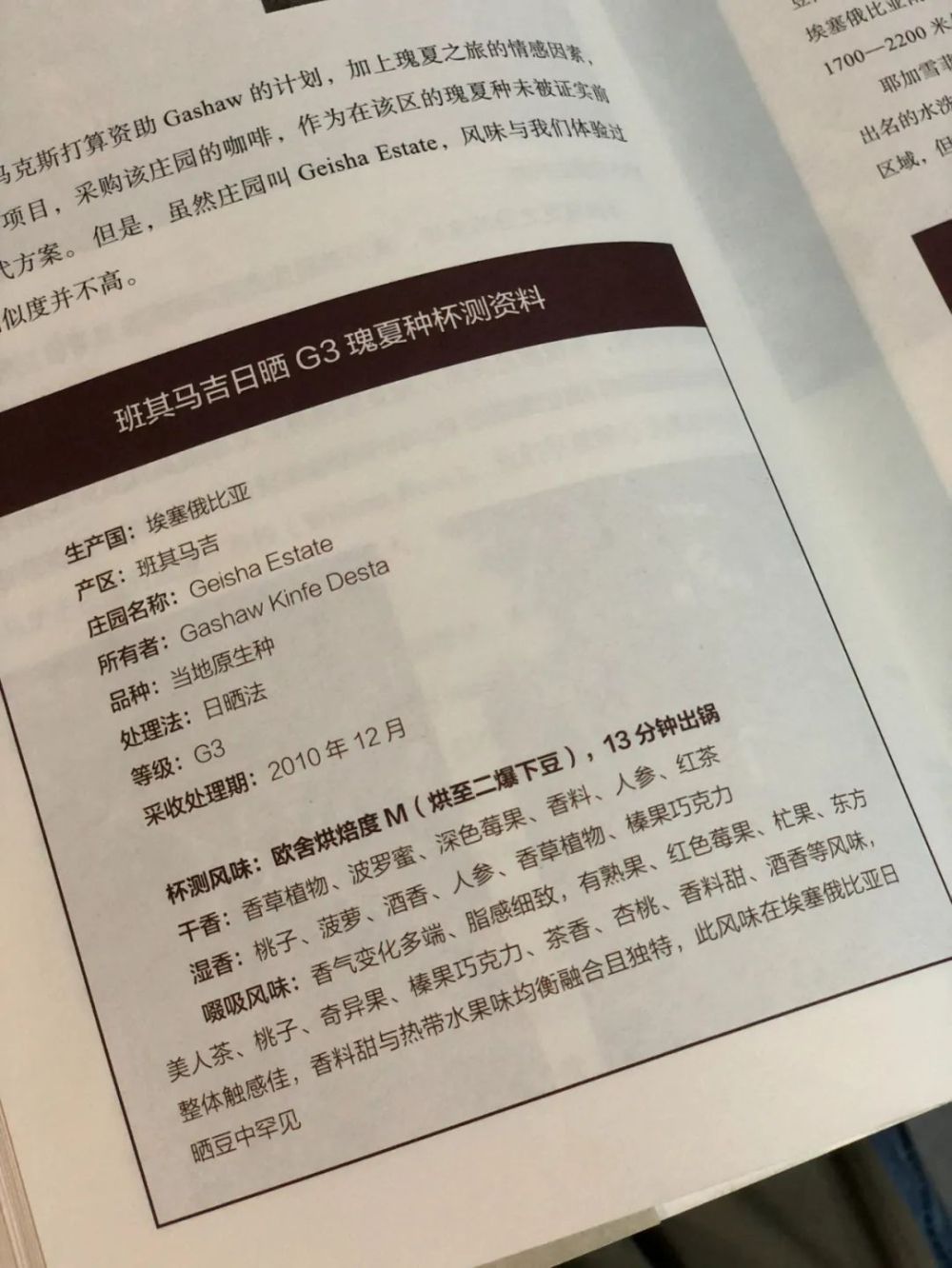
Luckin used the native Geisha variety from Ethiopia, whose yield level is comparable to the commonly seen Ethiopian Heirloom, as both belong to natural mixed varieties that cannot be further subdivided, and are usually graded G1 to G5 based on green bean defect rate.
In terms of flavor, it is also close to the performance of Ethiopian Heirloom and does not possess the exquisite coffee flavors that Panama Geisha is renowned for.
Regardless of grade, its quality, flavor, and price all show a significant gap compared to Geisha from South American regions or the Gesha Village in Ethiopia, and it is not a coffee bean that has been defined as specialty. Teacher Xu Baolin mentioned in "Bean Seeker 2" that the native Geisha variety, when dropped after second crack, presents cup flavors with notes of berries, nuts, spices, and plant roots.
However, quite a few enthusiasts have criticized Luckin for deep-roasting Ethiopian Huakui and Geisha, believing that doing so wastes good beans.
Therefore, when Luckin announced on March 25th that it was officially going to the Panama region to source beans, some people in the coffee community began to worry about the situation of Panama Geisha. Some netizens also joked: if it's still the inherited deep roast, it makes no difference whether they source beans or not. Everyone is also guessing whether Luckin will take a fancy to Geisha from Deborah or Hacienda La Esmeralda.
Can Luckin really bring back Geisha from this trip? After all, Panama doesn't only have the Geisha variety.
Currently, all Geisha varieties in Panama are the "Geisha T2722" that has been cultivated and domesticated over decades and generations, possessing exquisite floral and fruity aromas.
Compared with other Arabica varieties, T2722 Geisha not only has low yield, but the plant is also particularly fragile and very picky about its growing environment. It needs high altitude, fertile soil, cloud cover or shade, and cannot be directly exposed to the sun.
At the same time, the leaf system of T2722 Geisha is very thin, with low photosynthetic efficiency, and the root system is also fragile, absorbing water and nutrients slowly, resulting in extremely low yield. Combined with the high-altitude environment, the fruit also ripens relatively late.
A single Geisha tree produces only half the fruit of a Caturra, which leads to Panama's annual Geisha coffee bean production accounting for only three percent of total production.
Panama Geisha is a globally sought-after commodity, with low production, high popularity, and high prices. Even ordinary-quality Geisha beans are not cheap, so the possibility of Luckin finding Geisha on this trip is not great.
Judging from the poster Luckin released, the cutout of the coffee tree and coffee beans in the background image looks more like the Caturra and Catuai that are more common in Central and South America. These two varieties are also the main force in Panama's annual coffee bean production.

Caturra
Catuai
The coffee tree on the poster is most likely Caturra, because Caturra's secondary branches are very close together, allowing more fruit to grow in the same space. Of course, it could also be Catuai, which is a hybrid of Caturra and the Mundo Novo variety and produces even more fruit.
But if these two varieties are not observed carefully side by side, they look quite similar, and both produce a lot of fruit. It is speculated to be Caturra because there is still some spacing between the fruits.
T2722 Geisha, on the other hand, produces far less fruit, with larger spacing between each cluster of fruit and fewer fruits per cluster.
T2722 Geisha
Another basis for speculating Caturra and Catuai is the cutout of roasted coffee beans at the bottom of the poster. The bean shape is oval and flat, with a relatively slender tail end, which better matches the bean appearance characteristics of Catuai.

Of course, the above is only speculation. Exactly what variety Luckin will bring back from Panama this time can only be revealed once the product is launched, so we might as well wait and see.
For the coffee industry, this is not a bad thing, and it is far from reaching the level of monopolizing the market.
Every time Luckin makes such a move, it instead gives more mass consumers a chance to learn about single-origin coffee beans and different coffee varieties.
It will also make more consumers want to understand a certain single-origin coffee bean more deeply, and then walk into independent specialty coffee shops to taste it, comparing the flavor differences of the same bean between chain stores and independent shops.
The most obvious example is the Huakui SOE launch. Later, when talking with other coffee shop owners, everyone mentioned that during that period, customers asking about Huakui coffee increased noticeably, and quite a few customers said that it was precisely because they drank Luckin's Huakui SOE that they began to take more interest in understanding Ethiopian beans.
Coffee beans with good quality and low production do not have much chance of being monopolized, and ordinary coffee beans with large production do not need to be monopolized. As a chain coffee brand, in order to maintain relatively stable output across all stores, sacrificing some flavor in roasting is unavoidable.
Friends who like specialty coffee also do not need to worry that Luckin's large-scale procurement will drive up coffee bean prices. In recent years, there have been no shortage of beans with good quality and excellent flavor. There is no need to focus excessively on one particular bean; there are still many delicious coffees waiting for everyone to taste.
Image source: Internet
The above content is compiled by CoffeeHunters, a coffee news website.


