







Why Would Coffee Knowledge Matter in a Wet Market?
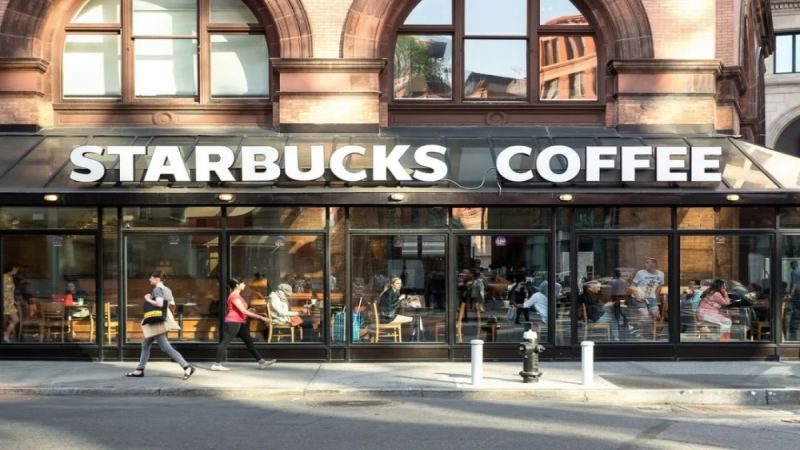
Starbucks has opened stores in traditional wet markets, including a newly opened market in Shanghai's Minhang district and a long-established trade market in Seoul, South Korea. The move extends the chain's strategy from core commercial districts into surrounding communities, where high foot traffic, relatively low rents, and steady repeat purchases make bazaars a different kind of retail site.
A Credit Suisse report described Starbucks as an affordable luxury, a position built through site selection and pricing that once kept a sense of distance from everyday consumers. Shifting toward community locations changes that. Pharmacies, convenience stores, and breakfast shops now sit beside the coffee counter, aiming to give residents a one-stop shopping trip. More coffee knowledge on how pricing shapes market expansion is worth watching.
In recent years, Starbucks has continued to adjust its store layout strategy, gradually extending from core commercial districts to surrounding communities, and even setting its sights on traditional wet markets. A newly opened wet market in Shanghai's Minhang District has brought in a Starbucks, and a Starbucks store has also appeared in a long-established comprehensive trade market in Seoul, South Korea. The high foot traffic, relatively low rents, and considerable repeat-purchase potential of wet markets have prompted coffee brands to re-examine the commercial value of traditional bazaars. This article focuses on the phenomenon of Starbucks choosing wet markets as locations, analyzing the logic behind this strategy, the feasibility of selling coffee in wet markets, and the significance of affordable pricing for the expansion of the coffee market.
For professional coffee knowledge exchange and more coffee bean information, please follow Coffee Workshop (WeChat official account cafe_style)
For more specialty coffee beans, please add the private WeChat of Front Street Coffee (FrontStreet Coffee), WeChat ID: qjcoffeex
An analysis report released by Credit Suisse last year pointed out that compared with other coffee brands or chain brands, Starbucks can be regarded as an "affordable luxury."
For a long time, Starbucks has created a sense of distance among many consumers through its brand positioning, site selection strategy, and product pricing. Because its stores are mostly located in commercial areas, it has also formed a hidden impression of hierarchy in the minds of the general public.
However, with changes in the economic environment and the advancement of various policies in recent years, Starbucks in many parts of the world has begun to adjust its strategic direction. Compared with the customer base in commercial districts, community residents are now becoming a key target for Starbucks. And within communities, the areas with the highest concentration of foot traffic are often wet markets and their surroundings.
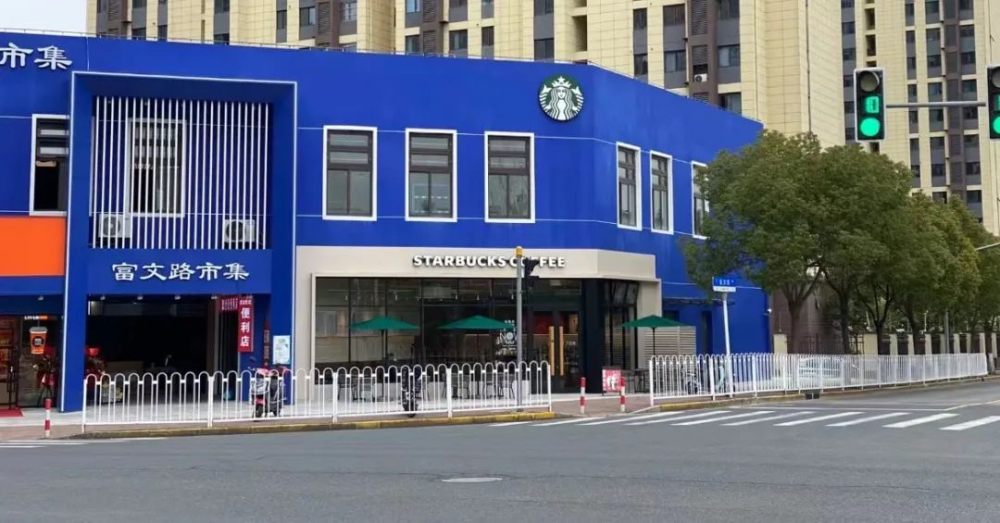
Recently, in a newly opened wet market in Shanghai's Minhang District, in order to provide residents with a "one-stop" shopping experience, pharmacies, convenience stores, breakfast shops, and other convenience businesses were introduced near the entrance. Among them, the appearance of Starbucks surprised many netizens.
In order to attract more attention from community consumers, the areas beside and even inside wet markets have become locations contested by many coffee brands, and Starbucks is naturally no exception.
In fact, in recent years, many Starbucks stores in China have chosen to open near major regional wet markets, usually surrounded by residential areas, so that whether on the way to work or on the way to buy groceries, people can pass by conveniently.
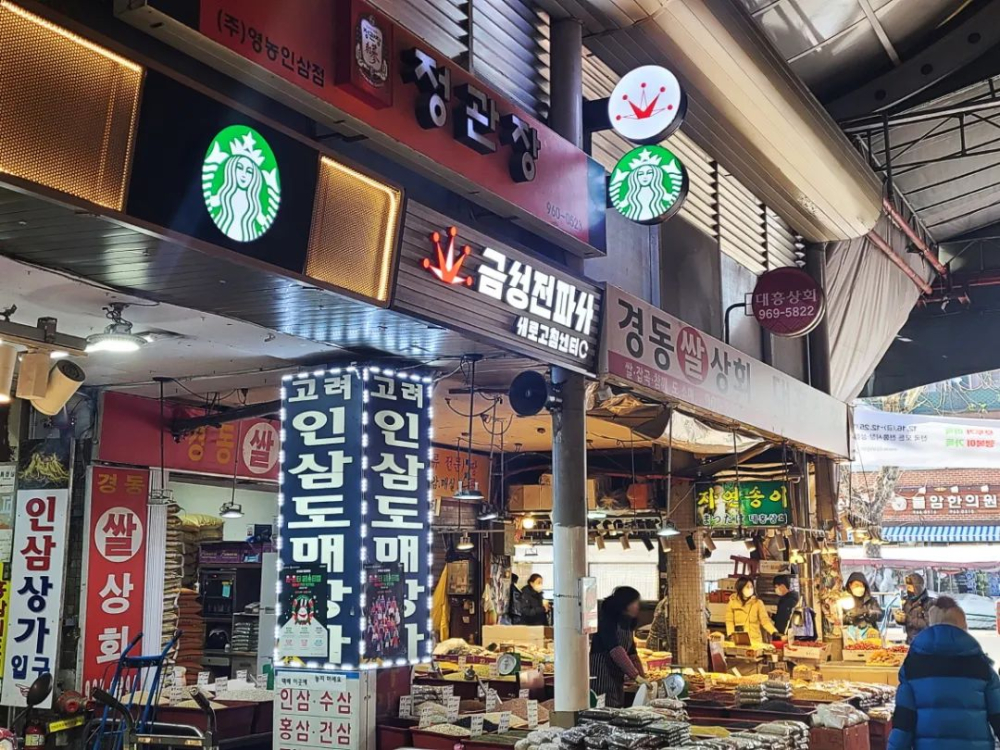
This is not only the case domestically; Starbucks overseas has also begun to establish a presence in wet markets. Recently, a Starbucks in South Korea opened in a long-established traditional comprehensive trade market in Seoul.
There was a theater in the market that had been abandoned for many years. Starbucks rented it and transformed it into a distinctive store full of sentiment and story.
The collision between a traditional setting and a modern coffee shop has not only changed consumers' views of Starbucks' brand positioning, but also brought more development opportunities to traditional markets, and has also given more young people a new understanding of traditional commercial areas.
Are wet markets really a good location for selling coffee?
Perhaps in many people's impressions, the sanitary conditions of wet markets are not ideal—standing water on the ground, odors in the air, and so on.
These problems exposed by traditional wet markets have already attracted attention. Under the supervision and rectification of relevant departments, the environment of most markets has improved significantly. Both the interior and surrounding areas of the markets are clean and tidy, with clear functional zoning, and the floors are also very clean and dry.
In addition, in order to retain more customers, the service support provided by various stalls is quite adequate. Whether buying vegetables or meat, most vendors can provide preparation services. For the younger generation, who may have average knife skills, find preparation troublesome, but still care about healthy living, this is much more appealing than ordering takeout.
As a result, many young people have started visiting wet markets again.
The foot traffic in wet markets is actually not low; it can even be said to be very high. People of different age groups come and go every day. Even if they do not make a purchase, because of the seemingly "mismatched" collaboration between the two, many people cannot help but share it with friends and family around them, thereby achieving a promotional effect.
Opening a coffee shop in a wet market is actually nothing new. It is just that, over the years, the bad impressions brought by the environment of most traditional wet markets have made people feel that opening a coffee shop in a wet market is somewhat inappropriate.
But in fact, abroad, coffee shops really like to open in or around traditional markets, since the foot traffic is genuinely high.
Starbucks' first store was opened in Pike Place Market, the oldest farmers market in the United States. If a coffee brand wants to quickly gain traffic and attention, being approachable is the first thing it must do.
Selling coffee in a wet market is really not such an odd thing
Many people think that selling coffee in a wet market is unrealistic for two reasons: one is the environmental issue, and the other is that the people who go to wet markets do not seem like those who would consume coffee, so they overlook this business model.
But the advantage of opening a store in a wet market is that the rent is cheap and the foot traffic is high. Although coffee is not a daily necessity, for some customer groups, selling coffee is just a matter of convenience. At the same time, if the customers who initially buy it "on the side" are truly satisfied with the product, they will become stable regulars.
After all, such a customer must live nearby and must often go to the same wet market. As long as the store's product pricing is reasonable and product quality is stable, the customer has a great chance of repurchasing.
Not everyone has extreme requirements for coffee flavor, so stable product quality is the biggest key to retaining customers.
It is not necessarily true that the people who go to markets will never be the group that consumes coffee; it is more that coffee's pricing drives people away.
Affordable prices can give curious friends who are reluctant to spend money on coffee a chance to try coffee, and that in itself is a good thing.
Only when more mass consumers have a demand for coffee will the coffee market have greater room for development and innovation.
Image source: Internet
The above content is compiled by CoffeeHunters, a coffee news website.


