







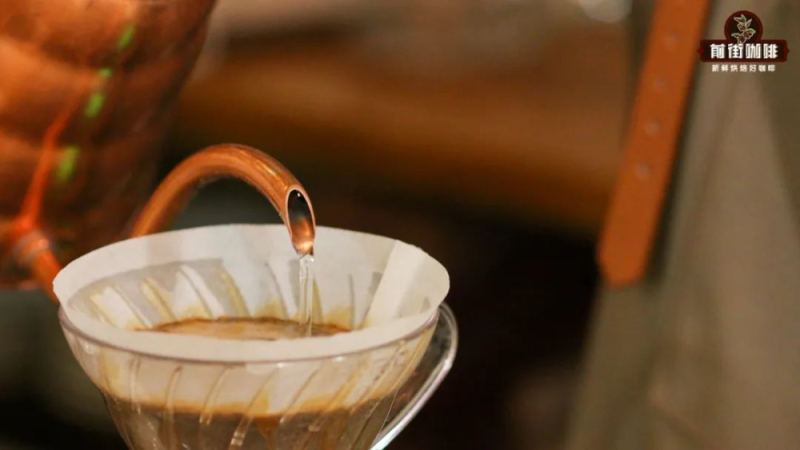
Does water level really change how is coffee processed in pour-over?
Water level in pour-over brewing changes acidity, sweetness, and body. A higher level during pouring tends to give livelier acidity and clearer flavor layers with a lighter mouthfeel, while a lower level produces a fuller, heavier cup with more pronounced sweetness, based on observations at Front Street Coffee with the same beans.
The cone-shaped dripper, with its ribs or grooves, keeps flow rate similar at high and low levels, and high-level brewing can finish a few seconds faster. Dose, dripper size, and bean freshness all interact with this, so adjust the pour to steer extraction rather than treating water level as a fixed step in how is coffee processed.
Every detail in pour-over coffee can change the final flavor direction, and the water level is often an easily overlooked key variable. In actual brewing, Front Street Coffee has found that with the same beans, different liquid levels can produce noticeable differences in acidity, sweetness, and body thickness. Starting from Front Street Coffee's observations, this article analyzes which coffee beans are suitable for high and low water levels, and combines dose, dripper size, and freshness to give specific water level recommendations, helping you control the extraction direction more precisely in your daily brewing.
Recently, a friend who visited the shop chatted with Front Street Coffee about pour-over details. He followed the brewing method Front Street Coffee shared, but felt there was a gap between the taste and what he drank in the shop. Front Street Coffee asked him to demonstrate the brewing process on the spot, and only then discovered that the root of the difference was the liquid level height during pouring.
What changes can water level height actually bring to coffee?
In pour-over recipes, it is usually not explicitly specified to which mark the water level should be poured, nor is the start and end time of each pouring stage often precise to the second. More often, it depends on the brewer's own habits and understanding.
So for beginners who are still exploring, there are many variables.
The dripper used for pour-over is an inverted cone shape. To prevent clogging, the inner wall has raised ribs or recessed grooves. Because of this structure, although the water retained in the dripper at a high water level is several times that at a low water level, the flow rate can still remain similar, and sometimes is even slightly faster. In other words, coffee liquid at a high water level actually flows away faster than at a low water level. At the same time, the overall extraction time for high-water-level brewing is also shortened by a few seconds compared with low-water-level brewing.
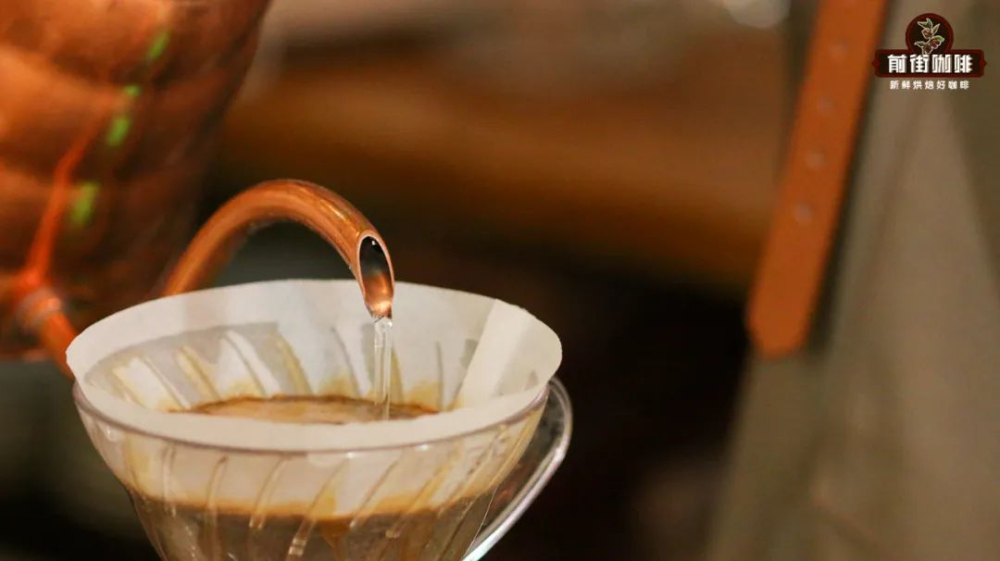
According to feedback from many practices by Front Street Coffee, for the same coffee beans, if the liquid level is raised higher during brewing, the acidity appears more lively, the flavor layers are clearer, and the mouthfeel tends toward lightness.
If the liquid level is kept at a lower position, the overall mouthfeel of the coffee is fuller and heavier, and the sweetness is more prominent.
So how should this be applied in actual operation?
When brewing coffee beans with floral and fruity acidity, Front Street Coffee recommends raising the water level when pouring after blooming. The extent of the raise should be judged based on the dose and the freshness of the coffee. For example, when using a small dripper and 15g of coffee grounds, raise the liquid level to one-half to one-third of the height of the short ribs, and the coffee's flavor presentation will tend toward clear and translucent rather than a thick mouthfeel.
If the liquid level is raised further, the coffee may become watery, because 15g of light-roasted coffee grounds cannot easily form a coffee bed wall above one-half of the V60 short ribs. Without the coffee bed wall as a barrier, water will flow directly down along the edge.
If using 20g of coffee grounds, the liquid level can be raised to a height level with the small V60 dripper. This is also why it is not recommended to brew more than 20g of coffee grounds in a small dripper.
A low water level is suitable for anaerobic coffees that easily release flavor, or for washed and honey-processed coffees that need to highlight high sweetness. Also taking 15g of coffee grounds and a small V60 as an example, the liquid level only needs to be maintained around the bottom of the short ribs.
Keeping the water level at a lower height makes the hot water's extraction of the coffee more concentrated, so the acidity of the brewed coffee is relatively reduced, thereby highlighting a tropical-fruit-like high sweetness.
The above content is compiled by CoffeeHunters, a coffee news website.


