







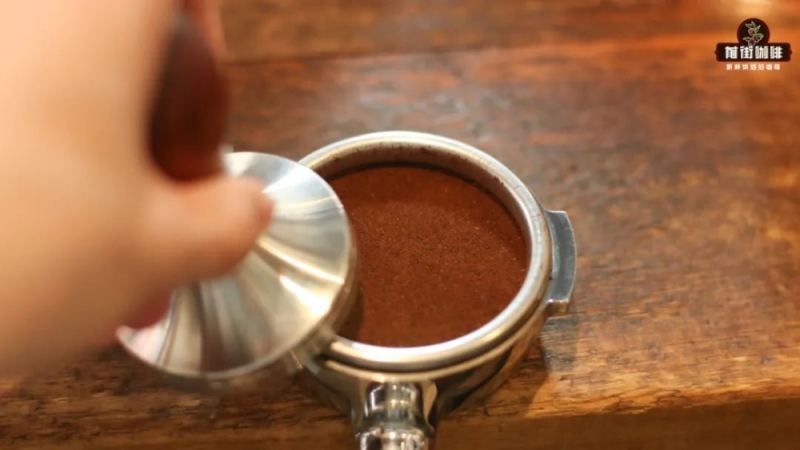
How does tamping pressure interact with coffee grind level?
Tamping pressure alone does not decide espresso flow; grind fineness does. Tests at Front Street Coffee found that with a fine grind of 1.6, tamping at 9 kg took 36 seconds to extract 37 grams, against 27 seconds at 1.8 kg. With a coarser 2.2 setting, the two pressures produced nearly the same result.
The reason is puck density. A fine grind already packs the coffee tightly, so extra force visibly slows the flow, while a coarse grind leaves space where pressure changes little. The practical takeaway is to set the coffee grind level first, then tamp level and firm without chasing an exact number on density coffee.
Tamping is a key step in making espresso, but how much does tamping pressure actually affect the extraction result? This article uses actual measurement data from Front Street Coffee to compare the flow rate and extraction time of espresso after tamping with two different pressures, 1.8 kg and 9 kg, under different grind settings. The results show that grind fineness determines the density of the coffee puck, which in turn affects the actual role of tamping pressure: with a fine grind, differences in pressure clearly change the flow rate, while with a coarse grind, the two pressures show almost no difference. The article analyzes the underlying principles in depth to help coffee lovers understand the relationship between tamping pressure and grind size.
Using a tamper to compact the coffee puck is a crucial step in the espresso extraction process. In past discussions about tamping, the focus has mostly been on how to level the coffee bed. This is because once it is tamped unevenly, it easily leads to uneven extraction.
As for whether the force applied during tamping changes the extraction result of espresso, opinions are not unified. Some baristas believe the pressure must be precisely controlled, and that using too much force will compress the coffee grounds too tightly, causing the water flow rate to slow down. Other baristas argue that as long as the puck is level and stable, the amount of pressure actually does not matter, because compared with the pressure applied by the espresso machine during extraction, the force of manual tamping is negligible.
Front Street Coffee also conducted comparative tests on tamping pressure. In the first test, Front Street Coffee set the Galileo grinder to 1.6 and ground 18.5 grams of coffee. After distributing the grounds, they tamped with 1.8 kg of force, ultimately extracting 37 grams of coffee liquid in 27 seconds.
Keeping the same grind setting and dose, they switched to tamping with 9 kg of force. Extracting 37 grams of coffee liquid took 36 seconds, the flow rate dropped significantly, and the outflow time was also noticeably delayed by 2 to 3 seconds.
Then the grind was adjusted coarser to 2.2, and 19.5 grams of coffee was weighed out. After distributing the grounds, they tamped with 1.8 kg of force, obtaining 39 grams of coffee liquid in 28 seconds.
Using the same 2.2 setting and 19.5 grams of coffee, after distributing the grounds they tamped with 9 kg of force and also obtained 39 grams of coffee liquid, again taking 28 seconds.
The two tests used two completely different pressures, yet the results were inconsistent. The fundamental reason lies in the difference in density caused by different coffee grind sizes.
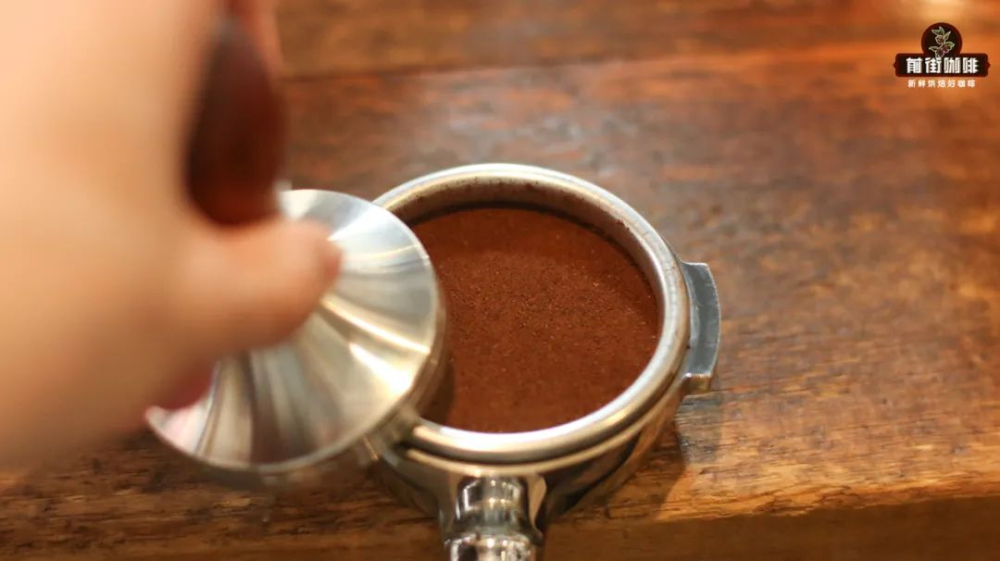
In the first test, the grind was set relatively fine, and the difference in tamping pressure directly led to a difference in how compact the puck became. With 1.8 kg of force, the puck was relatively less compacted and had lower density, so the flow rate was faster. With 9 kg of force, the puck was compressed more tightly, so the flow rate was relatively slower.
Looking at the test with the coarser grind, no matter how much tamping force was applied, the gaps between coffee particles in the puck were necessarily larger than in the previous fine-grind group. Whether with 1.8 kg or 9 kg of force, the puck had in fact already been compressed to its tightest state. Therefore, the coffee extracted with the two pressures was very similar in flow rate and time, with no significant difference.
The above content is compiled by CoffeeHunters, a coffee news website.


