







What should a coffee shop location assessment check before signing a lease
Site selection and renovation take the most time and money when opening a coffee shop, and the longer the preparation drags, the higher total costs climb. Before searching, settle three questions: why the shop is being opened, who the target customers are, and what style the store should present. Clear answers make the storefront search far more targeted.
The assessment then runs through three layers of observation: the surrounding location, the storefront itself, and the interior. Foot traffic, storefront width, drainage, and water supply all belong to that checklist. Whether the spot is suitable shapes future profitability and operational efficiency, so each factor deserves checking one by one rather than rushing the lease. Coffee knowledge from sources such as Front Street Coffee can support the research.
Opening a coffee shop often involves the two most time-consuming and costly stages: site selection and renovation. The longer the preparation phase, the higher the overall costs will climb. Therefore, before starting the search for a storefront, entrepreneurs need to clarify three core questions: what is their original intention for opening the shop, which customer groups they are mainly targeting, and what kind of store style they hope to present. Only after thinking these through can they find a storefront with clear direction and choose suitable renovation materials. Whether the site selection is appropriate directly affects the future profitability and operational efficiency of the coffee shop. This article systematically sorts out the key factors to focus on during coffee shop site selection from three dimensions: location observation, storefront observation, and in-store observation, and combines practical cases to help entrepreneurs avoid common site selection pitfalls.
For professional coffee knowledge exchange and more coffee bean information, please follow Coffee Workshop (WeChat public account: cafe_style).
For more specialty coffee beans, please add the private WeChat of Front Street Coffee (FrontStreet Coffee), WeChat ID: qjcoffeex.
Opening a coffee shop, the most energy-consuming stages are usually concentrated in site selection and renovation. These two early-stage tasks are also the main destinations for capital investment; the longer they drag on, the higher the total cost.
So before formally deciding to open a shop, three questions must be thought through in advance: what is the motivation for opening this shop, who is the target customer group of the coffee shop, and what overall style should the shop pursue. With a clear direction, finding a storefront becomes more targeted, and the choice of renovation materials will be more well-founded.
How to choose a suitable storefront is the biggest challenge many people encounter in the early stages of opening a shop. Many friends, eager to get the shop open, do not consider the store location and storefront thoroughly enough, resulting in numerous difficulties in subsequent operations.
The final determination of the store location and storefront relates to whether the coffee shop can be profitable and operate efficiently in the future, so it needs to be observed and considered one by one from the following three aspects.
/ Location Observation
1. Whether the interior of the store can be clearly seen
"Stand in the customer's position to examine the storefront and confirm whether the shop location is prominent enough. The ideal state is for people to spot where the shop is at a glance."
(To be honest, without looking carefully, you really wouldn't think this is a coffee shop...)
2. No obstructions in front of the storefront
"The most common obstructions in front of a shop are large trees, electrical boxes, streetlights, and building pillars. These large and difficult-to-move objects block customers' sightlines and weaken passersby's attention to the storefront."
3. Choose a storefront next to shops with as similar a customer base as possible, and record customer flow and customer types at different time periods
"When selecting a location, it is best to choose near or next to shops with similar customer types. The pricing and categories of surrounding products should be consistent with your own coffee shop, so that the same customers can be attracted to enter and spend.
At the same time, you should also count when the peak and off-peak periods are, and what characteristics the consumer groups entering the shop during these periods have (such as male-to-female ratio and occupational ratio)."
Wrong case sharing: There was once a coffee shop opened in a dining area, but the storefront was surrounded entirely by inexpensive Chinese restaurants and fast-food shops, and the surrounding consumption level was such that a meal could be had for 15 to 30 yuan. Most of these customers would not be willing to spend the same amount on a cup of coffee.
/ Storefront Observation
1. Storefront width
"The shop area does not need to be too large, but the width of the storefront must be sufficient. The wider the storefront, the easier it is for customers to notice it, the higher the shop's exposure rate, and naturally more people will enter to spend."
2. Lighting
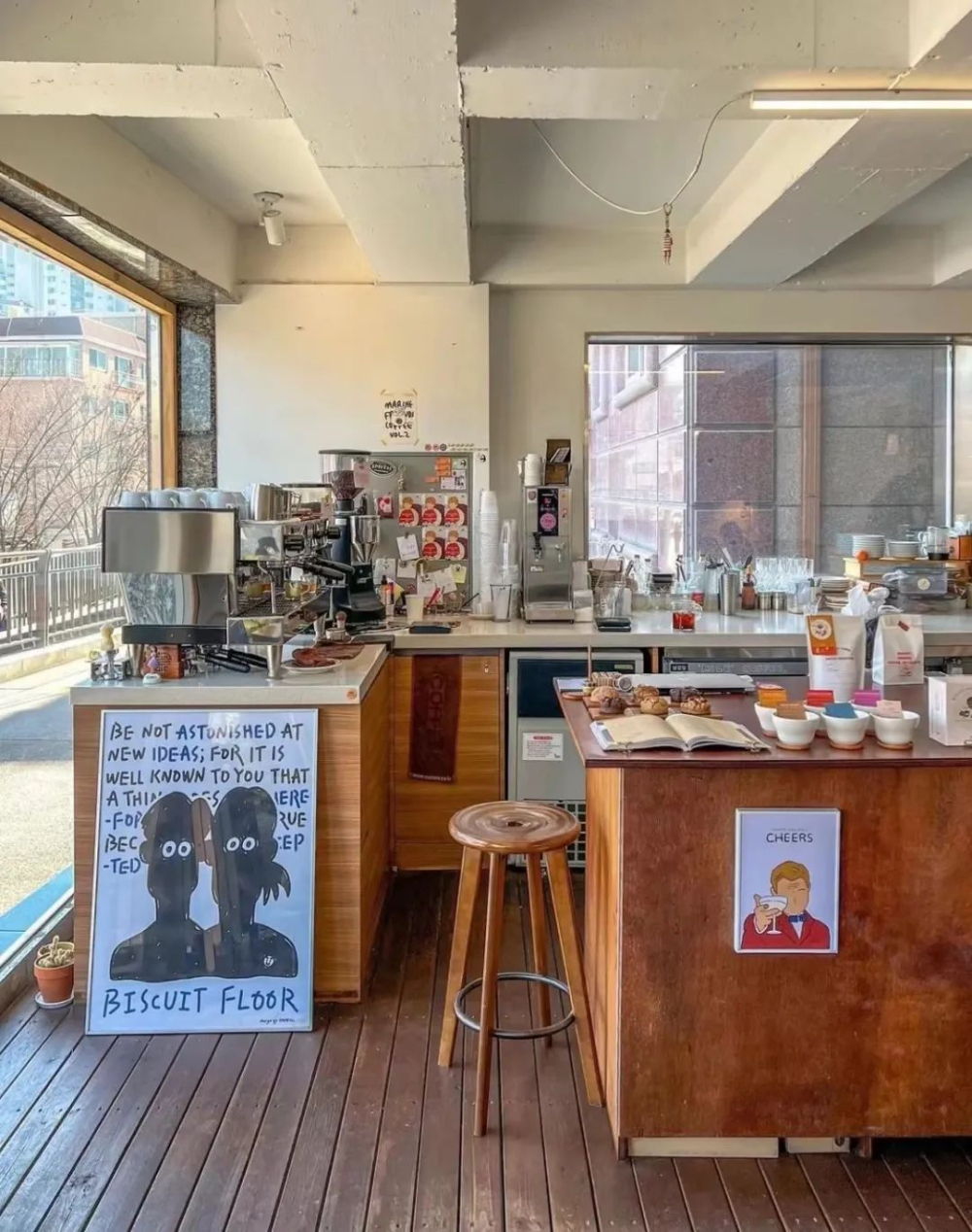
"The quality of lighting determines the brightness of the storefront and directly affects customers' willingness to enter. Nowadays, many coffee shops like to adopt a recessed entrance design. In this case, if the storefront lighting is insufficient and the interior is dim, most customers will be unwilling to walk in and spend."
/ In-Store Observation
1. Drainage point
"Water flows to low places, so pay attention to the drainage slope and the diameter of the drainage pipe. For a food and beverage shop, the most critical thing is to have a suitable drainage point; otherwise, after prolonged use, problems such as blockage and backflow are likely to occur. If there is no reasonable drainage point, this storefront can be directly abandoned."
2. Water inlet pipe
"The water inlet pipe is very important! Some storefronts were not previously used for food and beverage purposes, or were not designed with food and beverage needs in mind and have no restroom, in which case no water inlet pipe would be installed.
In this situation, be sure to pay attention and ask clearly: whether the shop can obtain the relevant certificates for operating a food and beverage business, and whether a water inlet pipe can be installed. If it can be installed, you also need to confirm where clean water can be brought in from."
3. Smoke exhaust and ventilation
"Although some coffee shops do not involve smoke exhaust issues, there are still cases where they provide bread and other foods that need to be heated in an oven. Although such foods produce little smoke during heating, if there is no good smoke exhaust and ventilation system, the odors produced during heating will linger in the shop for a long time, making customers who enter feel uncomfortable. Therefore, in addition to the entrance, there also need to be sufficiently large windows."
Image source: Internet
The above content is compiled by CoffeeHunters, a coffee news website.


