







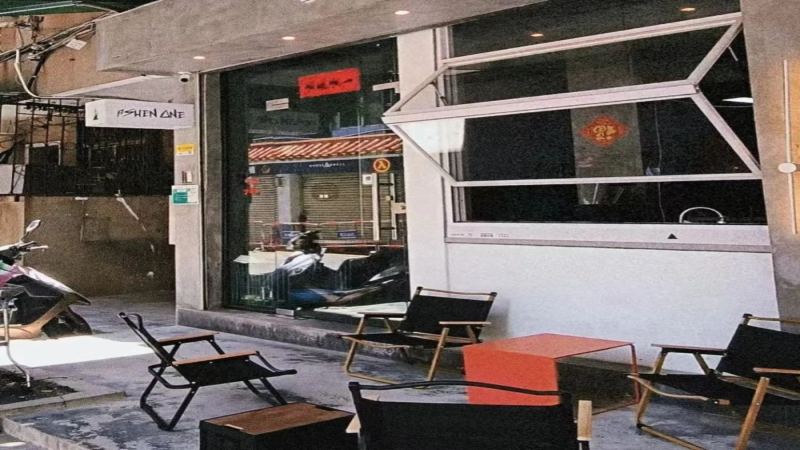
How can coffee shops in small cities compete as chains expand?
As first- and second-tier coffee markets saturate, brands are pushing into fourth- and fifth-tier cities, crowding the county-town track. In Xinhui District, Jiangmen, Guangdong, only three real coffee shops existed before 2015, when Starbucks entered. Local shops now face three pressures: too many competitors in one area, large chains expanding downward, and weak social-space appeal.
Meituan's 2022 China Coffee Consumption Insight Report counted 117,300 coffee shops in mainland China in the first half of 2022, with average growth of 18.28 percent, and third-tier cities growing notably. Xinhui's main urban area holds under 500,000 residents. Some owners are shifting toward a store-ization model, reworking how they use space, staff, and coffee machines to keep regulars.
As the coffee markets in first- and second-tier cities gradually become saturated, more and more brands are setting their sights on small cities in the fourth and fifth tiers, making the county-town coffee track unusually crowded. This article takes Xinhui District, Jiangmen, Guangdong as an example to review the course of local coffee shops from Starbucks' entry to the explosive growth of community stores, analyze the three major challenges facing coffee shops in small cities: excessive competition within the same area, the downward expansion of large chain brands, and shortcomings in social space attributes, and observe some shop owners' new ideas of transitioning to a "store-ization" model, exploring the survival space and future direction of coffee shops in small cities.
Opening a cozy little coffee shop in a small fourth- or fifth-tier city—this is probably the "poetry and distant fields" in the hearts of many young people in big cities! According to Meituan's "2022 China Coffee Consumption Insight Report," in the first half of 2022, the total number of coffee shops in mainland China reached 117,300, with an average growth rate of 18.28%. Among them, the growth momentum in third-tier cities was particularly prominent.
The coffee market in first- and second-tier cities has become saturated, and more and more coffee brands are beginning to expand into lower-tier markets, focusing on affordable coffee. So, can the small coffee shops in fourth- and fifth-tier small cities still hold on to their "poetry and distant fields"?
Cold, hard data may be hard to resonate with people, so the writer will talk about what he has seen and heard in his hometown. First, a brief introduction: my hometown, Xinhui, is a district under the jurisdiction of Jiangmen City, with its main urban area being Huicheng, some distance from the Jiangmen urban area. Nominally it belongs to the third tier, but its actual level is closer to a fourth-tier small city. Data from the "Seventh National Population Census" show that the permanent population of the main urban area is less than 500,000.
Before 2015, apart from coffee-themed restaurants, there were only 3 coffee shops in the area that truly sold coffee. And it was in that year that Starbucks entered Xinhui. At the time, the arrival of a big brand was actually beneficial to the development of local coffee shops, because the freshly made coffee market was still a blue ocean (that was the era of milk tea). It was precisely the arrival of Starbucks, this industry authority, that made residents of the small city begin to know about freshly made coffee.
It was at the end of 2019 that coffee shops truly sprang up like bamboo shoots after a spring rain, and community coffee shops began to rise. Coupled with the pandemic, many young people chose to return to small cities for development, and the scale of community stores expanded rapidly. Most of these stores were located in alleys and inner streets near the central commercial street.
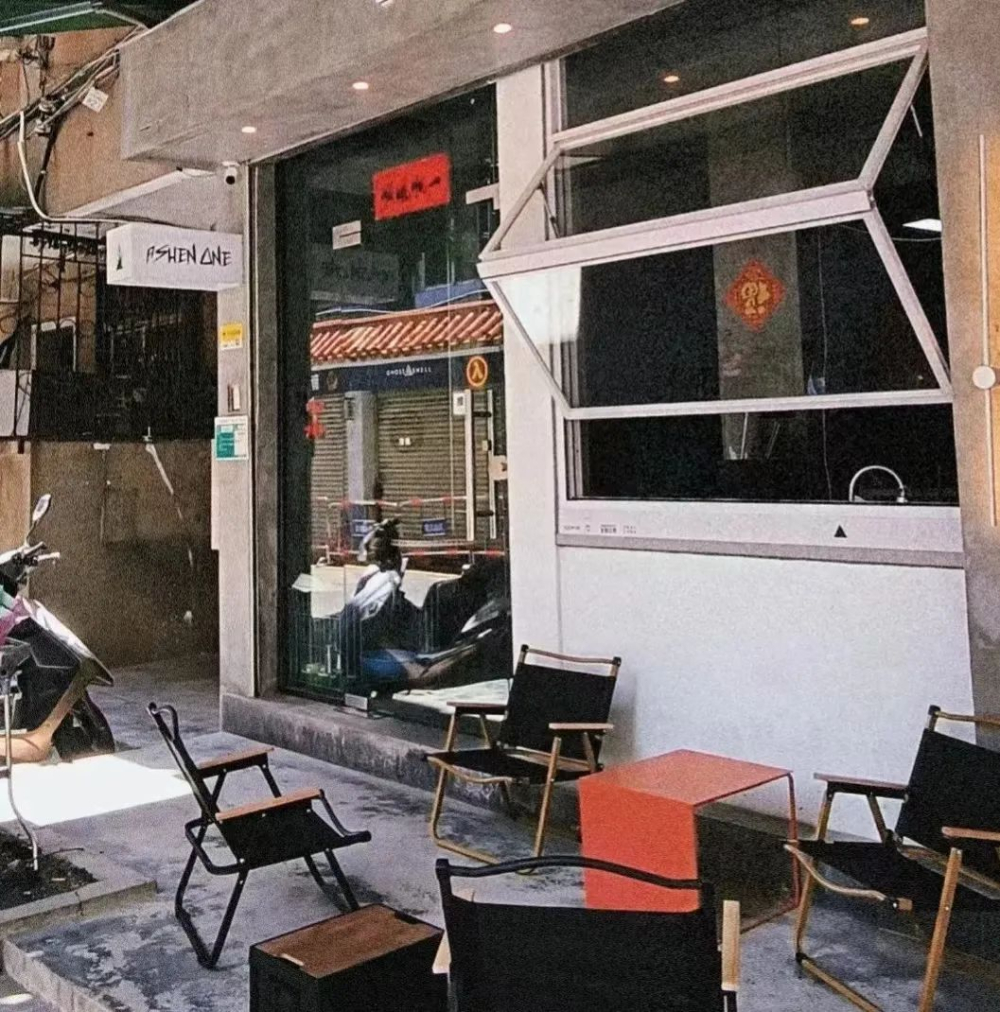
As a result, these small coffee shops faced their first challenge—everyone crowding together to fight over the cake. Small cities have few commercial districts, and they are also very small. As shown in the figure below, within a 500-meter radius there are 16 coffee shops, basically one every couple of steps. If tea beverage shops are included as well, this small 500-meter walking area has more than 30 stores.
Such fierce competition forces small coffee shops to desperately create selling points, such as decoration style, coffee equipment, product variety, and price competition. The most intuitive aspect is coffee equipment, which perfectly illustrates "small but complete." When the writer visited the shops, there were all kinds of well-known coffee machines and grinders (all the rent saved was invested in equipment).
The product line is also very rich, with a full range of espresso series and pour-over series, and in addition there are creative coffees independently developed by the coffee shops. Of course, there is also lemon tea... (Coffee shops in small cities cannot do without lemon tea; after all, coffee is poetry and distant fields, while lemon tea is life.)
In terms of price, the writer focused on the two coffees with the highest output, Americano and latte. The average price of Americano is 13-15 yuan, and the average price of latte is 17-20 yuan. The writer also shamelessly asked about the cost of coffee beans and milk, and just in terms of raw material cost, it is about the same as coffee shops in first-tier cities. The reason for this price is mainly to create a price advantage over tea beverage shops.
For these coffee shops in fourth- and fifth-tier cities, the second challenge is the downward expansion of large coffee chain brands into lower-tier markets. If the competition among local coffee shops is a battle of equals, then the entry of big brands that have fought in first- and second-tier cities is a dimensional strike.
In 2021, Xinhui's first Luckin Coffee entered Xinghui Plaza (the busiest commercial district). Luckin's playbook was much more aggressive than Starbucks', directly exposing its discounts for everyone to take advantage of. Luckin's products highly overlap with those of these community stores, and it even formed a price advantage. Coupled with the influence of brand power, what community stores had left was only their location advantage and advantage in taste (this advantage would only become obvious when people have higher demands for coffee). Now Luckin already has 3 stores in Huicheng, covering the main commercial districts, and the location advantage of small community stores is becoming increasingly dim.
For small community coffee shops there is also a third challenge, and that is the social space attribute of coffee shops! In big cities, you might make a special trip to a certain shop because of its products. But in small cities, people favor the social space attribute of coffee shops more. This, however, is the shortcoming of small community stores. Just as during the Spring Festival, the exciting news that major coffee shops in the small city were packed showed: community stores were packed, and coffee shops selling space were also packed. Community stores were packed because your space is too small; coffee shops selling space were packed because young people returning to the small city need a space to chat, socialize, and reminisce.
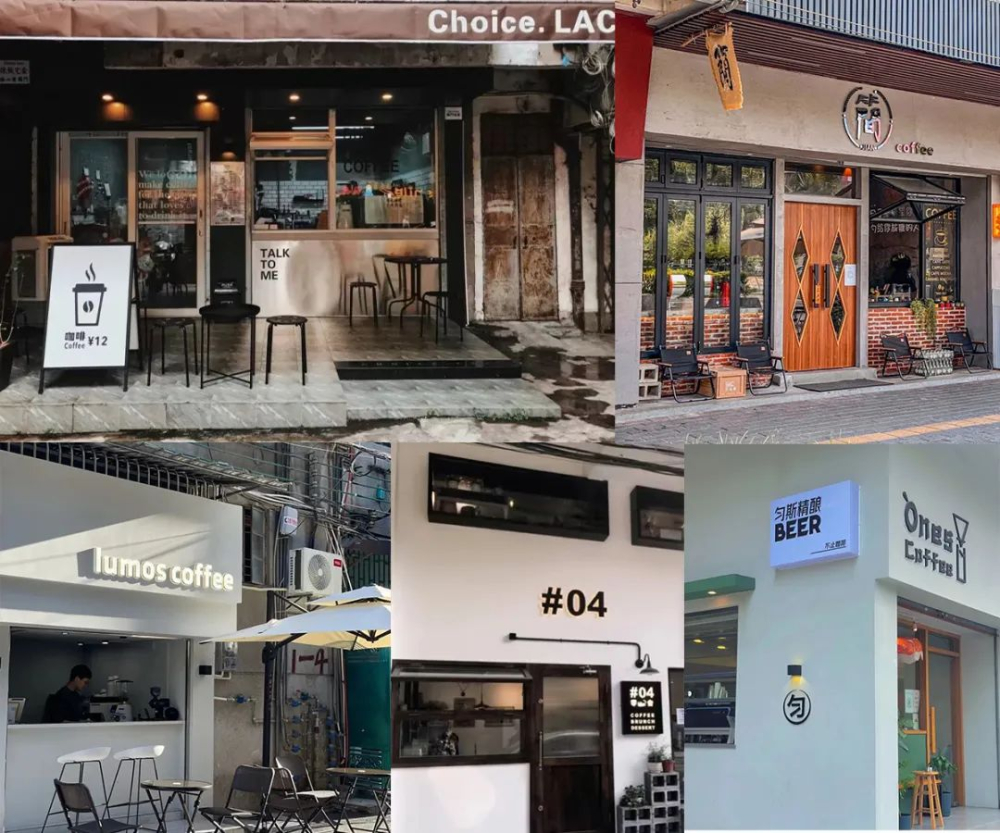
Coffee shops becoming "stores"
For community coffee shops desperately caught up in involution in old neighborhoods, some clever owners have already started doing the "store" business.
"Store" means a small shop. Back when there were no chain convenience stores everywhere, it was these small shops that provided convenience for nearby residents. These stores were all self-employed, but they seemed to have formed an agreement: within the residential area covered by one store, a second store would absolutely never appear. The stores acted as if they had agreed on and divided up territory, serving only the residents of that area.
The writer found that in newly built residential communities far from commercial districts, there would be a coffee shop nearby, and moreover only this one coffee shop. What was most touching was that in a property development that only had its units handed over in January, the coffee shop at the community entrance was already being renovated. This coffee shop seemed to have contracted the coffee of the residents in this community, becoming an important facility resource of the community.
d
The above content is compiled by CoffeeHunters, a coffee news website.


