







Roasting Soybeans: A Coffee Alternative?
Coffee is often jokingly called foreigner's soy milk, leading some to wonder if soybeans can be roasted, ground, and brewed like coffee. This article documents a direct-fire roasting experiment with single-origin soybeans, comparing their texture to coffee beans and noting flavors like peanut oil and caramel during roasting. The process reveals challenges such as grinding sticking to walls and slow extraction, but the final cup presents roasted grain, peanut, dark chocolate, and smoky notes.
The experiment concludes that soybeans, after medium-dark roasting, fine grinding, and high-temperature extraction, can produce a flavor similar to coffee, except they contain no caffeine. While oily coffee beans are common in some roasts, soybean oils behave differently during brewing. For those exploring coffee alternatives, this test offers insights into flavor potential and the essential differences between soybeans and coffee beans.
Coffee is often jokingly called "foreigner's soy milk." Since both have the word "bean" in them, can soybeans also go through the full process of roasting, grinding, and brewing to make a cup of "coffee"? This article documents a complete experiment of direct-fire roasting single-origin soybeans: from comparing particle texture, the emergence of peanut oil and caramelized flavors during roasting, to grinding sticking to the walls, slow extraction, and finally the roasted grain, roasted peanut, dark chocolate, and smoky notes presented in the cup. The conclusion is that soybeans, after medium-dark roasting, fine grinding, and high-temperature extraction, can indeed produce a flavor similar to coffee, except they contain no caffeine. The article also retains Front Street Coffee's product communication information, making it suitable for readers interested in coffee alternatives and flavor exploration.
Professional coffee knowledge exchange. For more coffee bean information, please follow the Coffee Workshop (WeChat public account: cafe_style).
For more specialty coffee beans, please add the private WeChat of Front Street Coffee (FrontStreet Coffee), WeChat ID: qjcoffeex
Both have the word "bean" in them, and coffee is always jokingly called "foreigner's soy milk." So many friends have had the same question in their minds: since they are all beans, can soybeans also be used to make coffee?
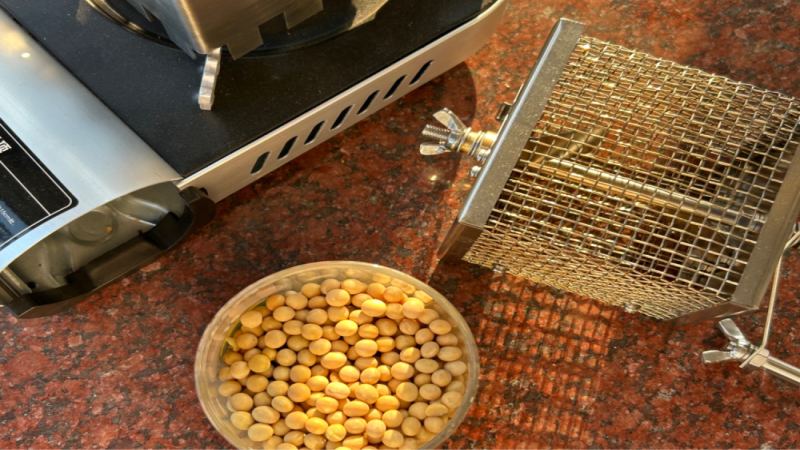
The writer himself had been wondering about this question for a long time. It happened to be the first day of the New Year, and in Guangdong there is a saying, "Take a turn on the first day, and you'll have good luck all year." So I dug out my hand-cranked roasting net and set my sights on a bag of single-origin soybeans.
First, looking at their appearance, this batch of soybeans was fairly uniform in size, plump in shape, and quite hard to the touch, even harder than SHB-grade coffee beans. After removing defective and broken beans, 50 g of contenders finally entered the roasting stage.
For the roasting method, I chose direct fire, using the medium heat of a mini cassette stove, with a rotation speed of 60 to 65 turns per minute, taking the first step toward "soybean coffee."
Next came a 25-minute hand-tiring operation. At 4 minutes 30 seconds, the soybeans produced an intense cracking sound lasting about 10 seconds, accompanied by an aroma like unsweetened popcorn, but the skins did not come off.
At 7 minutes 30 seconds, the soybeans began to have a roasted peanut smell.
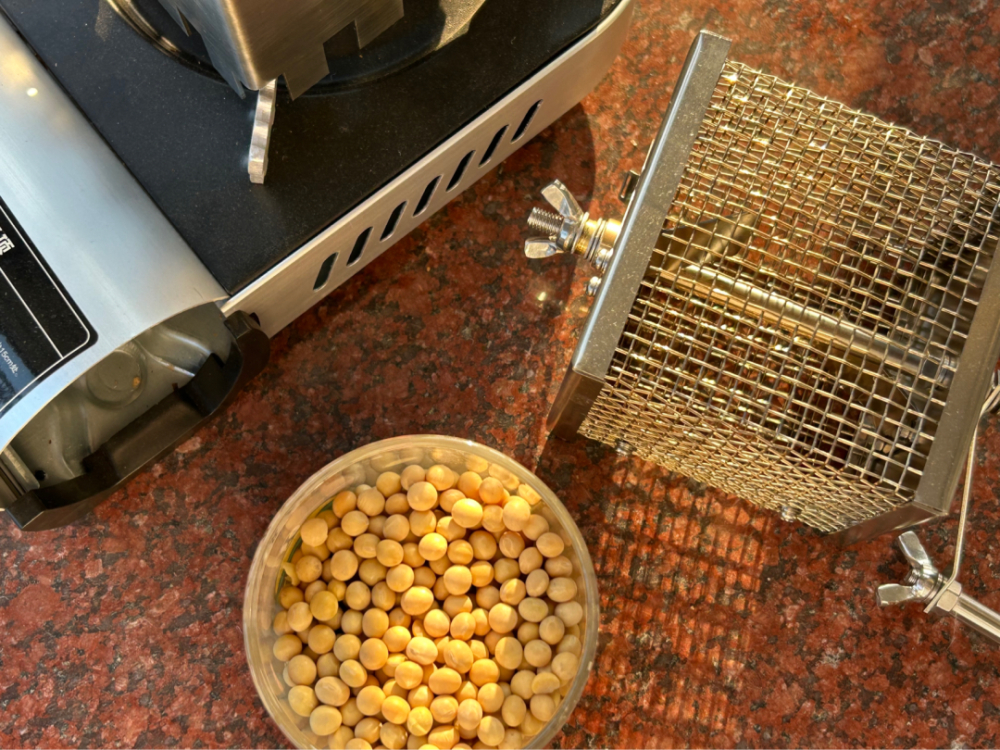
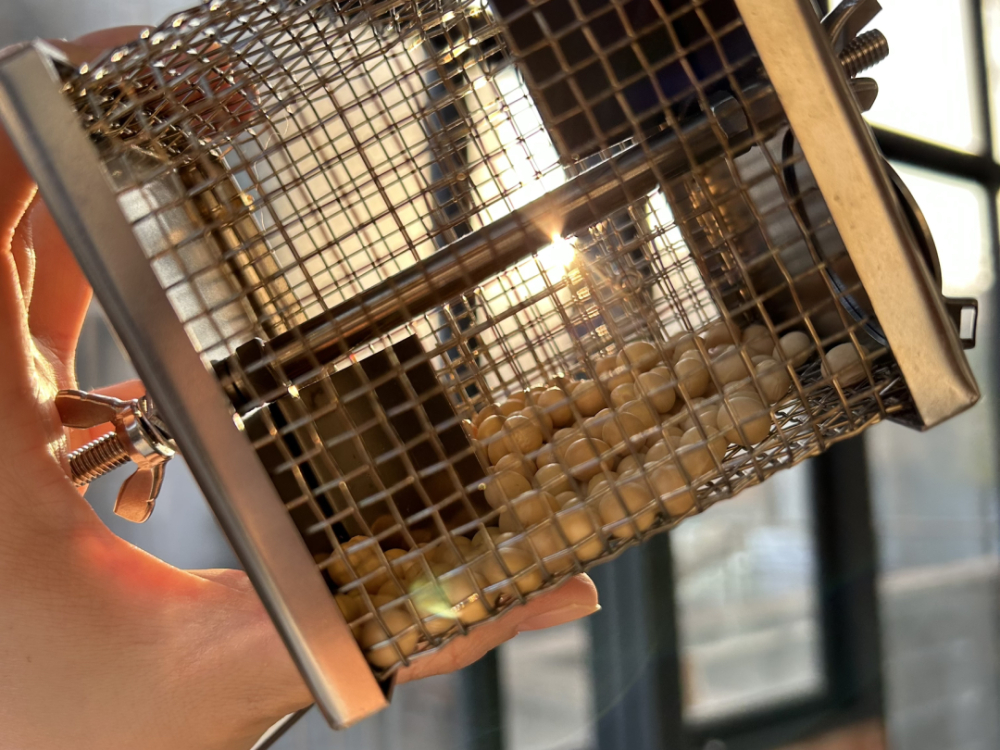
At 13 minutes 30 seconds, the smell turned into that of freshly pressed peanut oil. At 15 minutes 30 seconds, the soybeans entered the caramelization stage, and a light coffee color appeared on the surface.
At 19 minutes 30 seconds, the surface color of the soybeans was already close to that of medium-light roasted coffee beans.
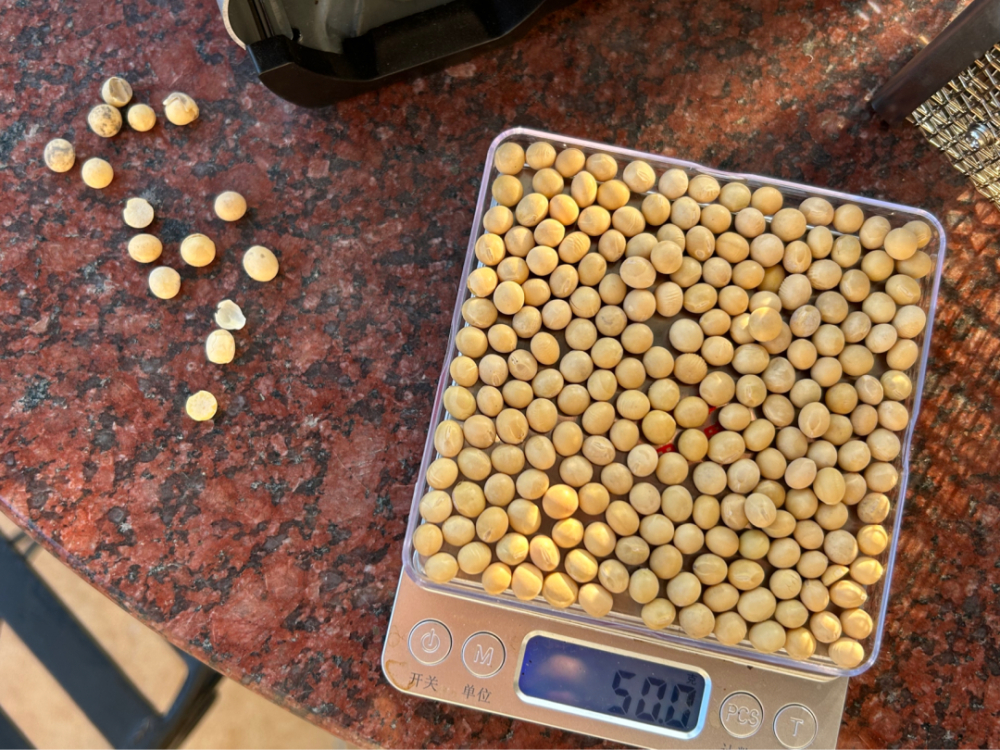
At 25 minutes 00 seconds, the surface reached the color of medium-roasted coffee beans, so the roasting ended, and I used a hair dryer for cooling.
After cooling, I weighed them again to check the dehydration. Normally, after coffee beans are roasted, their weight is only 80% to 85% of what it was before roasting. This time the soybeans weighed 41.2 g after roasting, so it can roughly be said to have met expectations.
Once roasting was complete, I fell into a mental struggle. Throughout the process, the peanut oil sensation was very obvious, and one could imagine there was quite a lot of oil inside the beans. If I used a grinder, it would basically be another disabled-person operation. (There should have been a picture here, but the scene was too messy and I forgot to take one.)
But I still accepted reality, picked up the grinder, and with my eyes closed ground 11 g of soybeans into somewhat fine particles. The result was as expected: the poured-out roasted soybean powder was only 10 g, and the other 1 g all stuck to the inner wall of the grinder and was extremely difficult to clean. I wrecked a grinder just to satisfy my own curiosity and everyone else's. Since it was already ground, then let's brew it. Because I forgot to bring a dripper and filter paper, this time I switched to a stainless steel coffee filter for brewing.
I had thought that such freshly roasted soybeans should puff up into a hamburger shape during blooming, but they did not. The entire extraction process was very slow. Maybe I ground too fine. I poured about 100 g of hot water over 10 g of roasted soybean powder, and the extraction time was about 2 minutes.
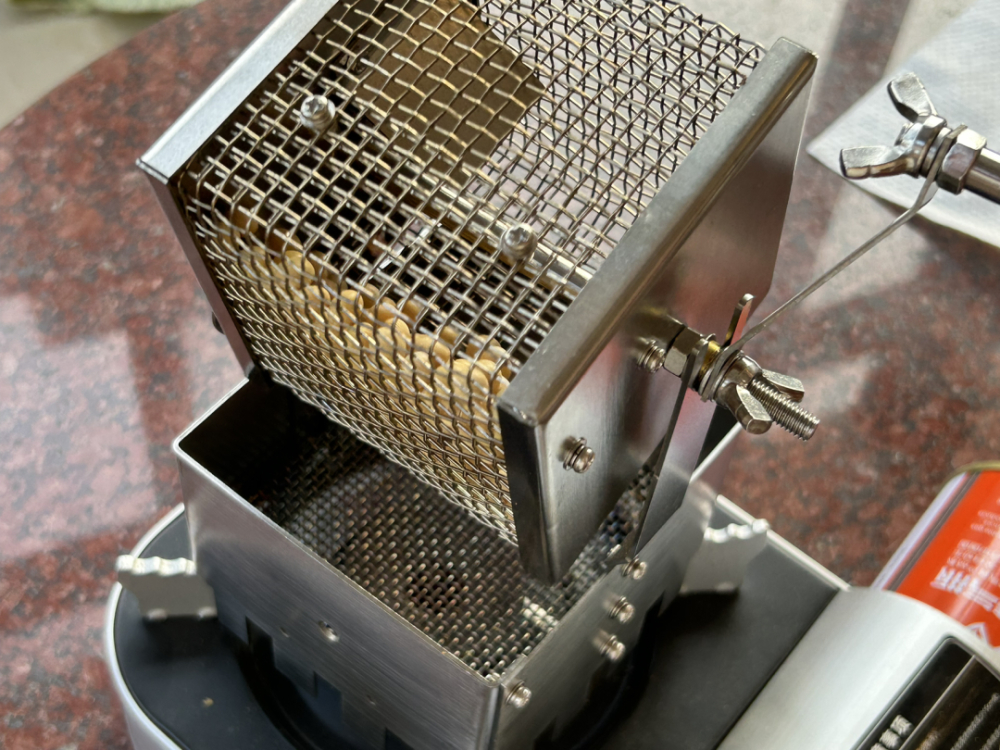
(Mm... let's just count this as blooming.)
But after extraction was complete, the taste of the soybean liquid was indeed unexpected. Rich roasted grain aroma, roasted peanut and roasted nut notes, and a dark chocolate-like body.
It was not over yet. What followed was herbal, spice, and oily notes, as well as an obvious smoky sensation (too fresh, drunk immediately after roasting).
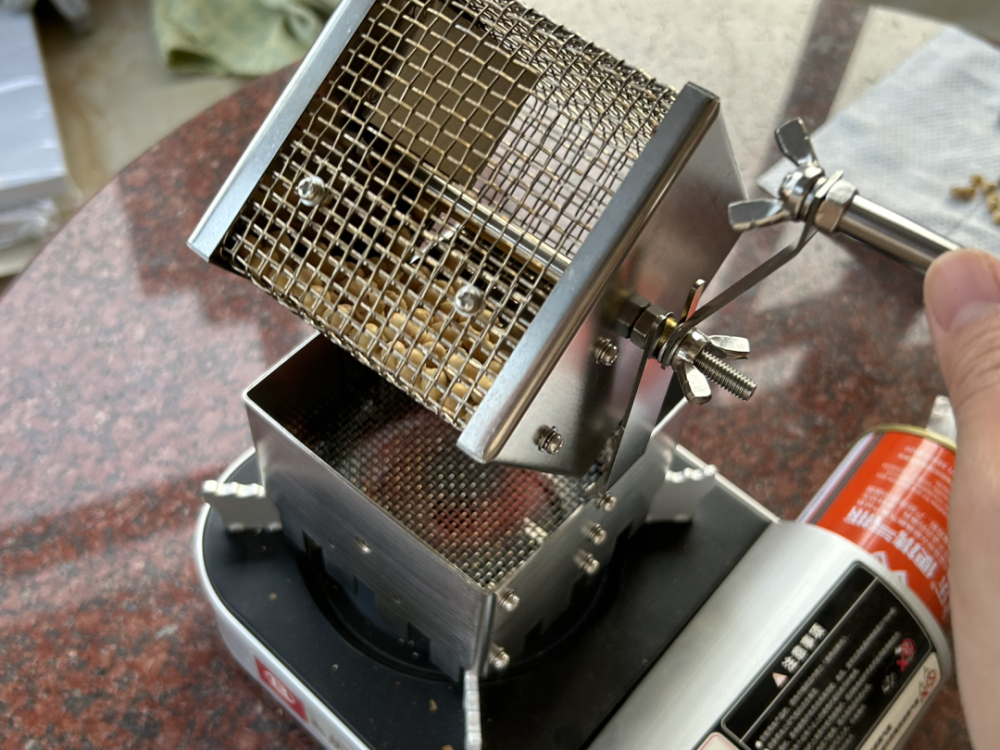
Overall, it felt like a mediocre Mandheling blend with Robusta coffee beans.
From this experience, soybeans after medium-dark roasting, then extracted with fine grinding and high water temperature, can indeed produce a coffee flavor, only without caffeine. Whether the brewed taste is like coffee beans or not is not important. If you don't tell anyone, it really can pass. Although it is feasible, I do not recommend everyone try it, because even after deep cleaning that grinder and airing it out for a whole night, the oily smell was still overwhelming.
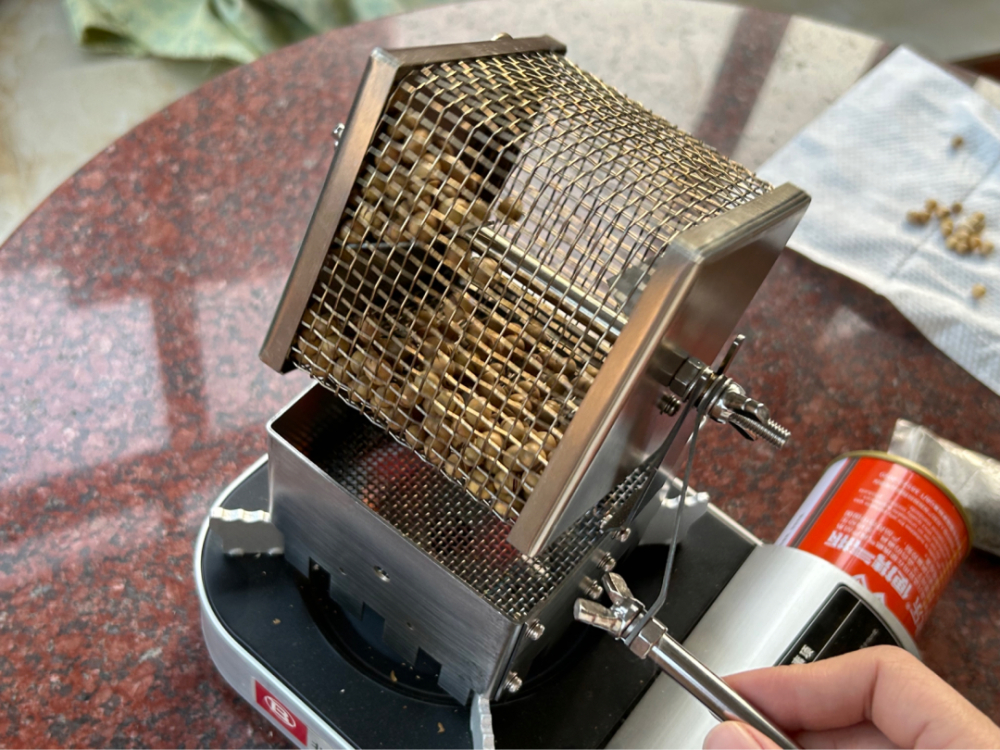
Finally, the writer here wishes everyone: Happy New Year! Good health! May everything go your way! Wishing you prosperity!
The above content is compiled by CoffeeHunters, a coffee news website.


