







Which brewing factors push coffee quality into over-extraction?
Burnt, harsh bitterness in pour-over usually points to over-extraction, meaning extraction efficiency ran too high. The classic reference is the Golden Cup standard, where 18 to 22 percent extraction yield tastes balanced; past roughly 22 percent the cup turns bitter. Strong concentration alone can also taste sharply bitter without being over-extracted.
Over-extraction comes from several parameters at once: water temperature too high, grind too fine, too much water poured, extraction time too long, and pouring agitation too vigorous. Fixing one variable rarely solves it. Choosing a recipe with a wide margin for error protects coffee quality even when the beans are good but the cup still tastes harsh.
Many coffee enthusiasts have encountered this trouble during pour-over brewing: the beans are of good quality, yet the brewed coffee carries an unpleasant burnt or mixed bitterness. This taste is often attributed to "over-extraction," but what exactly is the mechanism behind it? This article will sort out the scientific principles of over-extraction from the beginning, analyze the various parameter factors that lead to excessively high extraction efficiency, and share Front Street Coffee's experience in constructing brewing recipes—how to avoid undesirable flavors by choosing parameters with a high margin for error—to help you more confidently brew a clean and delicious pour-over coffee.
Of course, if a cup of coffee is judged as "over-extracted," it must be because it presents some unpleasant tastes. Generally speaking, over-extracted coffee carries a burnt or mixed bitterness, but it should be noted that not all unpleasant bitterness can be blamed on over-extraction—for example, when coffee is brewed too strong, it also produces an uncomfortable intense bitterness, and that bitterness does not fall under the category of over-extraction.
Let us first clarify the mechanism behind over-extraction. The origin of this concept is the well-known Golden Cup extraction standard. Through his research, Dr. Lockhart pointed out that only 30% of the substances in coffee beans are soluble in water, and when the extraction yield falls between 18% and 22%, the coffee's flavor performs at its best; once coffee develops undesirable bitterness, its extraction yield has often already exceeded 22%, and over time, people came to use "over-extraction" to describe that mixed bitter taste in coffee. To this day, with the continuous improvement of coffee quality, whether the extraction yield can break through 22% while still tasting good remains a topic the industry is still exploring. Therefore, when someone mentions over-extraction nowadays, they are not saying the extraction yield has exceeded 22%, but rather expressing that they have tasted that burnt, mixed bitterness.
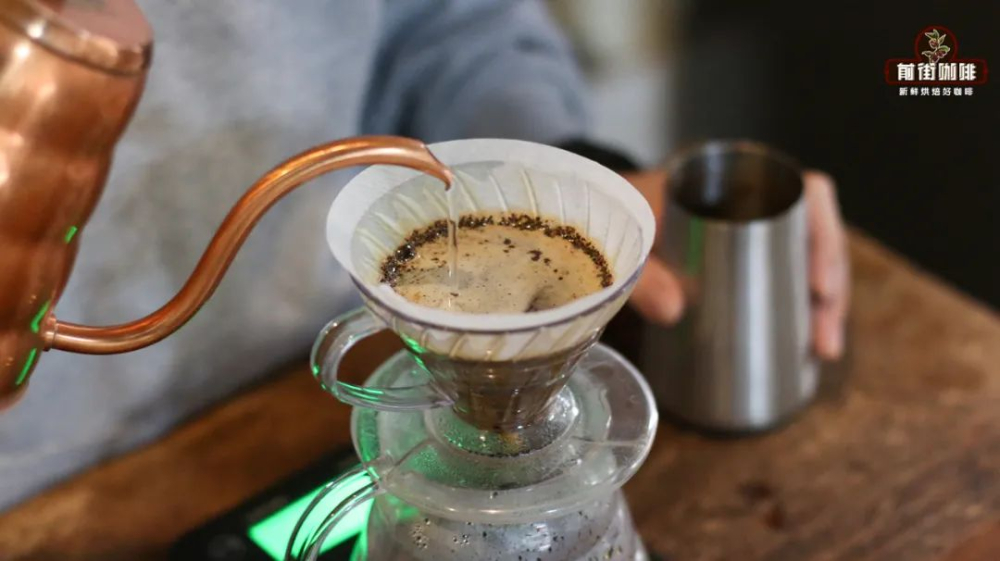
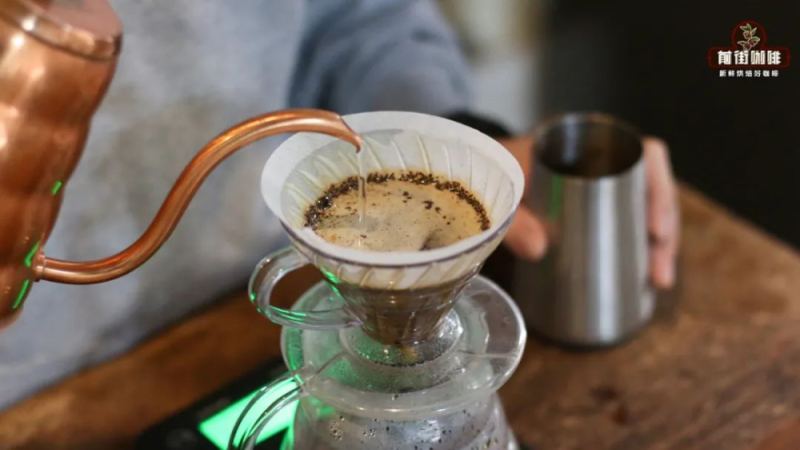
The core cause of coffee over-extraction lies in excessively high extraction efficiency, and when broken down into individual brewing parameters, it manifests as: water temperature too high, grind too fine, too much water poured, extraction time too long, and pouring agitation too vigorous. It can be said that almost all means of raising coffee's extraction yield can become a trigger for over-extraction. Ultimately, the problem lies in the brewing recipe itself being unreasonable, or the recipe placing too high a technical demand on the operator, resulting in a low margin for error. For example, when watching world-class pour-over competitions, some competitors adopt highly personal brewing recipes. Such recipes aim to pursue the ultimate flavor of the coffee and place high demands on the brewer's skill and understanding, leaving little room for error—once operated improperly, mixed bitterness easily appears.
It is difficult to judge whether a brew is reasonable based on any single parameter alone. Take grind size as an example: some people prefer particles like coarse granulated sugar, while others prefer a coarseness like fine salt; as for pouring technique, some like to pour gently, while others are used to quickly circling and stirring the coffee bed. Looking at any single parameter alone, one cannot assert that coarse granulated sugar is necessarily right and fine salt necessarily wrong, nor can one say that gentle circling is delicious and fast stirring necessarily leads to over-extraction. Only by combining all parameters together can a reasonable judgment be made.
When constructing brewing recipes, Front Street tends to choose recipes with a high margin for error. Take water temperature as an example: Front Street usually sets the water temperature at 91°C. This temperature has a high margin for error for most coffee beans and can accommodate other parameters that are harder to adjust (such as grind quality). When there are fewer fines, brewing at 93°C can achieve a fuller, richer flavor, but if there are more fines, still using 93°C easily produces bitter, mixed tastes. When using 91°C, with fewer fines the flavor may not be as rich as at 93°C, but when there are more fines, brewing at 91°C is less likely to produce over-extracted tastes—this is what a high margin for error embodies. Circling pouring, coffee grind coarseness, and the choice of water ratio follow the same logic: choosing parameters with a high margin for error can, to the greatest extent, avoid the appearance of many undesirable flavors.
The above content is compiled by CoffeeHunters, a coffee news website.


