







Why does Arabica supply matter when Brazil stocks fall?
Brazil's coffee stocks have dropped to their lowest level since records began in the 1960s, falling 88 percent year on year to just 540,000 bags at the end of 2021/22. Total 2022/23 production rose 6.7 percent to 50.92 million bags, but much of that went to refilling empty stock rather than export markets.
Arabica, the species known for its milder acidity and aroma, fell short of expected output after drought and frost cut the 2021 harvest by nearly 20 percent. Vietnam's Robusta stocks also halved, tightening both major varieties at once. The USDA expects Brazil to export 36.65 million bags in 2022/23, the lowest since 2017/18.
The global coffee market supply-demand imbalance has further intensified, with coffee stocks in Brazil, the largest producing country, having fallen to their lowest level since records began in the 1960s. Although Brazil's total coffee production in 2022/23 grew 6.7% year-on-year, stocks plummeted 88% year-on-year, leaving only 540,000 bags. Arabica failed to reach expected output due to drought and frost, while Vietnam's Robusta stocks also halved, tightening supply of both major varieties simultaneously. Brazil's low green bean conversion rate has further exacerbated the shortage, and coffee prices face sustained upward pressure. This article will review the latest data and the underlying causes, along with professional recommendations from Front Street Coffee.
For professional coffee knowledge exchange and more coffee bean information, please follow CoffeeWorkshop (WeChat public account: cafe_style)
For more specialty coffee beans, please add private WeChat Front Street Coffee (FrontStreet Coffee), WeChat ID: qjcoffeex
Against the backdrop of a global coffee market supply-demand imbalance, coffee stocks in Brazil, the largest producing country, have slid to a historic low!! This situation means that the tight international coffee supply situation is likely to continue facing severe challenges.
According to Coffee Financial Network, CONAB, the National Supply Company under Brazil's Ministry of Agriculture, after completing four rounds of surveys, confirmed that Brazil's total coffee production in 2022/23 was 50.92 million bags (60 kg each), up 6.7% from the previous year. However, Brazil's coffee stocks at the end of 2021/2022 are estimated at only 540,000 bags, a sharp 88% year-on-year drop, the lowest since stock records began in the 1960s. Part of the increased production was used to replenish stocks, so the output did not flow directly to export markets.
The latest report from the USDA predicts that Brazil's coffee exports in 2022/23 will be 36.65 million bags, the lowest export level since 2017/18. In the 2021 harvest season, Brazil encountered extreme weather including drought and frost, with production falling nearly 20% year-on-year, resulting in the need for large amounts of coffee to fill the stock gap.
This year, Brazil's Robusta coffee production grew 11.7% year-on-year to 18.2 million bags; however, Arabica was still dragged down by drought and frost and failed to achieve maximum production, totaling 32.72 million bags, far below the market expectation of 48.7 million bags.
Public data shows that Brazil's coffee planting area totals 2.23 million hectares. The largest producing region, Minas Gerais, saw production fall 0.8% year-on-year to 22 million bags this year, with yield per unit area dropping 4.6% to 21.6 bags/hectare.
Brazilian Arabica coffee has always been known for its creamy, nutty, chocolate and caramel flavors—slightly bitter yet fragrant and smooth, easy to accept even for those new to coffee, making it the most widely accepted in the market. Brazilian Arabica accounts for about 80% of total production, and since this variety's output fell short of expectations this year, the tight supply situation may not yet be easing.
In Vietnam, the world's second-largest coffee producing country, coffee bean stocks are also being rapidly depleted. According to a media survey of market traders, as of the end of September this year, Vietnam's coffee stocks had halved compared with the same period last year. Vietnam is the main producing area of Robusta, the most in-demand coffee variety in the world.
It can be seen that stocks of both major coffee varieties grown globally are declining, while coffee demand continues to climb. Coupled with the global economy gradually recovering from the pandemic, future demand for coffee will only increase. The coffee market is currently experiencing its largest supply gap in recent years, with a severe supply-demand imbalance.
CONAB, the National Supply Company under Brazil's Ministry of Agriculture, pointed out that this year the conversion rate from coffee cherries to green beans in Brazil was lower than the average level of previous years, which may also be one of the main reasons for the tight market supply.
As the largest producing and exporting country, Brazil accounts for one-third of the world's total coffee production and is a core link in the global coffee market. Changes in the country's production and supply will directly affect global coffee supply, and the supply shortage may continue to worsen and push major international coffee consumption giants to further raise coffee prices.
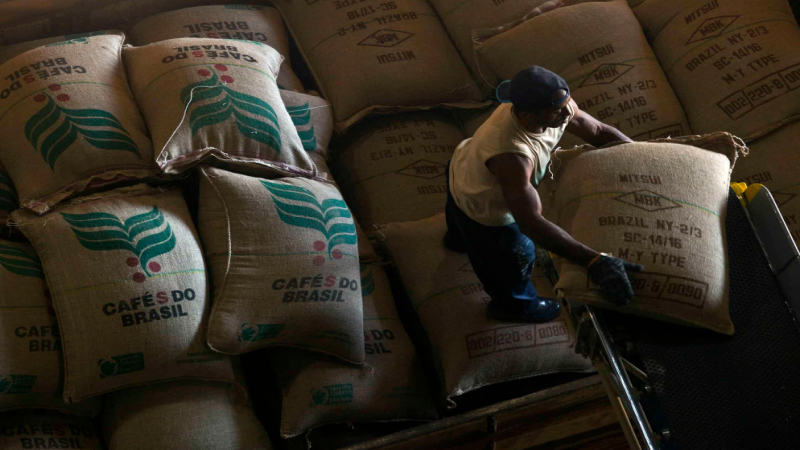
Image source: Internet
The above content is compiled by CoffeeHunters, a coffee news website.


