







How Long Does Yirgacheffe Hold Its Aroma in a Thermos?
A 316 stainless steel thermos keeps washed Yirgacheffe drinkable for about two to three hours. In a test, coffee poured at 68°C measured 65.8°C after one hour, with floral and citrus notes intact; at two hours, 60°C, little had changed. By four hours at 50°C the floral notes were gone, and by five hours at 46°C only honey green tea and citrus acidity remained.
The beans used were a washed Yirgacheffe Gudingding that releases jasmine and citrus at high heat and turns sweeter as it cools. Beyond four to five hours, falling temperatures and bacterial growth make long storage unwise, and reheating cannot restore lost aroma. That matters if the coffee is meant for coffee six hours before bed.
As temperatures drop, pour-over coffee quickly goes cold. Front Street conducted an experiment using a washed Yirgacheffe Gudingding, pouring freshly brewed coffee into a 316 stainless steel thermos and sealing it, measuring temperature and tasting flavor hour by hour. At 1 hour, 65.8°C, it still retained floral and citrus notes; at 2 hours, 60°C, almost no change; at 3 hours, 54°C, the flavor was slightly weaker; at 4 hours, 50°C, the floral notes dissipated and the acidity and sweetness became prominent; at 5 hours, 46°C, only honey green tea and citrus acidity remained. The test shows that a qualified thermos can preserve flavor well for 2-3 hours, suitable for taking to work, but after 4-5 hours the temperature drops and bacteria easily grow, so long-term storage is not recommended.
Front Street previously conducted a test of reheating cooled coffee, and found that although heating reduced the acidity, the fresh aroma from just brewing completely disappeared. This shows that once the aroma is lost, it cannot be restored by heating.
Recently the weather has turned cold, and a cup of hot coffee becomes lukewarm within minutes. So some people wonder: if you use a thermos, can the aroma and flavor volatilize more slowly? With this question in mind, Front Street conducted a comparative test. The beans chosen were the common Yirgacheffe Gudingding (washed process). This bean releases jasmine and citrus fruit aromas at high temperatures; as the temperature drops, the floral notes weaken, while the sweetness of sugars becomes more prominent. At room temperature, this flavor transformation is completed in about an hour.
This time, Front Street poured the freshly extracted coffee directly into a thermos and tightened the lid, then tasted it every sixty minutes, recording the flavor progression. There are many types of thermos; Front Street used an ordinary portable 316 stainless steel thermos, which previously measured a heat retention time of about twelve hours.
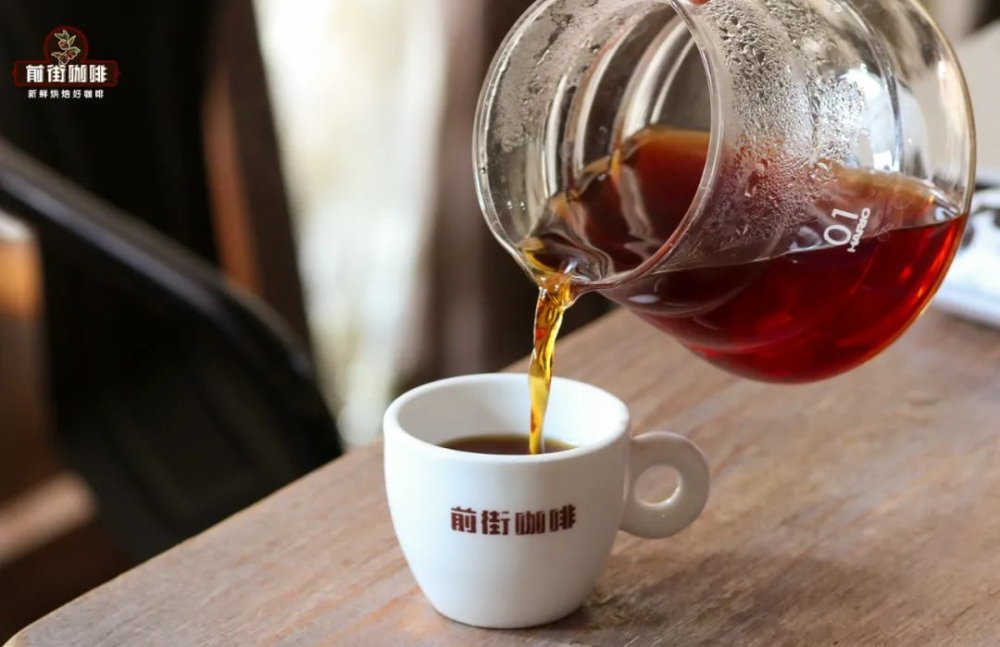
When just poured into the thermos, Front Street measured the coffee liquid temperature at 68°C. After one hour, it measured 65.8°C, a quite good heat retention effect. When pouring the coffee out, noticeable floral and citrus fruit aromas wafted out. On tasting, it was not much different from freshly brewed, with jasmine floral notes, citrus, honey, and a green tea finish all present.
After two hours, the temperature dropped to 60°C. Poured out and tasted, the drinking temperature was just right, not burning the mouth. The flavor was still very close to freshly brewed, with almost no big change. After three hours, measured again, the temperature was 54°C. Poured out and tasted, floral and fruity sweet aromas could still be captured, just slightly weaker in intensity than before.
After four hours, the temperature showed 50°C. Poured out and tasted, the coffee was no longer burning hot, in a warm state. At this point the floral notes had faded, with citrus and berry-like sweet aromas taking the lead, and the acidity and tea-like sensation also more prominent than before. After five hours, the temperature dropped to 46°C. When poured out, some steam could still be seen, but the aroma was already hard to perceive. On tasting, the coffee liquid temperature was lower than mouth temperature, with a somewhat cool mouthfeel. The honey sweetness and green tea aftertaste were still clear, and the citrus acidity was very obvious, but floral and fruity flavors were no longer noticeable.
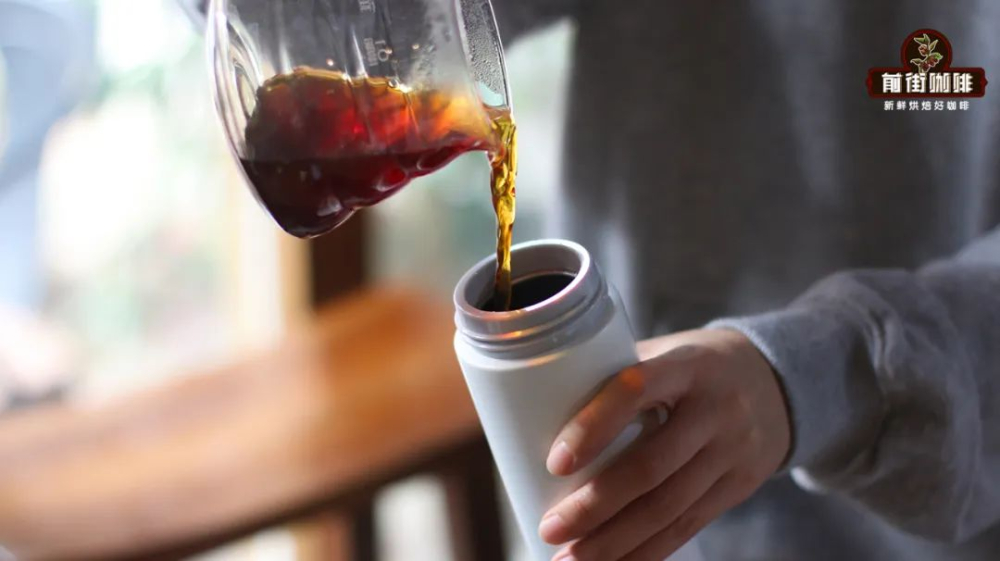
Storing coffee in a thermos can indeed play a role in "locking" in the flavor. As long as you choose a qualified portable thermos, preserving coffee flavor well for two to three hours is feasible, and brewing a cup before work to take to the office to drink is completely fine. However, the heat retention time of a thermos is not that long, and it specifically depends on the thermos's performance, the initial coffee temperature, and the number of times the lid is opened. Front Street also does not recommend storing it in a thermos for too long; after all, coffee is not pure water, and over time it may also breed bacteria, especially after four to five hours when the temperature drops, making it more likely to become a hotbed for bacterial growth.
The above content is compiled by CoffeeHunters, a coffee news website.


