








What Happens in a Fried Coffee Beans Experiment?
Home roasting has moved well past store-bought bags. Enthusiasts try iron woks, black sand and stones borrowed from chestnut roasting, rice cookers, ovens and air fryers. The most cited test is 2007 WBC champion James Hoffmann's fried coffee beans experiment, in which 100 grams of washed Ethiopian beans were fried in oil at 170°C, with color, oil absorption, grinding and extraction all recorded.
The fried beans came out evenly colored inside and out with a soft, silky mouthfeel, but showed a slight grassy note and insufficient development. Small coffee bean roasters exist for home use, yet the hands-on crowd keeps improvising. Rice cooker roasting is workable if the beans are stirred slowly in one direction and chaff is cleared in time, though evenness remains the main limitation.
More and more coffee enthusiasts are no longer satisfied with simply buying roasted beans and have started trying to process green beans at home. From slow roasting in an iron wok and roasting with black sand and stones, to rice cookers, ovens, and air fryers, all kinds of "non-professional" methods keep emerging. This article sorts out the feasibility and characteristics of these home roasting methods, and focuses on the fried coffee bean experiment by 2007 WBC champion James Hoffmann: he fried 100g of washed Ethiopian beans in oil at 170°C, recording the color changes, oil absorption treatment, grinding and extraction, and flavor performance. The experiment showed that the fried beans had a consistent color inside and out and a soft, silky mouthfeel, but with a slight grassy note and insufficient development. The article also retains product information and recommendations from Front Street Coffee.
For professional coffee knowledge exchange and more coffee bean information, please follow the Coffee Workshop (WeChat public account: cafe_style)
For more specialty coffee beans, please add the private WeChat account Front Street Coffee (FrontStreet Coffee), WeChat ID: qjcoffeex
In recent years, an interesting trend has gradually emerged: many coffee enthusiasts are no longer satisfied with just buying roasted beans to brew at home, but have started getting green beans and experimenting with roasting themselves.
Although some small bean roasters suitable for home use have already appeared on the market, many people who enjoy hands-on experiments are not convinced, so various homemade roasting methods have emerged.
The first thing that comes to mind is slow stirring in an iron wok. But this method makes it hard to heat every bean evenly, so some people borrowed the method of roasting chestnuts and used black sand and stones to assist the roasting.
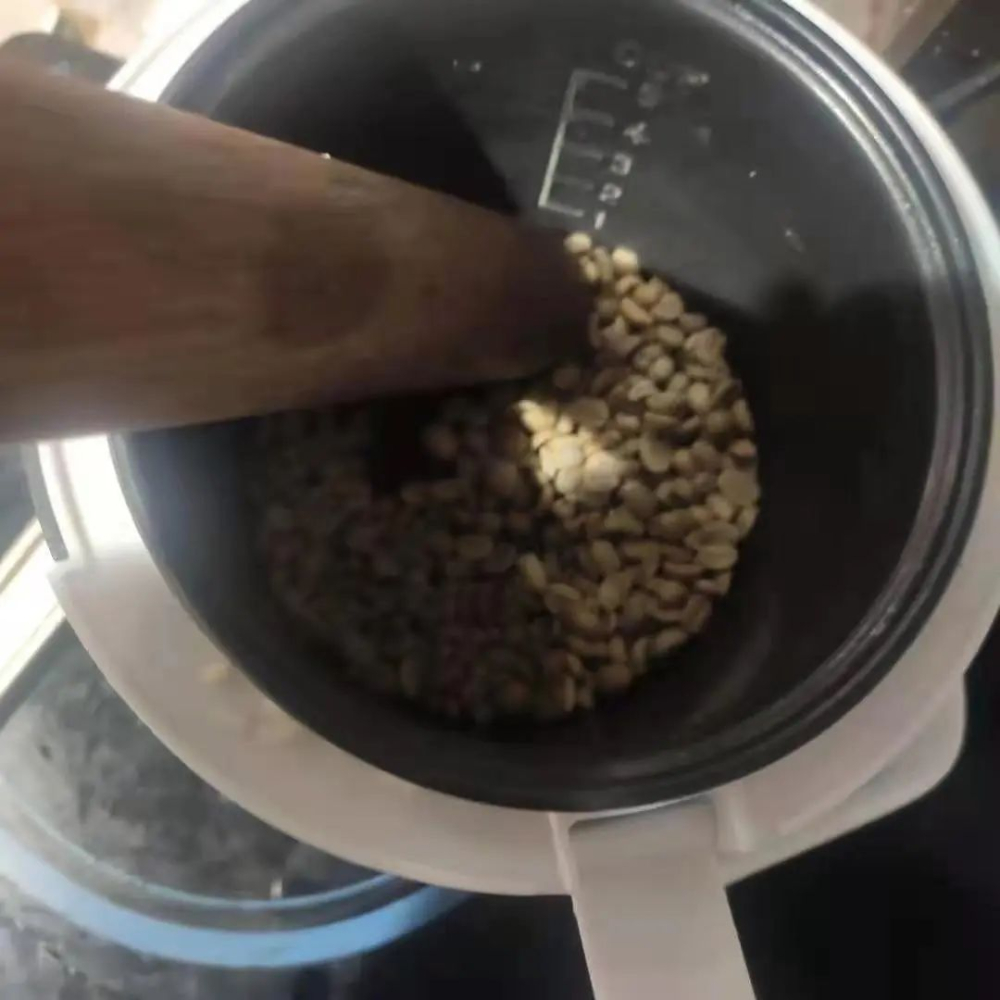
Later, someone suggested roasting beans in a rice cooker, saying that it can make the heating more even without black sand and stones, because the appearance of a grain roaster is similar to a rice cooker. The writer's friend actually tried it.
u1s1, roasting coffee beans in a rice cooker really is feasible. During operation, you must keep stirring slowly clockwise, clean off the chaff in time, and also be careful not to let Mom find out.
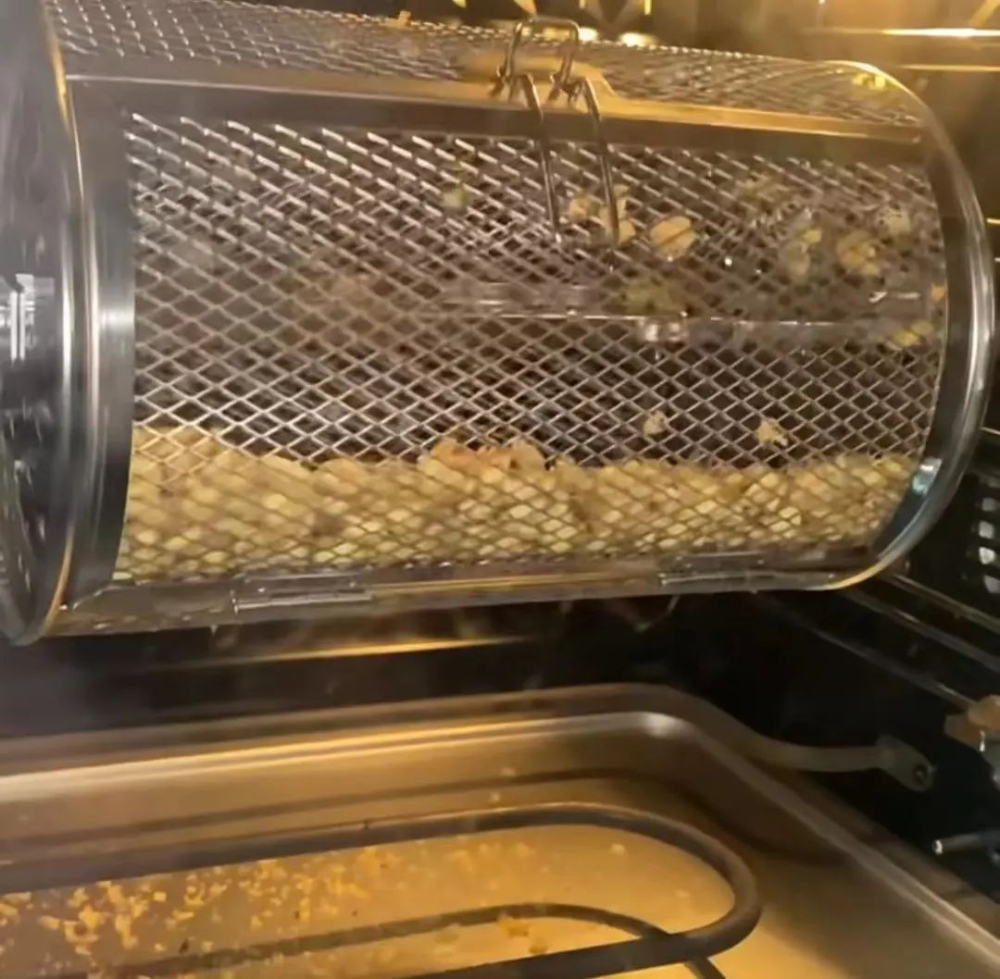
After that, everyone turned their attention to the oven. Many ovens have a rotisserie chicken function, and with just a little modification of the rotisserie rack, or by buying a dedicated rotating drum, they can be used to roast beans.
The advantage of oven roasting is that the temperature can be adjusted according to the condition of the beans, and the heating is more even. But the drawbacks are equally obvious: the chaff cannot be discharged in time, and the temperature drops sharply as soon as the oven door is opened.
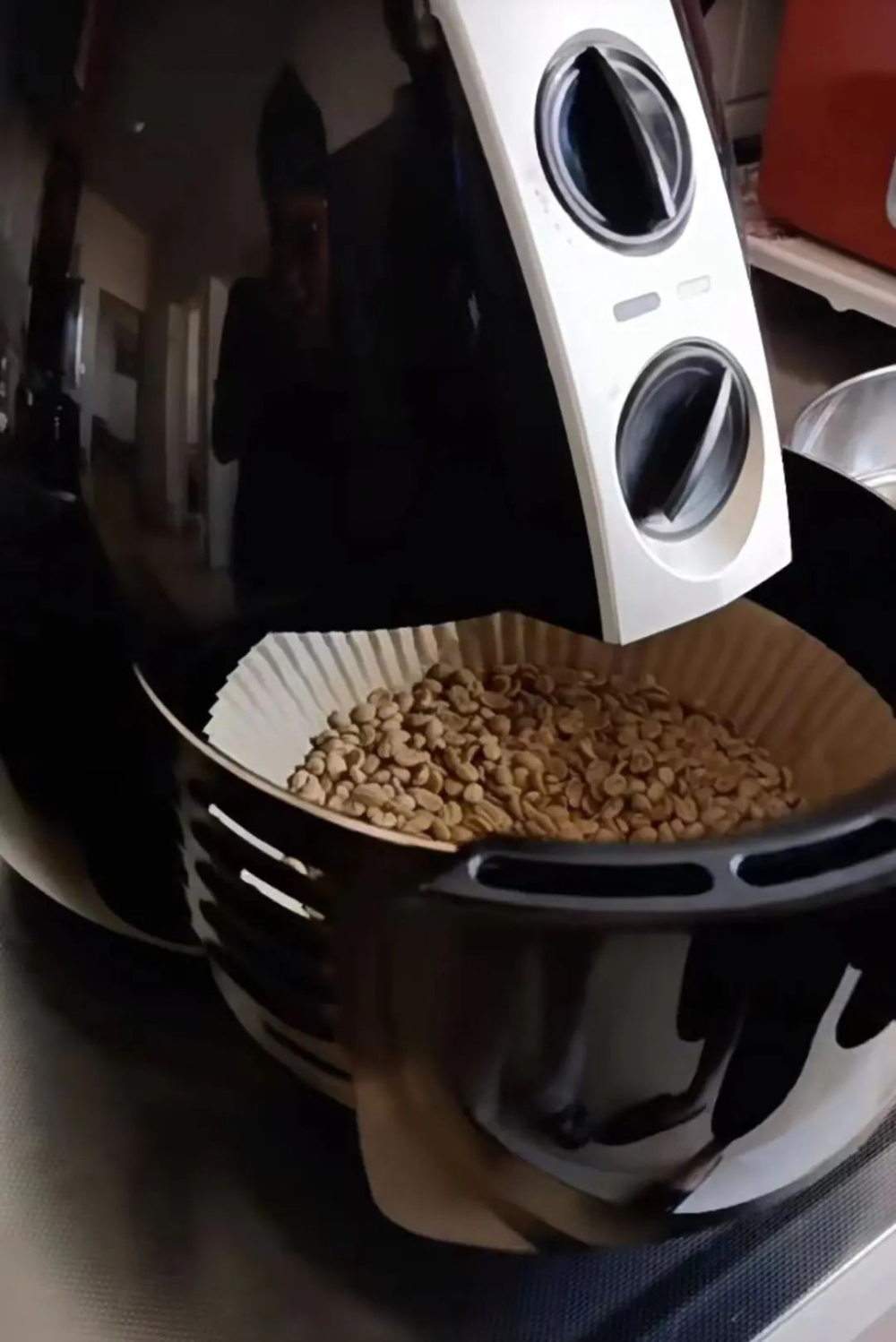
Later, air fryers also could not escape everyone's attempts. According to feedback from people who have tried it, among the current non-professional roasting methods, the air fryer is temporarily the most reliable. It heats more evenly, and you can pull it out midway to quickly shake off some chaff.

At this point, the writer still felt that all the ways people cook coffee beans at home were quite reasonable. Until a few days ago, James Hoffmann (2007 WBC champion) did something in a new video that many people have always wanted to do but have not dared to because they feel sorry for their grinder.
"Fried Coffee Beans"
At the beginning of the video, J Hoffmann said that any normal person would internally collapse upon hearing that he was going to fry coffee beans. But he had been thinking about this for a long time, because someone had done it on a coffee forum many years ago.
He pointed out that many of the ways people cook coffee beans at home now, such as dedicated roasters, ovens, and air fryers, are essentially hot-air roasting, relying on heat convection, heat radiation, and heat conduction to make the coffee beans undergo Maillard reactions and caramelization reactions.
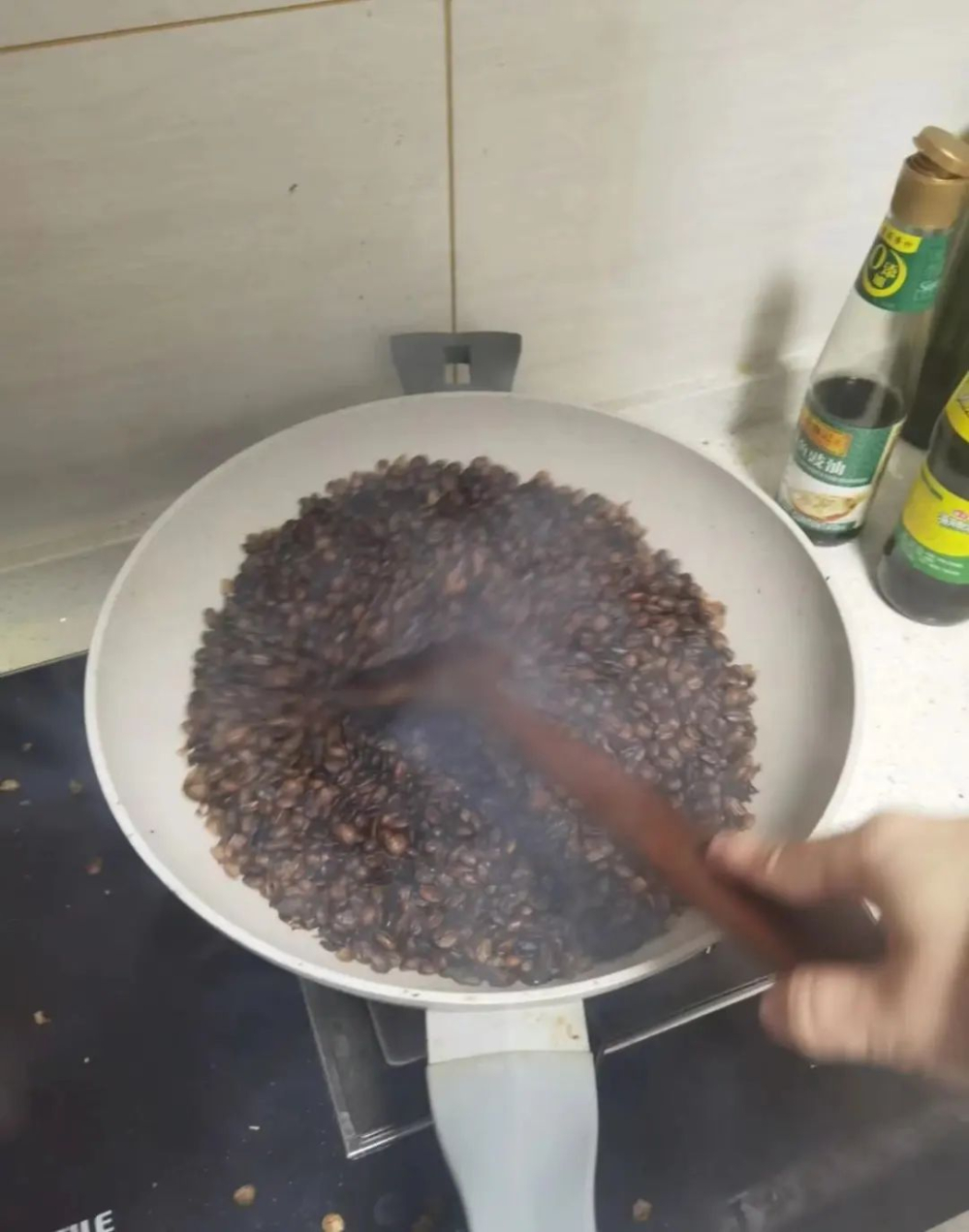
A deep fryer, however, has none of those complications. It directly maxes out the efficiency of heat conduction, because high-temperature oil can transfer heat energy to green beans very efficiently. With the experimental spirit of "if others dare not, I will do it," he began to put into practice an idea he had been curious about for years.
This time he used a professional deep fryer, with the oil temperature set at 170 degrees Celsius, not adjusted too high in order to be cautious. He chose 100g of washed Ethiopian beans, for no special reason, just grabbed them casually. The reason for using 100g was to avoid too many beans causing the oil temperature to drop.
Then he chose a strainer basket with smaller holes, but Ethiopian beans vary in size, and some beans could still slip through the basket. So throughout the frying process he did not dare shake it around, afraid the beans would fall in and could not be retrieved. Because the surface of the coffee beans was full of moisture, there was no crackling and popping as everyone might imagine after they went into the oil.
After frying for 10 minutes, the coffee beans began to turn milk chocolate color. At this point he said, hmm, the temperature is not quite enough, let's fry them a bit longer. After all, he had never done it either, and there was no literature explaining how to judge whether fried coffee beans were done, and the beans also would not produce cracking and expansion like in hot-air roasting.
There was no first crack. The master, relying on the color changes of the coffee beans, fried them for who knows how long as fate allowed, then directly scooped them out, braving the risk of burning his hands, and first used kitchen paper to absorb the initial oil.
Then he used a clean tea towel for a second round of oil absorption, while using a handheld large fan to cool the coffee beans and trying to blow away the chaff. Obviously, not much chaff was left, because it had all been stuck down by the oil.
So were the coffee beans actually done this time? They were done, and the color of the bean surface and the bean core was unexpectedly consistent. Because after frying, the coffee beans were oily from inside to outside, he also began grinding this batch of finished beans with the mindset of sacrificing a hand grinder he had used for several years.
After grinding, the dry aroma of the coffee had herbal notes, smelling a bit like French fries. Although the ground particles were about the size of caster sugar, because the frying process had not changed the structural density of the coffee beans much, water took a long time to pass through the coffee particles, and after extraction the coffee bed was like a mud pit.
Facing such a scene, J Hoffmann mentally prepared himself and took a sip... "Whoa! Not sure, another sip! I'm conquered!"
He said it actually tasted pretty good. Unlike the currently very popular floral and fruity coffee beans, the fried coffee beans were unexpectedly charmingly delicious, and he had been conquered by this flavor, then continued to take a few more sips.
Do fried beans really have no faults at all? They do. If one must find a flaw, it might be a slight grassy note, a bit underdeveloped. But in terms of mouthfeel, it was neither heavy nor greasy nor strange, with a faint, elusive acidity and a soft, silky mouthfeel.
At the end of the video, J Hoffmann said he did not mean to encourage everyone to try frying coffee beans, but frying can turn originally stunning coffee beans into a cup of coffee that is not stunning, yet unexpectedly brings a new shock. Simply put, yes, you will know once you try it. All right, just kidding, everyone can just watch.
Sure enough, a netizen really tried it and left this comment:
"I tried it last night, and then secretly swore: the first thing I will do after the lockdown is go to the UK and slap him."
All right, hurry up and try it. Once I buy a Hakka tea-grinding bowl for grinding, the writer will join the ranks of those giving it a try!
Image source: youtube, internet
The above content is compiled by CoffeeHunters, a coffee news website.


