







Where Does Sweetness in Coffee Show Up During Pour-Over?
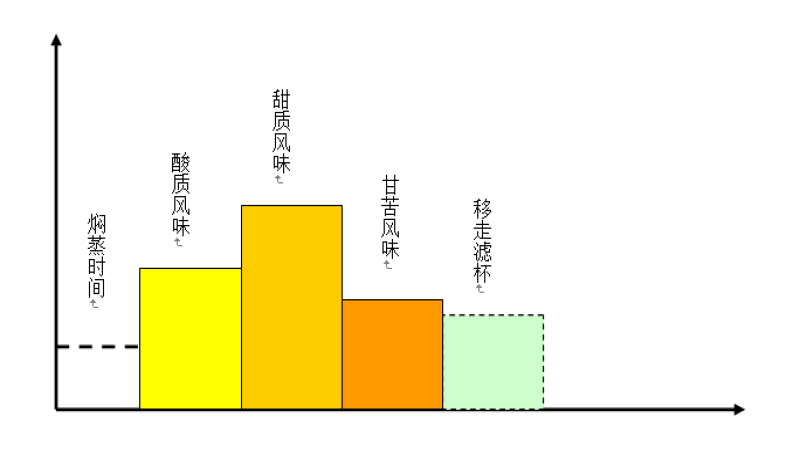
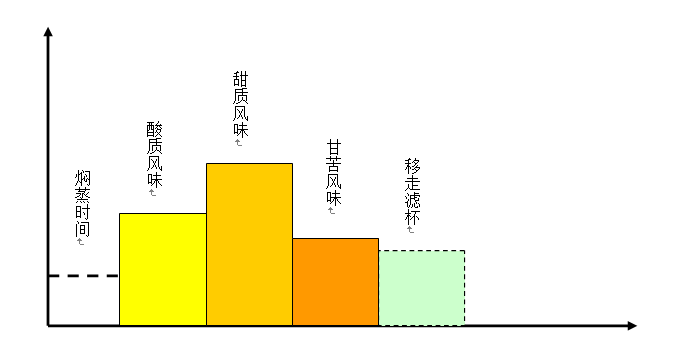
In pour-over brewing, acidity, sweetness, and bitterness do not arrive at once; hot water releases them in sequence. A staged pour lets you aim at the middle window where sweetness is most concentrated. Using 15g of medium-roast Papua Bird of Paradise grounds, 225ml of water, and 89 degrees Celsius, the sugarcane note makes that window easy to spot.
More pours mean less water per stage and more agitation of the coffee bed, raising extraction yield and lengthening total time, which adds layers but also raises over-extraction risk. In the first pour of 30ml, bloomed 30 seconds, the cup showed hazelnut, dark cocoa, caramel, and clear acidity with saltiness; the second pour of 95ml brought sugarcane, nuts, and citrus.
In pour-over coffee, staged pouring is a common technique for adjusting flavor. The release rates of the three tastes in coffee—acidity, sweetness, and bitterness—are not the same; hot water brings them out in sequence. This article uses Front Street Coffee's medium-roast Papua Bird of Paradise coffee beans as an example. With 15g of grounds, 225ml total water, and a water temperature of 89°C, it uses three-pour and four-pour methods respectively to compare the flavor differences in the first, middle, and final stages of the brewed coffee, helping you find the extraction stage where sweetness is most concentrated. It also explains the impact of the number of pours on extraction yield, operation time, and over-extraction risk, and offers practical ideas for improving sweetness extraction efficiency.
The purpose of staged extraction
In the process of pour-over staged extraction, different substances are extracted at different rates. After being released by hot water, the flavors appear in the order of acidity, sweetness, and bitterness.
In staged pouring extraction, apart from the blooming stage, under the same coffee-to-water ratio, the more stages there are, the less water is poured in each stage, and the more times the coffee bed is flushed and agitated, which increases the extraction yield. In addition, an increased number of stages lengthens the total extraction time, more coffee substances are released at each stage, and the flavor layers become richer.
Three-pour brewing: the coffee flavor extracted at each stage
Front Street Coffee selected a medium-roast Papua Bird of Paradise coffee bean. This bean has a clear sugarcane flavor and high sweetness, which helps identify the extraction stage corresponding to that taste. Coffee grounds: 15g Grind size: EK43 setting 10.5 (75% passing a No. 20 sieve) Water temperature: 89°C Total water: 225ml Pouring method: three-pour brewing. The filter paper and dripper are pre-wetted in advance, and one preheated sharing pitcher is used to hold the coffee liquid from each stage.
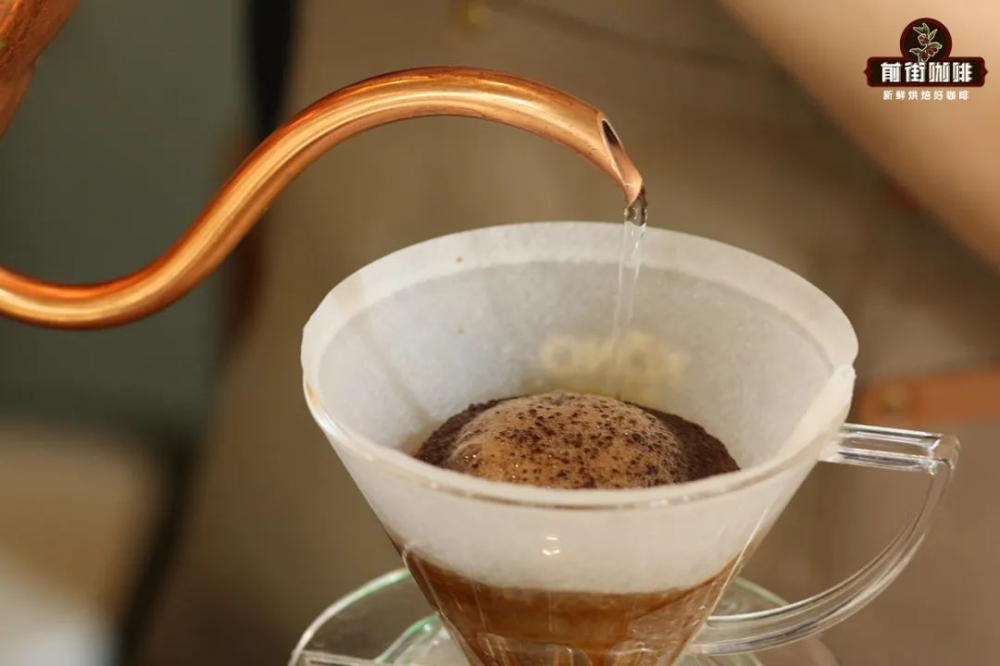
First pour: 30ml in a circular pour, blooming for 30 seconds. First-stage coffee flavor: hazelnut, dark cocoa, caramel, high concentration, with obvious acidity and saltiness. Second pour: starting at 30 seconds, pour 95ml in a circular motion from the inside out while raising the coffee bed. Middle-stage coffee flavor: sugarcane, nuts, citrus, fruity notes, tea-like sensation, relatively high concentration; as the temperature drops, the sweet-and-sour sensation becomes prominent. Third pour: after the coffee liquid has finished dripping, move to the last sharing pitcher and pour 100ml in a small circle. Total extraction time 2'16''. Final-stage coffee flavor: almond, citrus, white tea-like clean sweetness, relatively light flavor, clean mouthfeel.
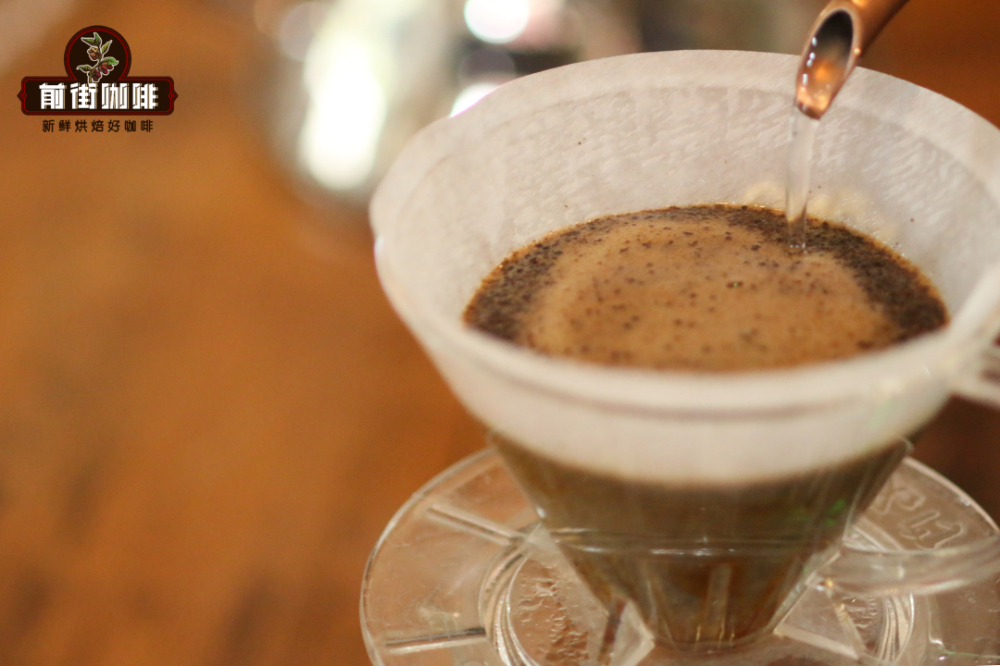
The purpose of the first pour is to moisten the coffee bed and release gases from the coffee. Because the pour volume is the smallest, the overall concentration is high, the concentrations of acidic substances and bitter substances are high, and the mouthfeel is more complex. The second pour uses more water, and the concentration is lower than the first pour. Sweet-and-sour flavor substances are released faster, and the overall mouthfeel is thinner. The final pour uses the largest amount of water, with the aim of extracting the coffee's full-bodied substances. In this coffee, that shows up as an almond aftertaste and the sweetness of tea. The overall concentration is the lowest, and the flavor is flat. Flavor comparison of four-pour extraction To more clearly identify the sweetness extraction stage, using the same coffee-to-water ratio and grind parameters, Front Street Coffee used four-pour brewing, divided into 30ml, 65ml, 65ml, and 65ml, with a total time of 2'31''.
After comparison, it was found that the first-stage flavor was the same as in three-pour extraction, dominated by high concentrations of acidity and saltiness. The second stage did not taste too strong, with clear roasted hazelnut and sugarcane sweetness and low acidity. The third stage was mainly nutty and sugarcane sweetness, with a slight tea-like finish and a relatively weak overall flavor. The final stage had the lowest concentration, with only a little tea flavor, almond bitterness, and woody notes. When Front Street Coffee mixed the four pitchers of coffee liquid and tasted them, the overall mouthfeel was balanced and moderate, with the sweet aroma of roasted hazelnut and sugarcane and the soft acidity of citrus, but the aftertaste carried a slight bitterness from over-extraction.
Because the more stages there are, the longer the operation takes, which increases the risk of over-extraction. Large-molecule substances in the later-stage coffee are more easily released, and instead mask the sweetness. From this it can be seen that more pours are not necessarily better. At which stage is sweetness? Returning to this comparison, whether using three-pour or four-pour brewing, sweetness is higher in the middle and later stages of extraction, and especially obvious in the final stage.
Sweetness mainly comes from the 6–9% sugars contained in coffee. Therefore, if you want to fully extract the sweetness in coffee, you need to increase the extraction yield to a certain extent within the range that avoids over-extraction. This can be done by raising the water temperature, grinding finer, or extending the extraction time.
For professional coffee knowledge exchange and more coffee bean information, please follow Coffee Workshop (WeChat public account: cafe_style).
For more specialty coffee beans, please add the private WeChat of Front Street Coffee (FrontStreet Coffee), WeChat ID: qjcoffeex
The above content is compiled by CoffeeHunters, a coffee news website.


