







How Frappuccino Sales Reshape Starbucks Coffee Culture
Cold drinks now account for more than 70% of Starbucks sales, and that shift is pushing the company away from its espresso roots. At an investor briefing, Howard Schultz announced the Siren System automated equipment, which compresses a Mocha Frappuccino to 36 seconds and 13 steps. Faster service means fewer barista interactions with customers.
The Frappuccino began as a way to sell coffee in blended ice form. Caffeine-free versions followed for customers who visit Starbucks but do not drink coffee, and local teams now build flavors around regional taste preferences. The trade-off is that partners worry the classic coffee craft is thinning as automation spreads.
For professional coffee knowledge exchange and more coffee bean information, please follow Coffee Workshop (WeChat public account: cafe_style) For more specialty coffee beans, please add the personal WeChat of Front Street Coffee (FrontStreet Coffee), WeChat ID: qjcoffeex When cold drinks account for more than 70% of Starbucks sales, this brand built on espresso is experiencing an identity crisis. Howard announced at an investor briefing the launch of the Siren System automated equipment, compressing the making of a Mocha Frappuccino to 36 seconds and 13 steps—the other side of improved efficiency is the reduction of opportunities for baristas to interact with customers, as well as partners' concerns about the thinning of coffee culture. From the rise of Frappuccino to the innovation of cold brew, from the rise of delivery scenarios to the taste preferences of millennials, Starbucks is standing at the crossroads of efficiency and experience.
For professional coffee knowledge exchange and more coffee bean information, please follow Coffee Workshop (WeChat public account: cafe_style)
For more specialty coffee beans, please add the personal WeChat of Front Street Coffee (FrontStreet Coffee), WeChat ID: qjcoffeex
Not long ago, Howard revealed at Starbucks' investor briefing that the cold beverage category has contributed more than 70% of Starbucks' sales. To respond more efficiently to customers' strong demand for cold drinks, Starbucks plans to deploy upgraded cold brew and Frappuccino-making equipment, aiming to streamline the cold drink process and shorten serving time.
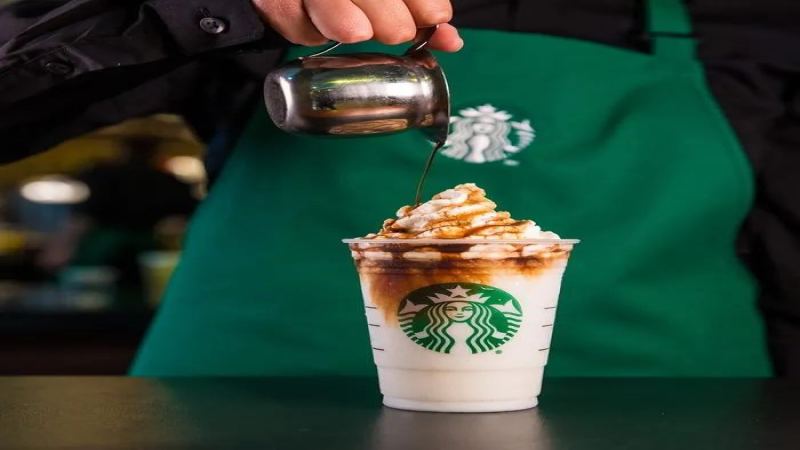
Since its launch, the Frappuccino has always enjoyed great popularity among consumers. Initially, this product was created to expand coffee drinking scenarios—selling coffee in blended ice form. Later, to accommodate customers who visit Starbucks but do not drink coffee, caffeine-free versions of the Frappuccino were introduced one after another.
The new generation of consumers increasingly favors sweet beverages, and Starbucks' beverage R&D teams in various countries and regions launch Frappuccinos with diverse flavors and highly visually striking colors and shapes based on local taste preferences. Precisely because of this, the Frappuccino firmly holds the top spot in Starbucks' cold drink sales~
As millennial customers' demand for cold drinks increases, along with their pursuit of flavor innovation, the Frappuccino has also become the best-selling product at Starbucks locations in various regions, so in recent years Starbucks has continuously increased its investment in Frappuccino R&D.
However, to make the Frappuccino present an aesthetically pleasing appearance, the production process inevitably becomes complicated. As order volumes continue to climb, the communication and emotional bond between baristas and customers are also diluted.
Starbucks also acknowledges that many baristas choose to leave precisely because orders for drinks with cumbersome steps keep pouring in, while customers show dissatisfaction due to long wait times, and the dual pressure increases the psychological burden on baristas.
So at this briefing, Howard announced that Starbucks has developed a brand-new system dedicated to Frappuccinos and other drinks that require blending—the Siren System. This system is equipped with a custom ice dispenser, milk dispenser, and a faster-spinning blending device to speed up the production process of Frappuccinos and other cold drinks.
According to Starbucks, after using the new equipment, baristas need only 36 seconds and 13 steps to complete a Mocha Frappuccino, whereas the current system takes 87 seconds and 16 steps. The production time for other Frappuccinos and cold drinks is also expected to be cut in half. Baristas can therefore free up more time to make other drinks and interact with customers.
After the new system was announced, some Starbucks partners, in interviews with local media, said bluntly that rather than this, it would be better to directly launch a machine that can automatically make Starbucks drinks, with baristas only needing to press a button, hang a cup, and add garnish...
Some partners also pointed out that the more complex the technology, the heavier the burden of cleaning procedures and equipment maintenance... Moreover, once automated equipment malfunctions, drink production time will instead be dragged out even longer.
Other partners lamented that Starbucks' coffee culture is continuously weakening, and today's new products have gradually become Frappuccino/cold brew-oriented. Baristas have fewer opportunities to show customers coffee-making, and cus tomers also pay less attention to Starbucks' classic coffee... I really enjoy chatting with customers while making coffee, but now more often than not I'm making cold drinks with my back to the customers.
Some store managers who have worked at Starbucks for many years said that many people come to work here hoping to learn more about making coffee and managing coffee shops through working at Starbucks. But what they learn at Starbucks now cannot be applied at independent cafes, which also leaves many partners disappointed.
The key reason Starbucks values innovation in cold brew coffee and Frappuccinos so much is that these two categories of products have extremely strong malleability. Starbucks has always emphasized the customization experience, hoping customers can get a product that better suits their personal taste and meets their expectations by adding or reducing ingredients or toppings.
By contrast, traditional espresso products have limited room for malleability, usually adjustable only through flavored syrups, and they are also relatively lacking in visual appeal. As a crushed-ice product, the Frappuccino, when paired with different ingredients, can present more colorful and layered visual effects, and its flavor is not constrained by espresso.
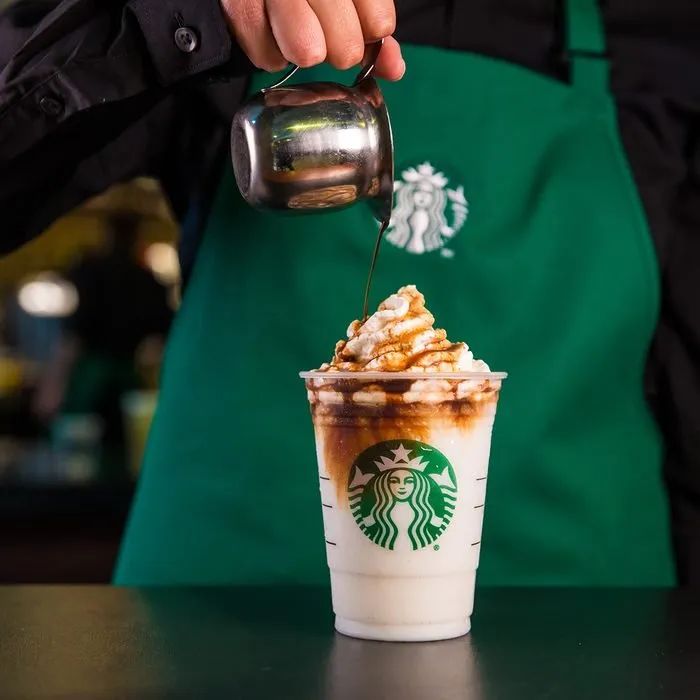
The refreshing yet rich characteristics of cold brew coffee also make it suitable for mixing with a variety of ingredients. It can be either the protagonist of a specialty drink or a supporting player. Different combinations can give the finished product different layered effects, making it easier to capture customers' attention to the product.
On the other hand, the reason Starbucks is willing to launch more cold drinks is also that the customer group currently using delivery services is growing ever larger. When hot coffee is delivered, changes in temperature can easily alter the coffee's flavor and overall mouthfeel. Although cold drinks are also affected by delivery, the changes in overall taste and mouthfeel are not as significant as those of hot drinks.
According to the briefing by Starbucks Corporation in the United States and the "2025 China Strategic Vision" released by Starbucks China, Starbucks will strengthen convenience services globally in the future, such as delivery and drive-thru, which will become important measures for Starbucks to tap new customers and drive sales.
Innovating cold drink products and updating production systems can further ensure the speed of product preparation and also further ensure that every cup delivered to customers has stable performance.
The future dividends of the coffee market mainly come from millennials and the new middle class. While pursuing health, they also pursue things that look good and are fun. To meet the needs of this group, it is necessary to understand their interests, interact closely with them, and continuously launch new products and new ways of playing to respond to demand.
Image source: Internet
The above content is compiled by CoffeeHunters, a coffee news website.


